
Government Approves €29.8 Million Crisis Mitigation Package
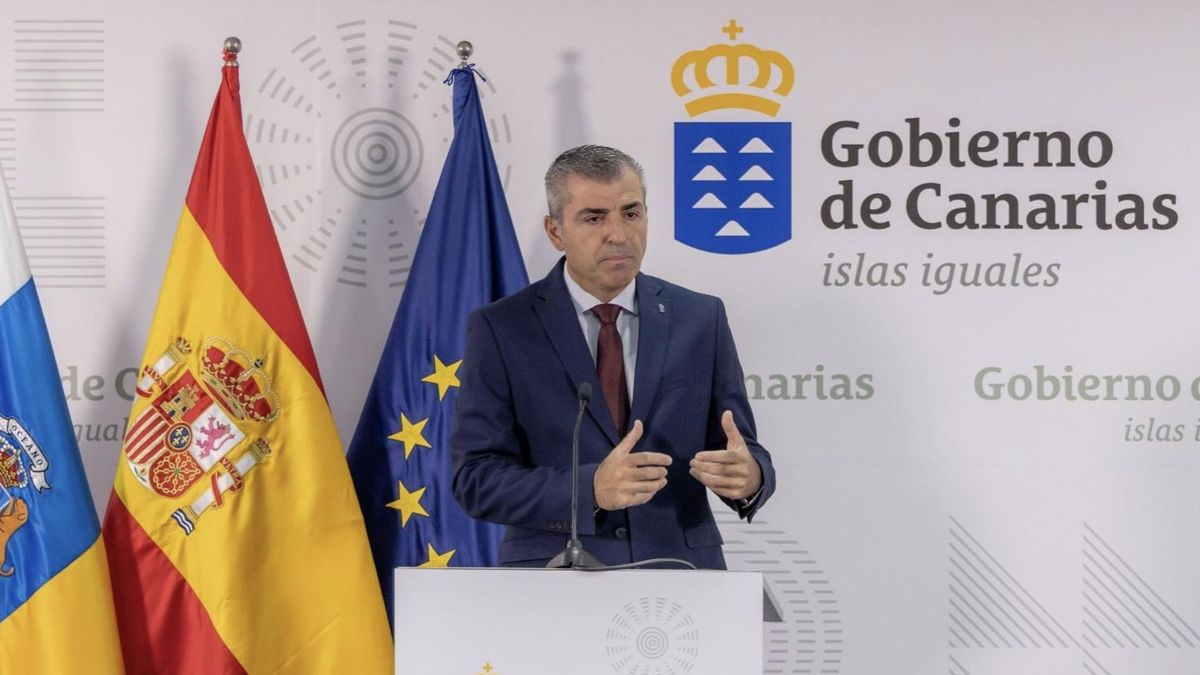
The Vice-President of the Canary Islands Government, Manuel Domínguez, has announced the approval of a document in the Governing Council held this Monday. It outlines a package of regional measures and a series of requests to the Spanish State to mitigate the impact of the Middle East war, valued at €29.8 million for a 100-day period. Of this total, the central government will contribute €15 million until June (which will be extended to €60 million if the conflict lasts more than three months), as announced by Minister Ángel Víctor Torres after meeting with the regional president, Fernando Clavijo, this Monday. For its part, the regional government will contribute a slightly lower amount (€14.8 million) for its own measures.
Tailored Response to Canarian Fiscal Reality
The initiatives outlined in the document approved by the Canary Islands will now be taken forward in a decree law to enact the proposals. They will be complemented by the requests made to the central government. These actions respond to Royal Decree-Law 7/2026, of 20 March, approved by the Spanish Government, whose tax measures—focused on VAT and the Hydrocarbons Tax—are not directly applicable in the Canary Islands due to its specific fiscal regime. Furthermore, said decree has an initial duration of 100 days.
Faced with this situation, the autonomous government has devised its own package of measures, within its powers, to bring the positive effects of such initiatives to the islands and mitigate the impact of rising fuel, energy, and basic goods costs.
Key Regional Measures: Tax Cuts and Direct Aid
Among the measures agreed by the Canary Islands Government are the reduction of the IGIC (Canary Islands General Indirect Tax) on fuels from 1% to 0%, aiming to lower the final price for consumers. The annual cost is estimated at €14.1 million, with €3.9 million calculated for a 100-day period.
Also included is an increase in the rebate of the fuel tax for farmers and hauliers, which rises from 67% to 99%. This change is estimated to have an annual cost of €19.4 million and €5.3 million for 100 days.
Furthermore, the application of the 0% IGIC rate to basic shopping basket products that were still taxed at 3%, such as salt, butter, and coffee. This action is estimated to have an annual cost of €3.2 million and €900,000 for 100 days.
Similarly, the limit of the special scheme for small businesses (REPEP) will be expanded up to €50,000 in annual turnover, reducing fiscal and administrative burdens. The measure will apply from July 2026 and will have a cost for this year of €12.5 million.
Finally, the Government will create a system of direct aid for the agricultural, livestock, fishing, and industrial sectors to compensate for energy and input overcosts, amounting to €7.2 million. These first four measures will require the approval of an autonomous decree-law, justified by the extraordinary and urgent need arising from the evolution of the international crisis.
Requests to the Spanish Central Government
Regarding the requests to the Spanish Government, these include the flexibilisation of fiscal rules to allow autonomous communities to adopt extraordinary measures; the implementation of a state subsidy on fuel prices; and the reduction of the tax burden on Personal Income Tax (IRPF) to compensate for the loss of family purchasing power.
Furthermore, an update of the allocations in the General State Budget is requested, especially in transport, water, and agriculture; the activation of liquidity and financing mechanisms for companies and the self-employed; and the creation of a specific fund for particularly exposed productive sectors.
A adaptation of the Recovery and Resilience Mechanism is also requested to account for the specific difficulties of the Canary Islands, including the possibility of extensions in project execution and the revision of objectives affected by cost increases.
Call for Structural Support and a “Canary Clause”
The Canarian government also demands that the State adopt structural measures to reinforce the Archipelago’s competitiveness. These include a reduction in airport and port fees; a boost to strategic renewable energy projects, such as geothermal and offshore wind; an increase in funding for the Specific Supply Regime (REA); the exclusion of the Canaries from certain European emissions measures (ETS) that increase connectivity costs; and an increase in the de minimis aid limit for companies.
The Government of the Canary Islands has insisted on the need to incorporate a ‘Canary clause’ in any state measure responding to crises, allowing public policies to be adapted to the singularities of the Archipelago. Finally, the autonomous government has stressed that these initiatives do not seek privileges, but to guarantee equity and correct the structural disadvantages derived from insularity, remoteness, and energy dependency.

Vivanta shuts all dental clinics including six in Tenerife

Civil Guard warns of digital skimming threat to online shoppers

Tenerife shifts FDCAN funds from roads to housing

PSOE warns Arrecife plan could ‘bury’ El Cable beach in concrete

Canary Islands faces loss of 20% of self-employed workers

Canary Islands to get 26 new substations by 2030

Canary Islands poverty rates stuck since pandemic

Court backs eviction over verbal room rental in Arona

Canary Islands pushes for 10-year residency rule for foreign buyers
