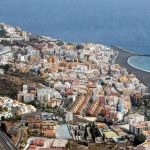
Festivals under fire: the clash between tradition and tranquillity
“This is uncontrollable, and what cannot be controlled cannot be tolerated, it must be prohibited.” With these words, the president of the Valencia city centre traders’ association, Julia Martínez, expressed this week the exasperation felt by many residents over the inconveniences caused by the Fallas festival in the Valencian capital. Large-scale mass celebrations in urban areas are increasingly facing opposition, and the ruling against holding the Las Palmas de Gran Canaria Carnival in the La Isleta district is one of the clearest examples of the clash occurring between the right to rest and the right to leisure. This conflict has also put the Santa Cruz de Tenerife Carnival on edge.
A landmark ruling in Gran Canaria
This week, the Fifth Court of Administrative Law in Las Palmas de Gran Canaria issued a ruling in favour of 11 residents from the Puerto district, who had complained about the 2024 Carnival celebrations in the plazas of La Luz, Manuel Becerra and Los Patos. Although the City Council has already announced it will appeal the decision, the ruling effectively prohibits these spaces from being used for the festivities again and also sets compensation for the claimants at €2,000 per person, per day. This is not the only blow the Carnival has suffered in the last two decades, which has increasingly restricted the areas of the city where the street festivities can be held – paradoxically, this year marked the 50th anniversary of the festival being celebrated freely after its prohibition under the dictatorship.
A nationwide trend of discontent
The truth is that public outcry against mass events and calls for restrictions on leisure activities are becoming increasingly common in Spanish cities. The case of Valencia’s Fallas is the most recent. For the past two weeks, the streets and squares of the Valencian capital have been occupied by firecracker displays, open-air dances, and food stalls. Thousands of people, both locals and visitors, have packed the city these days. A situation that has caused numerous annoyances for residents in the area where it all takes place – at least for some of them. Noise, litter, and mobility restrictions. Residents’ and traders’ associations have already publicly declared their displeasure, stating that the solution to the noise “and the intolerable excess” is to prohibit and remove the open-air dances from the city centre streets. “The festivals of collapse,” declared the opposition spokesperson in Valencia City Council on Friday. A situation that, according to many residents, has been overwhelmed this year by “drunken tourism.”
Tourism, ‘fomo’, and changing habits
Like the Carnival in the Gran Canaria capital, Valencia’s Fallas are festivals of international tourist interest. In a country like Spain, with a tourism-driven economy, festivals are increasingly attracting all kinds of visitors en masse. This situation combines with a growing perceived need to attend all types of events – a feeling known as ‘FOMO’ (fear of missing out) among young people – an ageing population, and changing habits. All of this has created a cocktail that is challenging celebrations which were unquestionable just a few years ago.
The economic imperative versus the right to rest
These types of festivals call into question the right to rest, but, at the same time, they generate economic activity. According to estimates from the University of Las Palmas de Gran Canaria (ULPGC), the Carnival in the island’s capital alone generates an economic return of €40 million. In addition to packed hotels and consumption in bars and restaurants, more than 70 groups, including orchestras and DJs, among others, make their fortune in February.
Legal precedents across Spain
The Las Palmas de Gran Canaria Carnival, with legal challenges since 2002, is not the only mass festival that has already faced rulings against it. In 2015, the courts ruled in favour of residents of the Chueca neighbourhood in Madrid due to the crowds and noise produced in the square of the same name during the LGTBIQ+ Pride opening speech. Since 2016, it has been held in the larger Pedro Zerolo square. Last December, residents of Vigo announced they would take legal action over the nuisance caused by “the chaos” generated by the Christmas celebrations. They complain that the huge influx of people they are attracting, the lights, the noise, and the mobility restrictions are becoming increasingly palpable. According to the residents, Vigo City Council exceeds decibel limits as it is an Acoustically Saturated Zone (ZAS).
Where residents have won a lawsuit against Christmas celebrations was in the town of Ocaña, in the province of Toledo. In this case, the festivities have been held outside the town’s main square, as was tradition, for three years, after a group of local women won a ruling that forced the City Council to seek an alternative. In Andalusia, lawyer Joaquín José Herrera challenged the marquees of the Cádiz Carnival for going “against the right to health and the inviolability of the home.” Herrera belongs to Jurists Against Noise, an association chaired by Yomara García, the lawyer who has won two of the rulings against the Las Palmas de Gran Canaria Carnival. In the case of Cádiz, the jurist encouraged residents to request acoustic measurements to take corrective measures and to claim compensation.
The Tenerife precedent and ongoing tensions
In the case of the Santa Cruz de Tenerife Carnival, city centre residents have also tried to halt the street festivities. Year after year, carnival-goers fill the streets of the capital with stages in different locations such as the Plaza del Príncipe or the Plaza de la Candelaria. In 2007, the judge dismissed the request to stop the festival; that year, lawyer Felipe Campos sought the suspension of the various open-air events due to the nuisance caused by food stalls, stages, and bars. The then mayor of Santa Cruz, Miguel Zerolo, argued that finding a different location for the festivities at that time was “unfeasible” as no alternative could be found and, furthermore, argued that “it has always been celebrated in the city centre, it is a historical tradition.” In any case, he put the waterfront on the table, which is where the largest concerts are held today.
Despite this decentralisation of street events, criticism has continued among residents, although for now they have not resumed the legal battle. Santa Cruz City Council has taken other measures such as limiting hours, cordoning off areas, or changing sound system arrangements. Measures that most cities that have had problems with their festivals have replicated and which, nevertheless, have continued to generate complaints.
Corrective measures and continued protests
Corrective measures are precisely what residents of Carabanchel, in Madrid, are asking for during the San Isidro festivals, held in May. Last year they decided to form a platform against noise, who have gone so far as to say it is “torture.” On the banners of a demonstration they held during the last edition, one could read “yes to the meadow and the pilgrimage, no to 15 days of amusement park, mega-concerts, open-air drinking, and unhealthiness.” These statements are similar to those repeated on numerous occasions by the complaining residents of La Isleta in Las Palmas de Gran Canaria – they have complained about the concerts, not the parade or the galas and contests. All this despite the fact that the Gran Canaria capital’s City Council has taken measures. For example, in this year’s edition they changed the orientation of the stages at La Luz and the Puerto market to redirect the sound.
Zaragoza, with the Fiestas del Pilar; Bilbao with Aste Nagusia; Barcelona during La Mercè; and Pamplona with the Sanfermines, are other Spanish cities where residents have publicly denounced popular festivals. Many have resorted to creating platforms against noise. And indeed, noise pollution is a constant in cities that is aggravated during popular festivals that bring thousands of people together, thus straining the right to leisure and the right to rest.


Two men injured in fall from wall in Playa de Troya
Tenerife-forged bell rings again in tiny Rioja village

Canarian journalists to discuss a world in conflict at Las Palmas theatre

Festival del Sur returns to Agüimes with theatre from three continents

Man, 24, seriously hurt in buggy crash on Gran Canaria track

Woman, 81, rescued from sea at Las Vistas beach in Adeje

Tenerife to receive ES-Alert volcano drill messages

Canary film Benito Pérez Buñuel to premiere in Venezuela

Teen rescued after ravine fall in Güímar, Tenerife