Compiled with the help of artificial intelligence, based on Spanish-language information. Source below the article.
Partners united on TMT’s importance
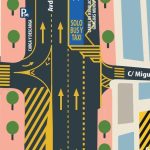
“The partners all agree on one point: building the Thirty Metre Telescope (TMT) is the most important thing.” That is the emphatic message from the TMT’s executive director, Robert Kirshner, in exclusive remarks to EL DÍA, in which he also revealed that no decision has yet been made on La Palma’s lucrative offer to host the astronomical giant.
With this, Kirshner has dispelled one of the fears hanging over the telescope’s future: that continued delays, budget cuts and social pressure would eventually disillusion one of the partners and scupper the ambitious international project. After more than a decade of setbacks, some members of the consortium – made up of scientific institutions from Canada, the United States, Japan and India – had expressed reservations about continuing to fund a telescope whose construction keeps hitting obstacles.
That was the case, as the director of the Instituto de Astrofísica de Canarias (IAC), Valentín Martínez Pillet, confessed in an interview, with Canada. “The fundamental problem now is that the Canadian community is disillusioned with the project. It has decided it would prefer to join the European Southern Observatory, the ESO,” Martínez Pillet recounted, insisting that if that decision were taken, it “could be the final nail in the coffin” for the consortium and the TMT.
La Palma’s €1bn offer on the table
The question remains, however, whether the telescope’s final location will be La Palma. With barely a fortnight left to make a decision, Kirshner says “the TIO partners are studying carefully” the ambitious Spanish and European proposal, which comes after ten years of negotiations between the IAC and the consortium.
The Spanish offer, which has brought the TMT closer to Spain than ever before, consists of several elements. On one hand, the Spanish government has reserved €400 million through the Centre for Technological Development and Innovation (CDTI). A further €600 million will come from Europe: €300 million from a European Investment Bank loan and another €300 million from the Instituto de Crédito Oficial (ICO). With that €1 billion, Spain would be in a position to cover the cost overruns that have accumulated in recent years due to the telescope’s delays and inflation-driven cost increases.
The final piece of the puzzle is the environmental permits, which the Canary Islands has held since 2019 and which expire this September. Those permits now set the deadline for a decision the consortium has been putting off for a whole decade. While they could technically be renewed for further years, Spain has chosen to issue an ultimatum to the partners. “Either it is built on La Palma, or it will not be built at all,” Martínez Pillet declared.
Hawaii’s sacred mountain obstacle
Kirshner acknowledges that La Palma is a privileged location for astronomical observation: “El Roque de los Muchachos sits above the clouds, at almost 2,400 metres altitude, beneath skies that Spanish law has protected from light pollution for nearly forty years.” However, the Mauna Kea mountain in Hawaii – the project’s preferred site – is somewhat higher and enjoys more clear-sky days each year.
The problem for the promoters – and by no means a minor one – is that Native Hawaiians do not want the telescope on their sacred mountain. Public opposition is so strong and entrenched that they have managed to postpone or halt construction on several occasions since 2014. The project has also faced legal challenges in the US islands, including contentious administrative proceedings and direct action from the Kū Kia’i Mauna group (literally translated as Guardians of the Mountain).
The latest move by Native Hawaiians, through the civic platform Puʻuhonua o Puʻuhuluhulu, has been to issue a wake-up call to the project’s promoters and investors. Specifically, they have sent a legal notice demanding an immediate halt to any effort to build the TMT on the sacred mountain of Mauna Kea. The letter warns that otherwise, they will deploy every legal and judicial measure at their disposal to stop its development. “The TMT will never see first light if it maintains its construction in Hawaii,” they challenge.
In that communication, the Hawaiians – who point to a Change.org petition with more than 500,000 signatures – recall that the island’s population has never given its “free, prior and informed” consent to the TMT’s construction on Mauna Kea, and that today the rejection is deep and broad enough to be considered representative. The island is home to some 1.4 million people, so the campaign is backed by the equivalent of a third of the population, even if many signatories do not live directly on the island.
Consortium’s alternative proposal
Despite all the difficulties encountered over the past 15 years, the promoters have never abandoned Hawaii. The consortium’s current proposal is that, instead of installing it at the summit of the sacred Mauna Kea mountain, it could be placed at a location where telescopes are already out of service, to avoid a greater environmental impact.
These push-and-pull dynamics have more than once called the TMT’s future into question. The most recent occasion was in early last year, when the Trump administration decided to cut its budget. This telescope will serve to “detect the first galaxies that formed after the Big Bang through to searching for habitable planets around nearby stars,” insists the executive director, stressing that “these great questions of science require a great telescope capable of capturing faint light and concentrating it to produce sharp images.” In this regard, the TMT has an advantage over the other great telescopes set to be built in the coming decades: “It is the only telescope in the northern hemisphere sky.”
What’s happening in the Canaries – straight to your phone
News, weather alerts and practical updates – direct from the islands, in English. We live here and know what’s going on – before the international media catch up. Everything lands on our WhatsApp channel – no middlemen, no algorithm. Curated for families, expats and travelers.

Work on TF-5 third lane between Guamasa and Los Rodeos to start in November

Canary Islands international air arrivals fall 1.3% in September

Helicopter evacuates US cruise passenger near Tenerife

El Hierro airport sees 3.6% rise in September passengers
Gran Canaria approves €509k works to shore up GC-200 slope

Canary Islands gets €47.5m for free public transport in 2026
Canary Islands airports see 0.9% fall in September passengers
El Rejo road in La Gomera to close for six hours on Tuesday

Man, 65, seriously injured in GC-1 crash in Agüimes