New water drones for Tenerife’s beaches
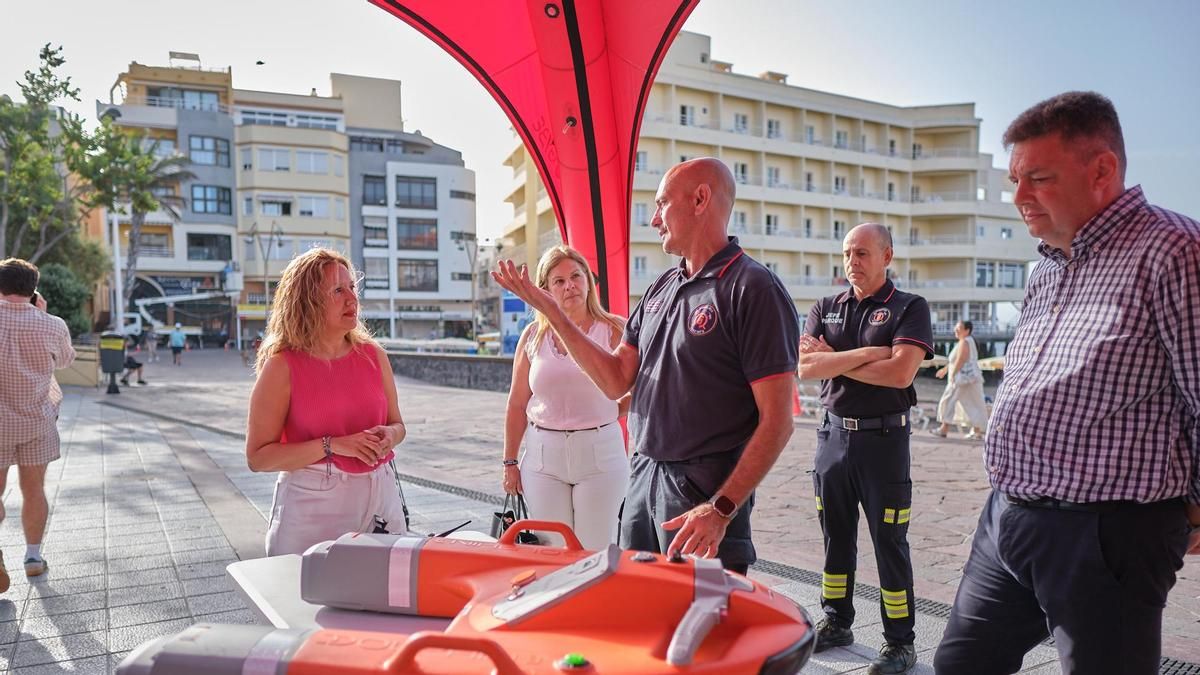
The Cabildo of Tenerife took a major step this Wednesday in strengthening coastal safety with the addition of new aquatic drones designed to anticipate emergencies in the water. The launch took place at El Médano beach in Granadilla de Abona, where the new operational protocol was unveiled and a practical demonstration was carried out of the rescue equipment now being deployed by the Fire Service Consortium and local municipal rescue teams.
According to the island’s government, the key innovation is the introduction of two aquatic rescue drones for the Fire Service Consortium, plus one for each of the thirty coastal municipalities. These devices can reach a victim rapidly without immediately exposing a rescuer to danger. Operated by remote control from the shore, the drones can locate a casualty using onboard cameras, mark the intervention zone, carry flotation equipment, assist conscious people, quickly transport a firefighter to the rescue site, and even evacuate both rescuer and casualty together.
How the drones work in rough conditions
With the ability to navigate in adverse conditions, submerge to overcome waves, and maintain battery life for nearly an hour, the devices represent a highly valuable operational tool for cutting response times and improving the safety of interventions. The Cabildo explained that the new equipment has been introduced in response to a rise in water rescues. Over the past decade, the Tenerife Fire Service Consortium has carried out 625 coastal interventions, 164 of which were rescues at sea, resulting in 26 fatalities. The number of operations has nearly doubled over the last ten years.
Studies by the Consortium have also identified seven black spots along the coastline that account for around 40 per cent of all rescues and approximately 50 per cent of recorded deaths in such emergencies.
‘Every minute counts’ – regional leaders react
The President of the Cabildo of Tenerife, Rosa Dávila, stressed that “every minute counts when someone is in danger at sea. We are making a qualitative leap in how we intervene, incorporating technology that allows us to act faster, reduce risks for rescuers, and increase the chances of saving lives.” She noted that Tenerife has one of the most popular coastlines in Spain and that prevention and response capabilities must evolve at the same pace as rising activity on the island’s shores.
The Minister for Natural Environment, Safety and Emergencies, Blanca Pérez, said the addition of these new resources “represents a major advance in protecting both those who need rescuing and the firefighters themselves, who often intervene in particularly complex situations.”
The Island Director for Safety and Emergencies and President of the Tenerife Fire Service Consortium, Iván Martín, explained that “the new procedure standardises the operational response, improves coordination between resources, and adapts interventions to the latest available technology, guaranteeing faster, more effective, and safer operations.”
Fire Service Consortium Officer Luis Castro detailed the capabilities of the new devices, noting that their greatest benefit is providing “greater safety during rough sea conditions, where there is risk for both those being rescued and the rescuers.”
What’s happening in the Canaries – straight to your phone
News, weather alerts and practical updates – direct from the islands, in English. We live here and know what’s going on – before the international media catch up. Everything lands on our WhatsApp channel – no middlemen, no algorithm. Curated for families, expats and travelers.

El Bejeque in Las Canteras adds sea to its fire

Siam Park Gran Canaria must build its own desalination plant

Fuerteventura’s biggest resort to open on 1 November
Gran Canaria to teach tourism history in schools
Canary Islands see 0.3% rise in foreign tourists in August

Row over 368-bed hotel project in La Gomera
Spanish astronaut trains in Lanzarote for Moon mission

Tivoli La Caleta hosts first red tuna Kaitai in Canarias
La Laja natural pools reopen in Las Palmas