A packed afternoon of ideas at MUNA
From the climate to the kitchen, from science communication to comedy, and from technology to security, the Antonio Pintor courtyard at the Museum of Nature and Archaeology (MUNA) – embraced by columns and bathed in natural light – proved too small for so many ideas. From the youngest in the family to the curious, students, and audiences of very different profiles, people gradually filled the space in the minutes before the start, bringing life to the surrounding area of Barranco de Santos. After the initial date was postponed due to low-pressure system Therese, the anticipation was now, indeed, high: “We came for the quality of the speakers and to learn about technological innovation,” says Nieves Santana, one of the attendees. A sign of the wait was the capacity, which from a week before the first act was already shouting “sold out.” In that atmosphere, among accreditations, final preparations, and conversations between friends who were reuniting while looking for a spot between the rows, an event designed to explore the impact of technology on our society, discover stories of innovation, and meet the figures redefining the digital future began.
Technology with a human touch
The event, which opened its doors at 5:00 PM, was part of the programming for Tecnológica 2026, one of the largest gatherings on innovation and digital narratives in Tenerife, held in its capital, Santa Cruz. “Technology is not only innovation, but also community, creativity, and opportunity,” stated the city’s mayor, José Manuel Bermudez, to kick off this new edition. But the afternoon, enlivened by a large panel of speakers who took the stage every 20 minutes, did not revolve solely around screens, artificial intelligence, or social media. What was discussed in the MUNA courtyard was also a conversation about how the present is communicated and the need to make understandable topics that, until not too long ago, seemed reserved for specialists. “Technology,” defended Carmen Pérez, the CEO of the Development Society, “is better when it unites us all and when, above all, it makes us more human.”
Climate, science, and the art of communication
Several of the first interventions of the day moved along those lines. “To truly understand a phenomenon as complex as the climate,” highlighted Mercedes Martín, a meteorologist tasked with breaking the ice that afternoon, “it is not only enough to look forward, many times, and I would say most of the time, we have to look back.” She addressed the relationship between science and communication at a time when phenomena like climate change are taking up more and more space in public conversation. A few metres away, among the audience, Leo was listening and taking notes on his phone: “It’s a luxury to be able to hear so many experts in a single afternoon. You can learn and receive a lot of inspiration,” he said. A similar idea also ran through the participation of Rocío Vidal, better known as Schrödinger’s Cat, who focused on “the importance of translating complex concepts into accessible language, in an environment marked by over- and disinformation, algorithms, and the fast consumption of content.”
From MasterChef to El Hormiguero: capturing attention
More than a succession of talks, the afternoon began to function as a kind of map of how the internet, science communication, and digital platforms have changed the way information is consumed. But Tecnológica also wanted to broaden the perspective through creativity and new ways of building brands, audiences, and digital communities. This is where profiles like Aleix Puig, founder of VICIO and winner of MasterChef 2019, or Jordi Moltó, a screenwriter linked to the popular TV show El Hormiguero, came in – two very different voices that, nevertheless, shared the same underlying question: “how to capture attention in a digital ecosystem saturated with stimuli.” “The event,” comments Diego Delgado, a returning attendee from previous editions, “is the best place to learn from different sectors and how to innovate through digital platforms.” “To be connected to technology,” noted the El Hormiguero screenwriter, “you don’t need to be behind screens all day,” while reminding the audience that “we are born with technology, but no one teaches us how to use it.”
Tech for everyday life and saving lives
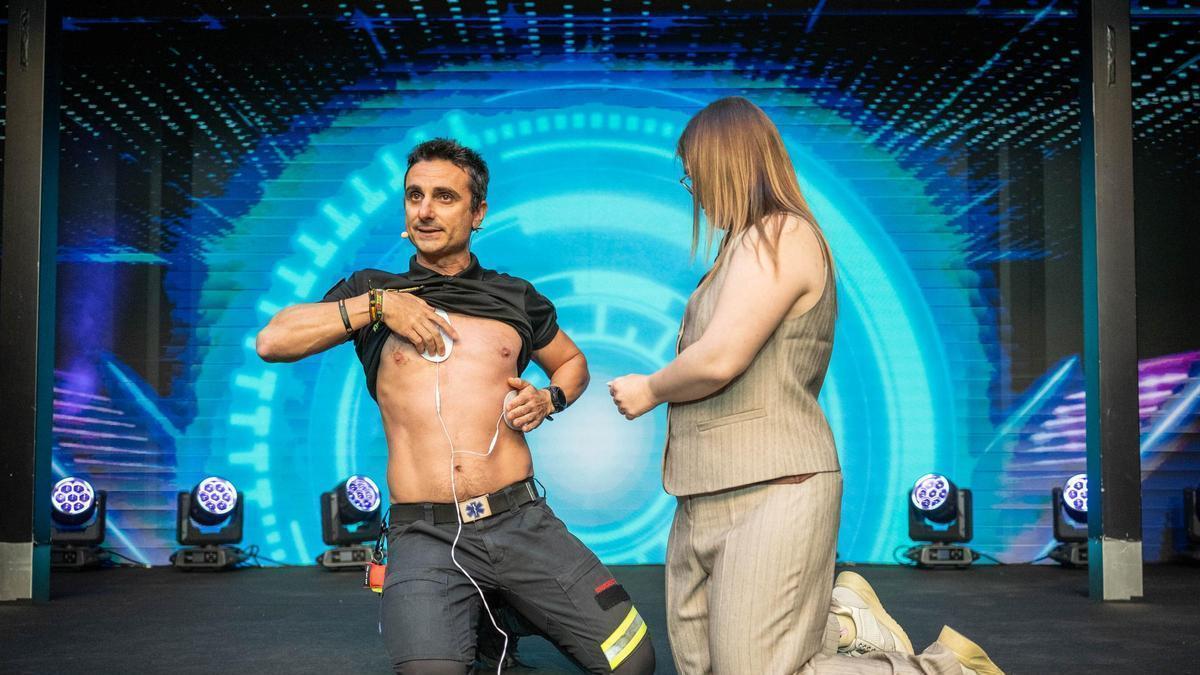
The day then moved into areas more closely tied to daily life. From electrical engineer and science communicator Verownika to Miguel Assal and his interventions on safety and first aid. As the afternoon progressed, the talks began to ground technological and digital concepts in everyday situations. “New technologies are welcome, but without inequality, with security, and above all, with ethics,” the engineer supported. Along these lines, “technology has advanced so much,” commented Assal, “that it now helps us save lives.”
Entertainment, emotion, and a celebration of individuality
There was also room for humour and content creation with Soraya Nárez and Caterina Moretti, who moved the audience in a final segment that mixed entertainment, social media, and personal experiences. “Shine, believe in yourselves. You don’t have to fit in to have a good time… listen to yourselves, enjoy, don’t believe everything you see on social media. Have self-love and, above all, be yourselves,” Moretti argued amid applause. Between talks, despite a few drops of rain falling on the audience, the courtyard remained full. Some attendees used the breaks to comment on ideas, take photos, or debate artificial intelligence, networks, and the future of work. Others simply observed. “I came out of curiosity and I’m leaving delighted, because, besides having a good time, I learned a lot,” says another attendee, Luz, before leaving.
A present-focused conversation on technology
For just over three hours, and beyond the talks, spotlights, or recognisable figures, Tecnológica turned the MUNA into a meeting point to discuss how technology has integrated itself into practically all areas of daily life. And perhaps that was the key to an afternoon that turned a museum courtyard into a space to talk, not so much about the future, but about the present.
What’s happening in the Canaries – straight to your phone
News, weather alerts and practical updates – direct from the islands, in English. We live here and know what’s going on – before the international media catch up. Everything lands on our WhatsApp channel – no middlemen, no algorithm. Curated for families, expats and travelers.

Sonora Festival 2026 draws 16,000 to Las Palmas

Two men injured in fall from wall in Playa de Troya
Tenerife-forged bell rings again in tiny Rioja village
Canarian journalists to discuss a world in conflict at Las Palmas theatre
Festival del Sur returns to Agüimes with theatre from three continents
Man, 24, seriously hurt in buggy crash on Gran Canaria track

Woman, 81, rescued from sea at Las Vistas beach in Adeje
Tenerife to receive ES-Alert volcano drill messages
Canary film Benito Pérez Buñuel to premiere in Venezuela