Compiled with the help of artificial intelligence, based on Spanish-language information. Source below the article.
Smart parking system for Santa Cruz
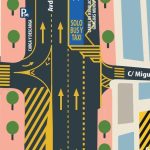
Santa Cruz de Tenerife is gearing up to launch a new parking information system that will let drivers see where spaces are available before they set off. The project involves installing 12 variable message signs at strategic points across the city, feeding real-time updates on occupancy levels in 24 independent parking zones dotted around the centre.
The initiative, driven by the council’s Mobility and Universal Accessibility department, is designed to make parking easier to find and to improve traffic management. The town hall expects the system to be up and running by early 2027.
How the new parking signs will work
The contract, awarded to Kapsch Trafficcom, comes with a budget of €435,000 and covers the supply, installation and integration of all the components needed to get the system operational. The 12 panels will be the most visible part of the project. Their job is to give drivers up-to-date information on available spaces in the various parking zones.
They will be positioned at key entry points so that people coming into Santa Cruz can see the data while on the move and decide more easily where to park. The aim is to cut some of the traffic generated when drivers cruise the streets hunting for a spot. In a city with significant volumes of inbound traffic, knowing what parking is available can help motorists avoid saturated areas and steer towards car parks with space.
Traffic pressure on the city’s main routes
The issue is particularly acute in a capital that receives a huge number of vehicles every day. Council documents identify the northern motorway TF-5 as one of the main entry points, with the stretch linking La Laguna and Santa Cruz typically carrying around 110,000 vehicles daily. The TF-1 adds another 80,000 to 90,000 vehicles a day via the Añaza approach and the connection to the port.
On top of these commuter flows, there is the city’s own internal traffic and the parking demand from residents, workers and visitors. The centre of Santa Cruz, along with neighbourhoods such as El Toscal and Salamanca, accounts for much of the pressure on available spaces. The new system is intended to provide a tool to manage that demand more effectively and cut down on unnecessary journeys.
Data, app and future smart mobility
The information will not just be displayed on roadside panels. The system will also feed data back to the traffic control centre, where it can be used to analyse parking usage statistically and assess how well the tool itself is performing. The data gathered will build a database that could prove useful for future smart mobility projects.
The scheme also includes a mobile app for the public. Users will be able to check space availability and get route directions to the nearest car park. The app will also show parking tariffs and opening hours, and there is scope to integrate payment systems. In this way, the council is proposing a solution that combines on-street information, centralised management and digital tools for drivers.
The ambition goes beyond simply saying where spaces are free. The goal is to bring together all parking data and turn it into useful information for deciding routes and where to stop. The launch of the system forms part of the council’s sustainable mobility strategy and its search for ways to ease congestion.
Launch planned for early 2027
Knowing real-time parking availability will improve the experience for residents and visitors alike, while also helping to identify future parking needs. Once operational, Santa Cruz will have a network offering a joined-up view of availability across 24 zones. It will be especially useful on the approaches and in areas where pressure on spaces is highest, letting drivers know in advance when it might be better to head elsewhere.
The council is confident the new infrastructure will contribute to more efficient mobility, making both driving and parking easier. The system is expected to go live at the start of next year, once the 12 panels, the management platform and the mobile app are all integrated into a single information tool.
What’s happening in the Canaries – straight to your phone
News, weather alerts and practical updates – direct from the islands, in English. We live here and know what’s going on – before the international media catch up. Everything lands on our WhatsApp channel – no middlemen, no algorithm. Curated for families, expats and travelers.


Work on TF-5 third lane between Guamasa and Los Rodeos to start in November

Canary Islands international air arrivals fall 1.3% in September

Helicopter evacuates US cruise passenger near Tenerife

El Hierro airport sees 3.6% rise in September passengers

Gran Canaria approves €509k works to shore up GC-200 slope

Canary Islands gets €47.5m for free public transport in 2026
Canary Islands airports see 0.9% fall in September passengers
El Rejo road in La Gomera to close for six hours on Tuesday

Man, 65, seriously injured in GC-1 crash in Agüimes