Compiled with the help of artificial intelligence, based on Spanish-language information. Source below the article.
La Palma five years on: ‘The volcano was an enemy we couldn’t defeat’
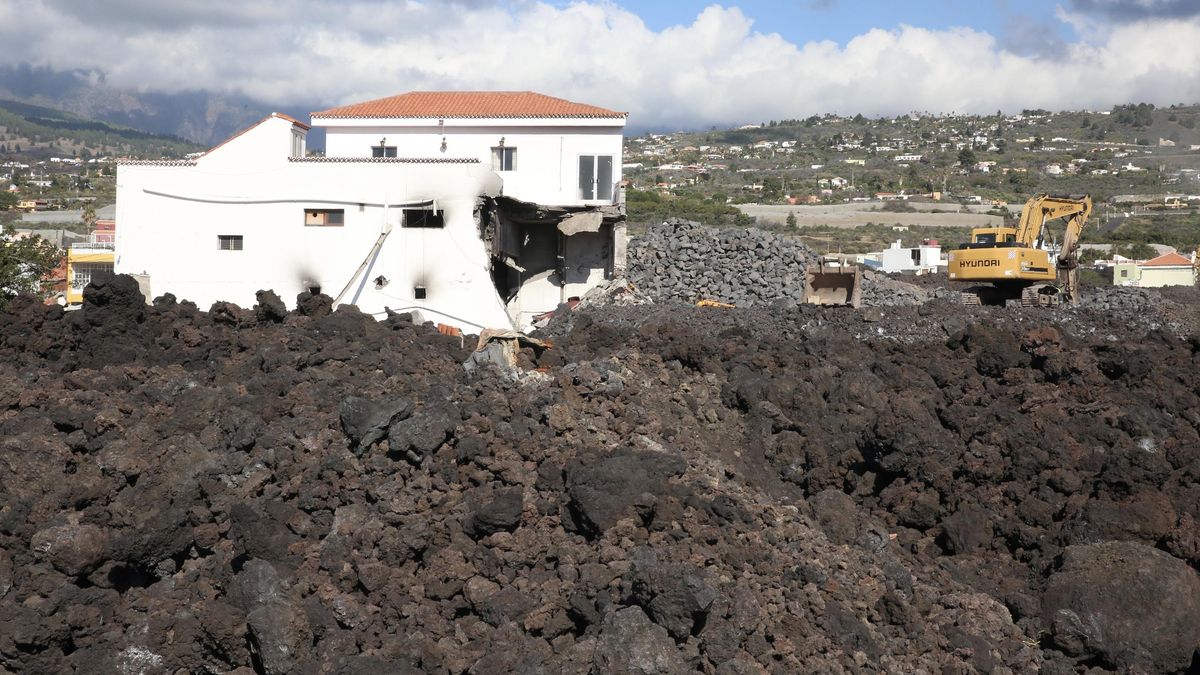
Five years ago today, the Tajogaite volcano began to tear La Palma apart. For three agonising months it spewed lava across the Valle de Aridane, burying the homes, land and memories of thousands of residents. Marcelino Rodríguez, president of the La Laguna residents’ association, remembers those days with painful clarity: “The volcano was like an enemy we couldn’t defeat. An enemy that would stop or retreat when it wanted to, not when we wanted it to, so it was a war we were going to lose.”
His neighbourhood of La Laguna was split in two. He insists there was no time to think much back then. “You just thought you were going to be next.” The lava eventually stopped a metre from Marcelino’s house, but more than once he thought it might have been better if it had taken it, because the real ordeal came afterwards: facing a desolate landscape, a neighbourhood that was no longer the same, a volcano that continued to loom over them, and returning to a home he could not enter through the front door, enduring months and months of machinery digging away.
“Because when the volcano stopped, we had another volcano here in the form of constant machinery. It was normal and we didn’t complain because the work had to be done, but all of that wears you down a little.”
A neighbourhood divided, a community scattered
The volcano left behind a multitude of stories. Marcelino notes that some people have never returned to the neighbourhood, and others no longer want to. He believes one of the challenges is to make it easier for those who do want to come back, even though psychologically it has been a devastating blow. “There are people who, to this day, have not been able to face the volcano because it is very hard.”
On reconstruction, he says progress is slow, but you cannot build in a day. “We have to live with what there is. You can see that things are moving, and anyone who says otherwise is lying. Those of us here would like it to be faster, but it is what it is.”
When the volcano erupted, the priority was ensuring there were no loss of human lives. But the people of La Palma went to sleep every night with the uncertainty of not knowing what would happen to everything they had fought for: homes, plots of land, businesses. “I lost the effort of 25 years,” says Fátima Ramos, of the platform for those affected by the volcano.
Housing: the greatest challenge five years on
Fátima lived in the Todoque neighbourhood, very close to the school, and lost everything she had: her home. She moved in with her in-laws and is still there, but she believes one of the most important challenges the administration still faces is housing.
The Spanish government granted a series of aid packages for damage to homes, with amounts of up to 60,480 euros under a 2021 decree, although the central government and the island council later agreed to increase this to 100,000 euros, with additional contributions of 30,000 euros. Added to this is a new mechanism created by the Canary Islands government for compensation based on patrimonial value, which also draws on central government funds.
“Housing is the main challenge, above all because there are many people who, even though they have received financial compensation for the value of what they lost, on top of the aid received from the Spanish and Canary Islands governments, still cannot afford to buy a flat, or buy land and build a house,” says Fátima Ramos.
Prices for both land and housing have risen sharply in recent years, making the reconstruction of life for the inhabitants of the Valle de Aridane even more complicated. “There are still container homes, there are still wooden houses, and people are still living in a provisional situation,” laments Fátima, who adds that although progress is being made, much remains to be done.
On La Palma there are those who have bought land and modular homes, those who are still building their house and have had to go to the bank, those waiting for a social housing property, and those living in rentals whose prices have skyrocketed. “There are many cases.”
Fátima points out that when restrictions on building on rural land were relaxed in the wake of the disaster, the price of that land soared. She adds, however, that some people have started building their homes and have gradually adapted. “We have been forced to live differently,” she says, recalling that there are people who used to live with a house and a small vegetable garden, “your flowers, your pets” and now live in a flat or in temporary accommodation.
Those affected also note that some are waiting for social housing as an alternative, and are awaiting properties that are about to be completed in Los Llanos de Aridane (55 due to be handed over by the end of the year), with further construction under way in El Paso and Tazacorte. “The key here is not to stand still and for the administration to keep helping us in that regard,” insists Fátima Ramos.
Psychological scars that ‘we will carry with us forever’
Those affected stress that many psychological after-effects remain, and that it is only now that everything is surfacing. “We will carry the psychological scars with us, I think forever, even if people see us smile, even if they see us go to a party,” says Fátima.
They also agree that it is not the same for a child as for those who are older and have lost the neighbourhoods they had known all their lives, the places where they used to gather. “Do you remember this and that?” they ask each other when they meet in the street, since scattered neighbourhoods are another consequence of the eruption.
One of the things Fátima is most proud of is the Volcano Law, which she believes will help future generations, since volcanoes will continue to affect the Canary Islands.
Criticism over the absence of an institutional act
Francisco Pulido, president of the Tierra Bonita association, is critical of the fact that five years after the eruption there is no institutional act this Saturday. He also notes that there has never been a catastrophe of the volcano’s magnitude, not in terms of human lives, but it altered the lives of many people on La Palma. “It is the one that has had the greatest impact on the lives of the island’s people.”
Pulido considers the Spanish government to have been the most transparent when it comes to reflecting the aid being granted, and disagrees with the Canary Islands government’s stance of not publishing the beneficiaries of compensation for damages. The platform for those affected does not share this view either, considering such data to be private.
Tierra Bonita also points out that at the beginning of the eruption there was a more community-minded approach to creating land banks and seeking a more co-responsible system. With the current Canary Islands government, the criteria changed, and the association has felt a lack of participation.
Land, tourism and the future of the lava fields
Another outstanding challenge is knowing how many hectares will be protected from the volcano and what is intended to be done with them for tourism purposes. Pulido recalls that the land covered by the lava flows still belongs to those affected, and that they will have to be expropriated for any actions carried out. “Right now, to go and see the volcano you have to pay, anyone has to pay. You cannot even go alone; you have to pay a guide,” he stresses.
Pulido also agrees that there is still a need to deal with the shock caused by the uncertainty in the first days of the eruption, when those affected were given barely a few minutes to retrieve their memories and some belongings from their homes. “There is an anecdote about a woman who only managed to take out two bottles of water because she was so stunned,” he explains.
In his case, he feared for his village cemetery, which the lava reached to the height of the burial niches, but it has been possible to recover it.
Keeping the memory alive
Marcelino Rodríguez, for his part, is fighting in La Laguna to keep the neighbourhood cohesive and its memory alive, along with that of sister neighbourhoods such as Todoque and Las Manchas. A photographic exhibition was recently inaugurated with the aim of ensuring that visitors know that beneath the lava flows there was life and there was colour, and that they do not forget them.
To continue along this path of reconstruction, the government appointed a special commissioner, Héctor Izquierdo. According to the latest government data, aid for the recovery of the valley includes measures for economic protection and compensation for losses, furlough schemes, income tax exemptions and support for agriculture, among others.
Those affected stress that they are getting on with their lives, adapting and resigned to the fact that nothing will ever be the same again. They hope that, step by step, they can rebuild their lives, their neighbourhoods, their roads and their homes — but, as they put it, “do not ask us to be strong. At that moment I think we had to be strong and endure. But we no longer have reasons to be strong, nor reasons to say how happy we are.”
What’s happening in the Canaries – straight to your phone
News, weather alerts and practical updates – direct from the islands, in English. We live here and know what’s going on – before the international media catch up. Everything lands on our WhatsApp channel – no middlemen, no algorithm. Curated for families, expats and travelers.
Canary Islands hotels demand Imserso overhaul
Gran Canaria must be an island to live in, not just visit
Cueva de la Negra demolition on hold as appeal admitted
Lanzarote hospital pioneers microwave fibroid ablation
Fuerteventura historic home faces demolition on 21 September
Canary Islands opens applications for young renters’ bonus
Canarias has lowest salaries in Spain at 2,016 euros
Mesa y López bids to boost footfall by 20% in three years
Arrest order issued in Claudia Tacoronte feminicide case