
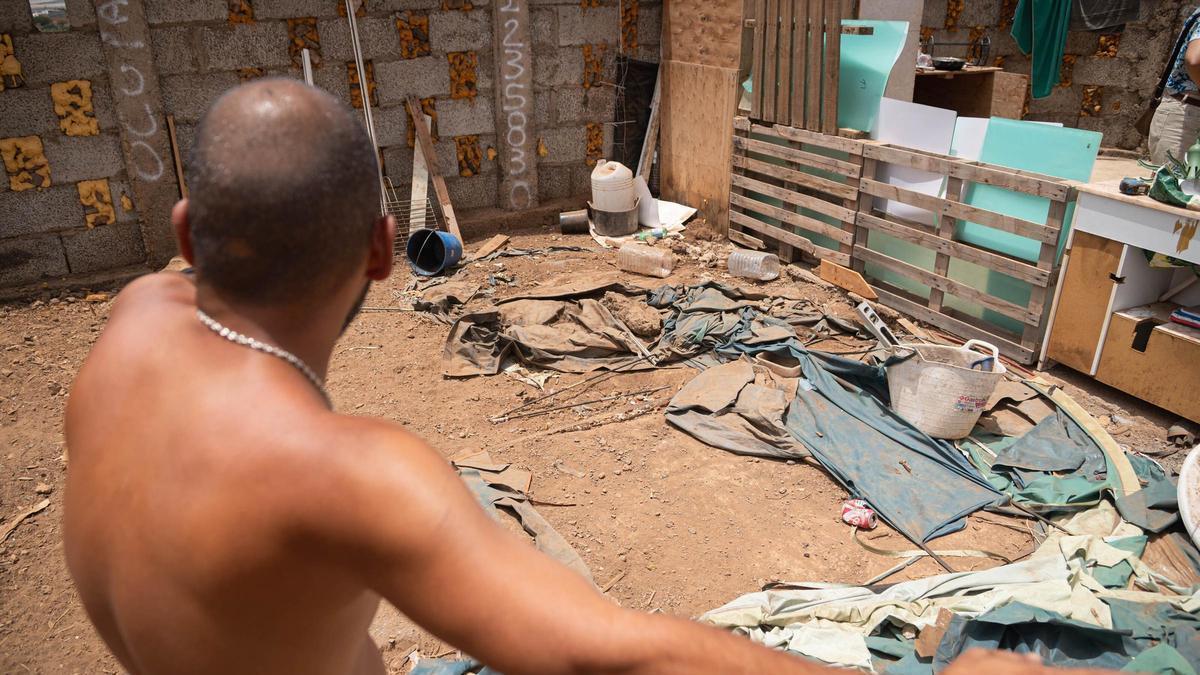
A simple visit to the illegal settlement of Los Vivitos in Arona plainly illustrates why this tourist municipality of over 90,000 residents is the second worst-hit by homelessness in Tenerife, according to a recent report by Cáritas. Amid waste scattered everywhere, there are constructions of every kind: full-scale homes built from concrete blocks with doors and windows, more rudimentary ones made of plywood sheeting but fitted with a metal gate barring entry to the plot, and some even boasting CCTV cameras, alarms, solar panels and water tanks.
Police operation and eviction ultimatum
The large-scale police operation deployed last Tuesday at this site, located on rustic land next to the TF-1 motorway between Buzanada and Guaza, sealed off 17 buildings, inspected a total of 64 structures and gave 94 identified people a three-month ultimatum to leave. It was the second intervention by security forces at this location, although this one was on a much larger scale. Arona Town Council, through this operation and others it has announced for the coming months, aims to put an end to the proliferation of these illegal settlements, which are becoming increasingly numerous not only in Arona but along the coast and midlands of southern Tenerife.
Harsh living conditions
Gusts of wind cover everything in dust. Calima and intense heat make conditions extreme in Los Vivitos, which occupies former farmlands where the walls that once separated crops still stand. Without the most basic essential services, most of its residents say they have no other option. Such is the case of a Colombian couple in their 40s, who prefer to remain anonymous. She works at a tourist hotel and he is on sick leave. They have two children, one of them with autism spectrum disorder. Every day they spend 10 euros on petrol to fuel the generator that provides them with electricity.
From rented home to a six-square-metre room
The family had been in Tenerife for a decade and lived in rented accommodation in Las Chafiras, where they paid 1,000 euros a month. However, a clause in the contract raised the rent to 1,400 euros after they were five days late with a payment. Unable to afford the increase, they were forced to leave the property. The search for another rental was, they say, a real ordeal due to the financial demands: three months’ deposit, estate agent fees and multiple requirements to secure a home. After spending a month at the Nauta campsite, they arrived at Los Vivitos. First they lived in a tent and later built a small room of barely six square metres, where all four family members sleep. The space has a small kitchen, a water tank, a washing machine and a makeshift bathroom. They have even managed to install an air conditioning unit to cope with the high temperatures.
A temporary situation, or a permanent one?
The mother insists their situation is temporary. “We have always worked. We are hardworking people and we are going to fight to get out of here,” she says. Her children study in Las Zocas and the younger one receives the specialist care he needs there. Not everyone shares that goal. Some residents, among them a man who has been living in the settlement for eight years, say they have nowhere to go and will not leave the site despite the police ultimatum. Moreover, they claim that the population of Los Vivitos has grown rapidly and estimate that between 200 and 300 people now live there. They even warn of speculation with plots within the settlement.
Housing crisis at the root
All agree on the same root cause: the housing crisis. They call on the authorities to regulate the rental market to stop more people ending up living in settlements like Los Vivitos, a reality already spreading to other parts of Arona, such as Guaza, Lomo Negro, El Fraile, Costa del Silencio and Las Galletas.
What’s happening in the Canaries – straight to your phone
News, weather alerts and practical updates – direct from the islands, in English. We live here and know what’s going on – before the international media catch up. Everything lands on our WhatsApp channel – no middlemen, no algorithm. Curated for families, expats and travelers.

Vivanta shuts all dental clinics including six in Tenerife

Civil Guard warns of digital skimming threat to online shoppers

Tenerife shifts FDCAN funds from roads to housing

PSOE warns Arrecife plan could ‘bury’ El Cable beach in concrete

Canary Islands faces loss of 20% of self-employed workers

Canary Islands to get 26 new substations by 2030

Canary Islands poverty rates stuck since pandemic

Court backs eviction over verbal room rental in Arona

Canary Islands pushes for 10-year residency rule for foreign buyers
