
Compiled with the help of artificial intelligence, based on Spanish-language information. Source below the article.
A long-standing crisis that has tested public patience
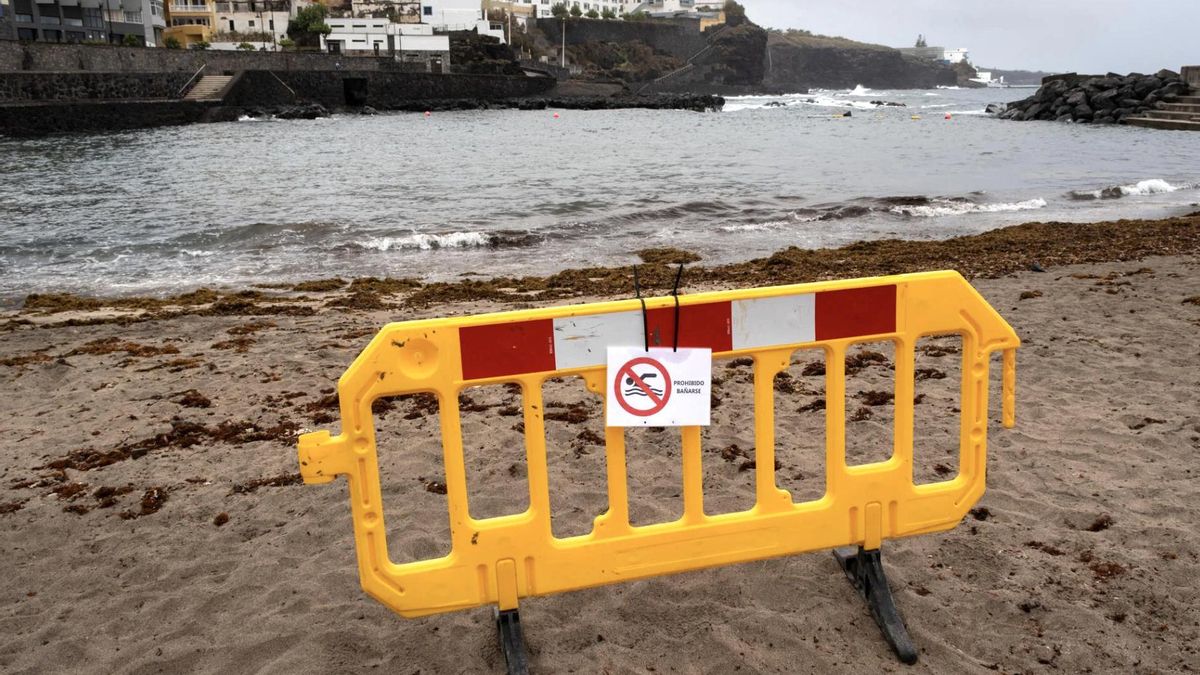
The problem of sewage discharges in the Canary Islands is nothing new. For decades, a structural crisis has been building, and it has finally worn down public tolerance. The collapse of infrastructure caused by an incomplete sanitation system means that more than 60 beaches are currently closed to swimmers. This figure can now be known precisely thanks to the creation of a real-time map based on official coastal analyses.
Although Tenerife continues to fare badly – with 33 beaches shut – the other islands are not spared either. Gran Canaria, Lanzarote, Fuerteventura, La Palma, La Gomera and El Hierro account for another 29 red flags and 110 yellow ones, a tally that gives a good sense of the scale of a problem affecting the entire archipelago.
How Vertidos Canarias works
Now, through Vertidos Canarias, anyone can check which colour of the traffic-light system applies to each beach. The platform was created by biologist Román Herrera, who decided to develop the tool after witnessing at close hand a public health problem that, he tells this newspaper, “is not being treated as a priority in the Canary Islands”.
The map shows, for each beach, the date of the most recent available sample, taken from the latest official analysis published by the regional health authority in NÁYADE, the Spanish National Bathing Water Information System, along with its result and the recorded values of Escherichia coli (E. coli) and intestinal enterococci – two of the main microbiological indicators used to monitor the sanitary quality of bathing waters.
Using a three-colour traffic-light system, the tool allows users to see the status of every beach in the archipelago. Red indicates that a beach is next to a discharge and that rain, wind or currents are currently carrying it towards the shore. Yellow signals that a discharge is nearby, although conditions are not contributing as much to its spread. Green, for its part, indicates that no known discharge is located nearby, or that conditions are not favouring its arrival at the beach.
Green does not always mean clean water
But one clarification is worth highlighting. “Being green does not necessarily mean the water has been tested and is clean,” stresses Román. This traffic-light system reflects the situation of known discharges and the conditions that may help them reach the coast, but it does not replace official sanitary analyses.
And that is precisely one of the differences between the two tools. NÁYADE offers a real sanitary measurement, but not in real time, whereas Vertidos Canarias seeks to anticipate a risk that the laboratory may not yet have detected. The health ministry’s information system carries out tests between 9 and 21 times a year, at fortnightly or monthly intervals depending on the season, and culturing the samples takes one or two days. This introduces an obvious limitation compared with the new platform: it may not accurately reflect the conditions of the water at that moment, but rather those present when the sample was taken.
Forecasting where contamination will travel
Herrera’s platform works differently. Its model incorporates various variables, including currents, wind and the location of discharge points, to calculate where contamination may travel. Under the “moderate plume” tool, users can view a heat map that forecasts the direction a discharge is taking and its possible impact on the coast. It also indicates the legal limits established for each bacterium: 500 CFU per 100 millilitres for Escherichia coli (E. coli) and 185 CFU per 100 millilitres for intestinal enterococci.
This information, which does not appear in NÁYADE and now does appear in Vertidos Canarias, is taken from Grafcan, the Canary Islands government’s mapping system, which makes it possible to identify which discharges and outfalls are registered at any given time and also shows whether or not each of those points has authorisation.
The blind spots in official monitoring
NÁYADE is also dogged by another controversy. The system covers bathing waters included in the official register, but not all of the archipelago’s beaches, coves or swimming spots form part of that register. The regulations concentrate controls on areas where a significant influx of bathers is expected, meaning that stretches of coastline fall outside periodic monitoring. If an area is not registered, there is also no equivalent obligation to subject it to routine sanitary checks. The result is a blind spot in water quality monitoring that Vertidos Canarias is precisely trying to address.
That is why a discharge can occur between two sampling rounds and appear in neither of them. It can also happen that the point where the sample is taken does not coincide with the place where the discharge is occurring. Herrera’s aim is for that information to also shed light on what is happening outside periodic sanitary controls – not only on beaches that are closed, but also on those not included in the register, in the periods between two analyses and in areas close to discharge points.
Recent episodes show the problem is far from solved
Recent episodes show that this is not merely an inherited problem. Over the past few months, various stretches of the Canary Islands coastline have once again been temporarily closed to recreational use because of contamination. Playa Jardín, in Puerto de la Cruz, has been subject to intermittent opening and closure since August. That same month, Bajamar beach, in La Laguna, was closed for 24 hours after an episode of enterococci contamination was detected. And the problem has continued into September.
On 8 September, Yaiza council ordered the temporary closure of the small beach at Playa Blanca, in Lanzarote, after detecting a sewage discharge caused by a breakdown at a pumping station near the coast. Today, 11 September, another Tenerife beach, Playa El Cabezo, has been closed because of faecal contamination. Reopenings are conditional on the results of Public Health samples.
Cases such as these demonstrate that contamination of the coastline is neither an isolated phenomenon nor confined to one particular island, but a problem that continues to surface and that forces authorities to combine sanitary controls with tools capable of anticipating where and when an episode of contamination may occur.
What’s happening in the Canaries – straight to your phone
News, weather alerts and practical updates – direct from the islands, in English. We live here and know what’s going on – before the international media catch up. Everything lands on our WhatsApp channel – no middlemen, no algorithm. Curated for families, expats and travelers.

Iberdrola plans Tenerife’s biggest battery storage plant

The wild canary that gave its name to the Canary Islands

Canary Islands sea hits second-hottest year on record

Legal bid to halt tree felling in Santa Cruz’s La Salud

Fiesta del Charco: A journey through La Aldea’s past

Corralejo dunes power line set for removal

ULPGC launches 14 research projects at Las Canteras

TMT will never be built, says Canary Islands astrophysics chief

Pedro Duque: Canarias is the “ultimate dream” for rockets
