
Unprecedented parliamentary move
The coastline of the Canary Islands witnessed an unprecedented legislative move this Tuesday. The Parliament of the Canary Islands has approved an initiative demanding the Spanish Government urgently modify the 1988 Coastal Law. The proposal comes after decades of administrative and legal conflict that have threatened the survival of thousands of homes in traditional settlements, affected by national regulations that, according to affected groups and parliamentary factions, systematically ignore the geographical and cultural particularities of the islands.
The initiative positions the Canary Islands as the starting point for a necessary national reform to correct the effects of a law described as “unjust,” having failed for almost 40 years to address the social reality of a territory where the coastline is central to its identity.
Unusual cross-party unity
In a rare political scenario, the Partido Popular (PP) and the Partido Socialista (PSOE) have joined forces to drive this reform. The proposal, championed by PP deputy Jennifer Curbelo, focused on the suffering of families who have spent half a lifetime in legal battles to save their homes. Curbelo condemned that the current law “draws lines without any criteria,” generating deep legal uncertainty, and stressed that this fight is not about party labels, but about “justice and coherence.”
Meanwhile, the PSOE supported the measure, although it introduced a critical amendment. Socialist deputy Rafael Nogales argued that, in addition to looking to Madrid, the Canary Islands Government must develop its own powers through a regional law. Nogales reminded the chamber that the solution will not come from “declarations of intent” alone, but from implementing the tools already permitted by the Statute of Autonomy.
A roadmap for coastal self-governance
The final resolution from Parliament not only targets the Congress of Deputies but also establishes a roadmap for self-governance of the coastline. With the backing of Nueva Canarias (NC) – whose deputy Carmen Hernández welcomed the change in stance from the major parties – and the rest of the chamber’s forces, the following points were agreed:
Priority state reform: Urge the State to ensure the 1988 Law recognises the unique volcanic and social character of the Canary Islands.
Full transfer of powers: Demand the definitive completion of the transfer of powers regarding coastal management.
Own legislation: Promote a Canary Islands Coastal Law that provides stability for historic settlements.
Dissent and painful memories
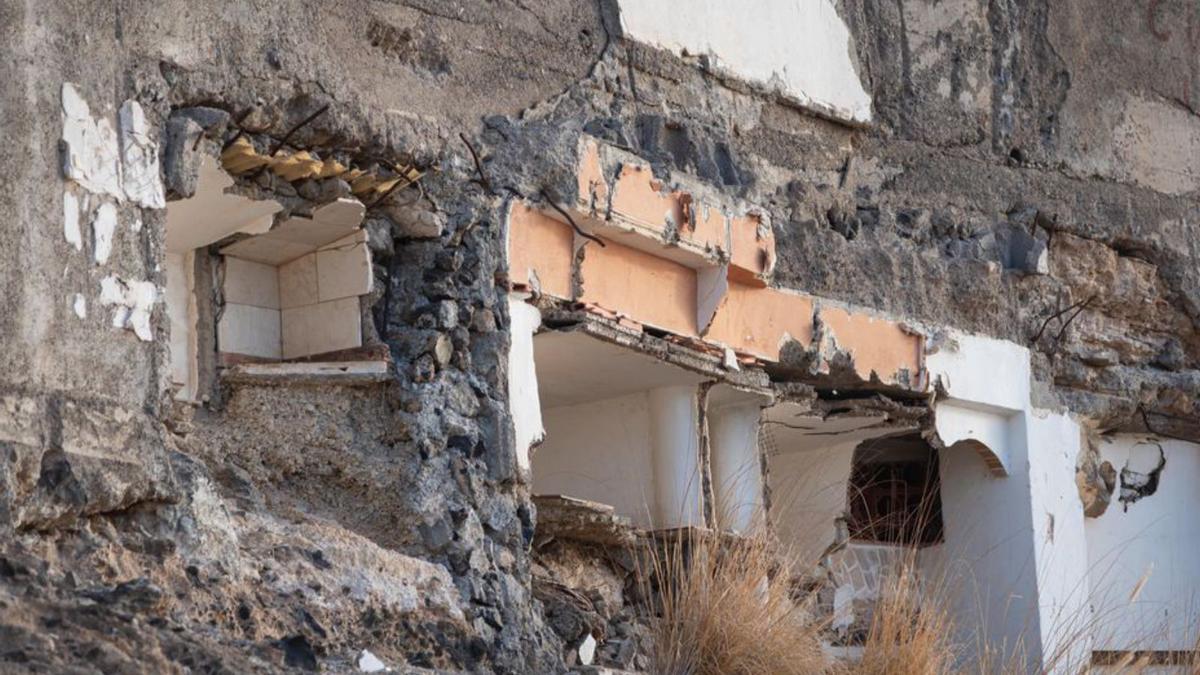
Despite the general consensus, unanimity was broken on the point regarding the creation of a regional law, with Vox voting against. The debate was marked by the memory of traumatic demolitions, such as those suffered at Cho Vito beach in Candelaria. With this parliamentary action, the islands are sending a resounding message: the survival of traditional coastal settlements is a red line that requires a legal framework that is adapted, modern, and above all, respectful of the Canary Islanders’ deep-rooted connection to the sea.
What’s happening in the Canaries – straight to your phone
News, weather alerts and practical updates – direct from the islands, in English. We live here and know what’s going on – before the international media catch up. Everything lands on our WhatsApp channel – no middlemen, no algorithm. Curated for families, expats and travelers.

Vivanta shuts all dental clinics including six in Tenerife

Civil Guard warns of digital skimming threat to online shoppers

Tenerife shifts FDCAN funds from roads to housing

PSOE warns Arrecife plan could ‘bury’ El Cable beach in concrete

Canary Islands faces loss of 20% of self-employed workers

Canary Islands to get 26 new substations by 2030

Canary Islands poverty rates stuck since pandemic

Court backs eviction over verbal room rental in Arona

Canary Islands pushes for 10-year residency rule for foreign buyers
