
Grantecan to Become Planetary Defender
The Gran Telescopio de Canarias (GTC or Grantecan) is set to become a hunter of asteroids dangerous to Earth within just seven years. The Spanish state is funding the installation of a new scientific instrument with an investment of nearly €19 million, enabling the telescope to obtain observations in two ranges: visible and near-infrared light.
New Instrument to Spot Distant Threats
This technical capability will allow it to better observe transient phenomena – a method for detecting exoplanets – at great distances and to act as a planetary defender. It will be able to capture potentially hazardous asteroids when they are still very far from Earth. This was announced by the Council of Ministers, which, at the proposal of the Ministry of Science, Innovation and Universities (MICIU), approved an investment of €18.7 million for the development of this instrument, called the “OPTIR Project”, on Tuesday.
Ambitious Seven-Year Development Plan
The development of the instrument will be carried out through a Public Procurement of Innovation process, which will include all phases of the project: design, manufacturing, testing, transport, integration, and commissioning. The design and construction are expected to be completed within a period of seven years. This initiative will involve the collaboration of scientific institutions, universities, and companies, fostering knowledge transfer and consolidating the experience accumulated over more than two decades at the Grantecan.
The World’s Largest Optical-Infrared Telescope
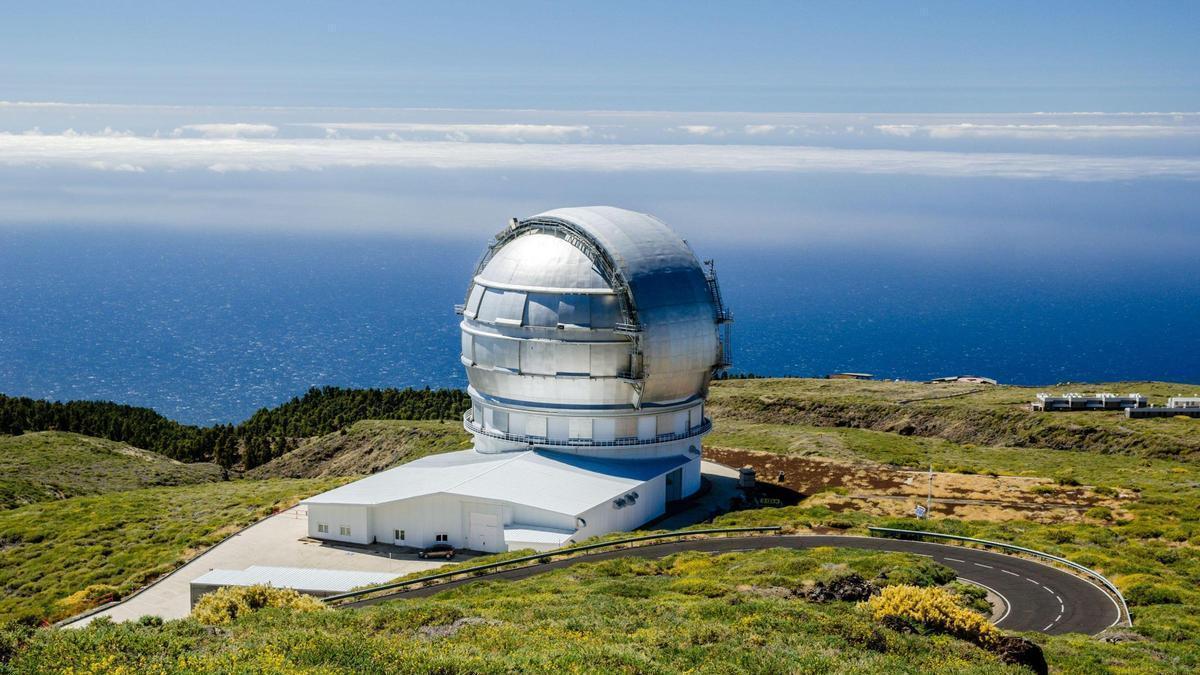
It is worth remembering that, to this day, with its 10.4-metre diameter, the GTC is the largest operating optical-infrared telescope in the world. The telescope is located at the Roque de los Muchachos Observatory on La Palma, at an altitude of 2,400 metres. Its current technical capabilities allow it to observe the universe in visible and near-infrared light, enabling the study of objects from our solar system to very distant galaxies, the formation of stars and planets, the evolution of the universe, black holes, and dark matter and energy.

Iberdrola plans Tenerife’s biggest battery storage plant

The wild canary that gave its name to the Canary Islands

Canary Islands sea hits second-hottest year on record

Legal bid to halt tree felling in Santa Cruz’s La Salud

Fiesta del Charco: A journey through La Aldea’s past

Corralejo dunes power line set for removal

ULPGC launches 14 research projects at Las Canteras

TMT will never be built, says Canary Islands astrophysics chief

Pedro Duque: Canarias is the “ultimate dream” for rockets
