Compiled with the help of artificial intelligence, based on Spanish-language information. Source below the article.
Canary Islands inflation climbs to 4.4%
The steady rise in fuel prices over the past 12 months has sent the Canary Islands, like the rest of Spain, down a road of misery — particularly where the annual Consumer Price Index (CPI) is concerned. The archipelago’s annual rate now stands at 4.4% for the period from October 2025 to September 2026, an increase of 0.6 percentage points on the comparable figure recorded in August, when it stood at 3.8%. No small matter.
According to the CPI statistics published this Wednesday by the National Statistics Institute (INE), the Canary Islands’ behaviour mirrors that of every administrative territory in Spain — albeit with the slim advantage that the archipelago posts the lowest annual general inflation indicator of any autonomous community, at 4.4% (level with Aragón), compared with 4.9% nationally and a regional high of 5.5% in Castilla-La Mancha, which is 1.1 percentage points above the figure the INE has recorded for the Canary Islands.
Three key drivers behind the 4.4% figure
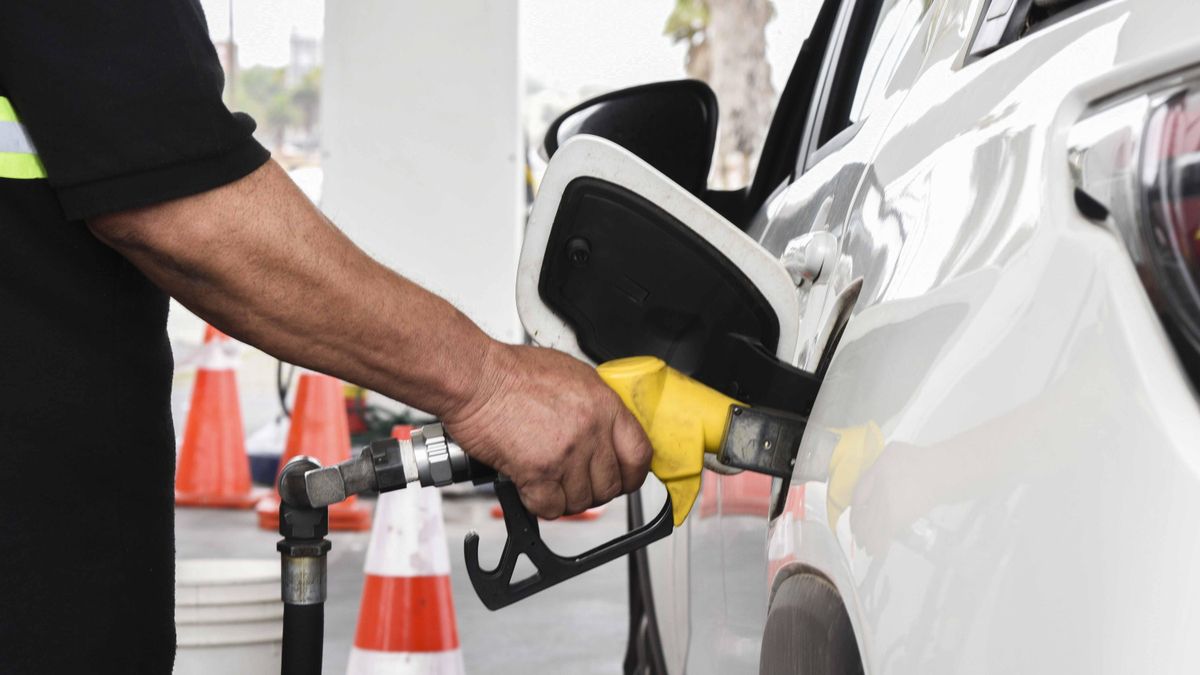
The equation producing that 4.4% annual Canary Islands CPI comes down, once again, to three key components that continue to cause frustration both in the islands and across the rest of the country. One is a structural problem in Spain: the relentless month-on-month rise in housing costs. The others — or rather, the other two — are the soaring price of fuel driven by the war situation in the Middle East, brought about by the United States, and the so far ever-upward trend in restaurant and accommodation services in the islands, linked to the strong performance of tourism in the Canary Islands. This dominant sector continues to fulfil its potential throughout the current lengthy boom, which is also expected to hold through 2026 and at least until the end of the summer season. October marks the start of the high season, which is looking far from bad.
Housing, fuel and tourism services
Housing in the islands has become more expensive by an average of 4.4% over the past 12 months, with prices 3.3% higher in the first nine months of the year and a monthly rise of 0.8% — that is, compared with the same figure for August. But the situation with fuel over the annual period is even worse: prices have climbed 10% over the last 12 months of calculation, against 10.5% for the national figure, while they have risen 7.9% up to the reference month across nine calendar months and have fallen 0.5% month-on-month, something that has had very little impact on the general CPI figure.
To these upward trends must be added another linked to two services closely tied to tourism performance: restaurants and accommodation. These activities continue to post positive figures, this time with average annual inflation of 4.5%, and 2% more across the first nine months of the year.
How the islands compare with the rest of Spain
The annual CPI calculated up to last September produced positive annual rates in every autonomous community in Spain, as well as in the autonomous cities (Ceuta, the lowest in the country at 3.1% annually). Castilla-La Mancha and Galicia recorded the largest increases, both at 5.5%. The Canary Islands and Aragón brought up the rear this time, with the smallest annual increase at 4.4% for both regions.
At national level, the annual rate of general CPI over the year from last October to September 2026 reached 4.9%, six tenths of a percentage point above the figure recorded the previous month, in August of this year. This annual CPI is the highest since February 2023.
Recreation, transport and core inflation
That same upward evolution, with no brake in sight, reflects the behaviour of the following price groups: recreational, sporting and cultural activities, which placed their annual rate at 3.6%, almost two and a half points above the previous month’s figure — driven by how package holiday prices behaved during what was still a holiday month in September. During this monthly period, prices fell by less than in the same month of 2025.
To that upward trend was added transport, whose annual variation rose by one percentage point to 10.5%. This increase was caused mainly by the movement in prices of fuels and lubricants for personal vehicles, which rose more than in September 2025, when there was a fall. In addition, prices for passenger air transport fell by less than last year.
As a result, the annual variation in core inflation (the general index excluding unprocessed food — fresh produce — and energy products — fossil fuels) stood at 3.1%, two tenths of a percentage point above the indicator for the previous month, the figure recorded for August 2026.
What’s happening in the Canaries – straight to your phone
News, weather alerts and practical updates – direct from the islands, in English. We live here and know what’s going on – before the international media catch up. Everything lands on our WhatsApp channel – no middlemen, no algorithm. Curated for families, expats and travelers.

Los Realejos residents fight on against propane gas plant

Canarias among Spain’s poorest regions as 36.2% live on low incomes

Canary Islands bananas lose ground to imported bananas

Canary Islands bottom of Spain’s social housing table

Three migrant boats reach Canary Islands in 24 hours

Canarias proposes 10-year residency rule to buy property

Gran Canaria hotel maid arrested over stolen gold necklace

Canary Islands plan 10-year residency rule to buy a home

Canary Islands launches empty homes rental scheme