Compiled with the help of artificial intelligence, based on Spanish-language information. Source below the article.
Filling the trolley in the Canary Islands: an uphill battle
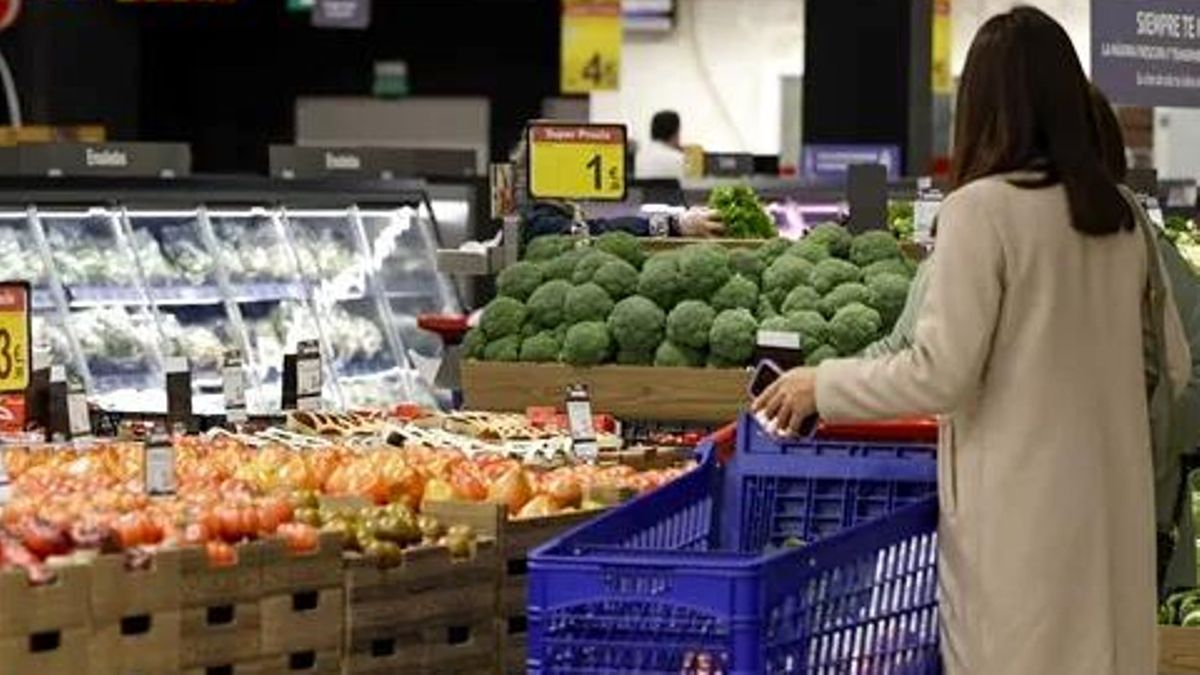
Filling the shopping basket in the Canary Islands has become an endless climb. Since 2021, the Consumer Price Index (CPI) has maintained an upward trend, driven to a large extent by the rising cost of fuel and energy, in an international context shaped by the conflicts in Iran and Ukraine. In the archipelago, this price surge is made worse by insularity, which pushes up the cost of transporting goods, and by a heavy reliance on products brought in from outside. The result is a shopping basket that ranks among the most expensive in the country — an undeniable contrast with wages, which are among the lowest.
Food costs up to 7.81% higher than on the mainland
Data published by ISTAC on 7 October show that food and drink in the Canary Islands cost 0.98% more than in the rest of Spain. However, when the tax effect is stripped out — IGIC in the archipelago and VAT on the mainland — the gap widens to 7.81%. The difference reaches 7.65% for food and 9.90% for non-alcoholic drinks.
This extra cost is all the more suffocating in a region where the average annual salary is the second lowest in the country. In the Canary Islands, a worker earns an average of €23,096.92 a year, some €9,216 less than an employee in the Basque Country, the region with the highest salaries in Spain.
Where you shop can save you thousands of euros a year
Choosing which supermarket to shop in can also make a considerable difference to household finances. The latest study by the Organisation of Consumers and Users (OCU), which analyses shopping basket prices, places several cities and establishments in the archipelago among those with the biggest price differences. The analysis covers 244 products across 80 categories, from fresh food and packaged goods to hygiene and household products, including both branded and own-brand items.
In this context, Las Palmas de Gran Canaria stands out as the city with the biggest gap between shopping at the cheapest supermarket and the most expensive one. According to the OCU data, choosing the cheapest establishment can save up to €2,167 a year compared with the most expensive option. The association names Supercor, Hipercor and El Corte Inglés among the most costly alternatives operating on the island, with price rises of up to 2.7%.
At the other end of the scale, Alcampo has remained one of the low-cost benchmarks in the archipelago, although its advantage is concentrated mainly in Telde. Carrefour has gained ground and consolidated its position as one of the cheapest options in Las Palmas de Gran Canaria and Santa Cruz de Tenerife, while Aldi stands out for its prices in San Cristóbal de La Laguna.
Coffee up 142% and eggs up 135% in five years
The evolution of certain foods also highlights the scale of the accumulated price rises in recent years. The cheapest ground coffee blend has risen by 142% in five years, while eggs have recorded an increase of 135%. In 2025, fresh products have also seen significant increases, with an average rise of 4.7%. Fish leads the way with an 8.6% increase, followed by meat at 3.7% and fruit and vegetables at 3.5%.
In the case of the Canary Islands banana, the price has seen a particularly sharp rebound after falling to €0.32 per kilo. In barely a week, the price climbed to €0.52, an increase of 63%. The recovery comes as a relief for farmers, whose production costs sit between €0.80 and €0.90 per kilo.
No single chain guarantees the lowest prices across all islands
The differences between establishments confirm that choosing where to shop can ease the family budget, but also that there is no single chain that always guarantees the lowest prices across every island and city. The final cost depends on the location, the supermarket and the products included in the basket. The OCU also notes differing behaviour depending on the category: Mercadona stands out for greater restraint on budget items, Aldi excels in fresh products and Lidl maintains a more balanced position across the different product groups.
Canary Islands vs Galicia: a widening gap
It is inevitable to draw a comparison with other autonomous communities, and this helps to put the effort required to fill the fridge in the Canary Islands into even sharper perspective. Galicia and other regions with more contained prices offer a very different picture from the archipelago, where rising food costs coincide with limited purchasing power. While the Canary Islands ranks among the regions facing the greatest difficulty in meeting the cost of the basic shopping basket, Galicia is among the cheapest regions for doing the weekly shop.
On top of this difference comes the wage gap between the two territories. In Galicia, the average annual salary is €3,530 higher than in the archipelago, according to data from the Salary Structure Survey by the National Statistics Institute (INE). The contrast is particularly striking given that the differences are not solely down to the price on the label. In the Canary Islands, the extra cost associated with insularity, the differences between establishments and lower earning capacity all pile up, reducing families’ room to manoeuvre when it comes to covering other essential expenses.
What’s happening in the Canaries – straight to your phone
News, weather alerts and practical updates – direct from the islands, in English. We live here and know what’s going on – before the international media catch up. Everything lands on our WhatsApp channel – no middlemen, no algorithm. Curated for families, expats and travelers.

Canary Islands approves new €1.6bn development fund

Mogán mayor says her €65,000 salary is too low

Abandoned cars in Canary Islands: hundreds left to rot

Work resumes on 27 affordable rental homes in Las Palmas

Los Realejos residents fight on against propane gas plant

Canarias among Spain’s poorest regions as 36.2% live on low incomes

Canary Islands bananas lose ground to imported bananas

Canary Islands bottom of Spain’s social housing table

Three migrant boats reach Canary Islands in 24 hours