Compiled with the help of artificial intelligence, based on Spanish-language information. Source below the article.
Clavijo opens talks on limiting foreign property purchases
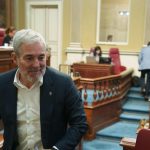
The president of the Canary Islands government, Fernando Clavijo of Coalición Canaria, said on Tuesday that he has already made contact with the political parties represented on the Permanent Deputation to gauge their “willingness” to approve a decree introducing limits on property purchases by foreigners in the archipelago. “If there’s a will, it can be done,” he said in response to a question from the Nationalist Group during the control session of the parliamentary plenary, in which he noted that his administration has drafted a decree-law and passed it to the central government, given that action is also needed on supply and that a third of property purchases in the islands are made by foreign buyers.
A long-standing issue raised weeks before an election
Despite being a problem that has been discussed by Canary Islands administrations for years — including two parliamentary commissions on the demographic challenge — it is now, a month and a half before an election and with parliament dissolved, that Clavijo’s government is referring the matter to the central government. The president insisted that action is needed on both “supply and demand” unless the aim is to impose a “dictatorial communist system”, and stressed the difficulties facing the Canary Islands given population growth of more than 500,000 people over 25 years, and moreover growth that has been “uneven”, with 48 municipalities home to fewer than 10,000 inhabitants.
David Toledo, president of the Nationalist Group, said the Canary Islands “cannot keep growing indefinitely” because natural resources and land are limited, and the “patience” of Canary Islanders “is not infinite either”.
Previous proposals voted down
It is worth recalling that Coalición Canaria has on several occasions voted in the regional parliament against proposals put forward by other parliamentary groups to limit or control foreign access to housing, and that Clavijo himself ruled out any measure aimed at taxing the acquisition of homes by foreigners, as proposed by his party colleague Carlos Alonso when he stood in the European elections. Alonso also proposed a levy on new residents, but Clavijo dismissed all these measures just 24 hours after those elections, in which CC failed to win a seat in Brussels.
A demand dating back to the 2024 protests
One of the most widely voiced demands during the protests of recent years against the islands’ development model, based on mass tourism, was limiting property purchases by non-resident foreigners. That was in April 2024. Shortly afterwards, the regional president took up that demand and incorporated it into his speech during a plenary session in the Canary Islands Parliament held in May of that year. “The time has come” to negotiate with the European Union the possibility of limiting property purchases by foreigners in the Canary Islands, he said. The question on the subject was put by his own party, as now, and in his reply Clavijo announced that his government had already commissioned the relevant legal studies in order to be able to explain its proposal to the new European Commission that would emerge from imminent elections (which were held shortly afterwards). There has still been no news of those legal studies.
Repeated announcements without results
That announcement came two weeks after all the parties that form or support Clavijo’s government (Coalición Canaria, PP, ASG and AHI) voted against a motion tabled by NC-BC that called precisely for measures to limit property purchases by foreigners. Almost a year later, in the debate on the state of the Canary Islands nationality held in March 2025, Clavijo repeated the announcement as if it were something new. There is a need to “put on the table the necessity of establishing limits on the acquisition of homes by non-residents, just as is already done on some European islands,” he said. But anyone wanting measures, he came to say, should look to Brussels. Now he is referring the matter to the Permanent Deputation, having first passed it through the central government, which is already into stoppage time before the November elections.
What’s happening in the Canaries – straight to your phone
News, weather alerts and practical updates – direct from the islands, in English. We live here and know what’s going on – before the international media catch up. Everything lands on our WhatsApp channel – no middlemen, no algorithm. Curated for families, expats and travelers.
Los Realejos residents fight on against propane gas plant
Canarias among Spain’s poorest regions as 36.2% live on low incomes

Canary Islands bananas lose ground to imported bananas
Canary Islands bottom of Spain’s social housing table
Three migrant boats reach Canary Islands in 24 hours
Canarias proposes 10-year residency rule to buy property
Gran Canaria hotel maid arrested over stolen gold necklace
Canary Islands plan 10-year residency rule to buy a home
Canary Islands launches empty homes rental scheme