Compiled with the help of artificial intelligence, based on Spanish-language information. Source below the article.
A voice for others, now silenced by borders
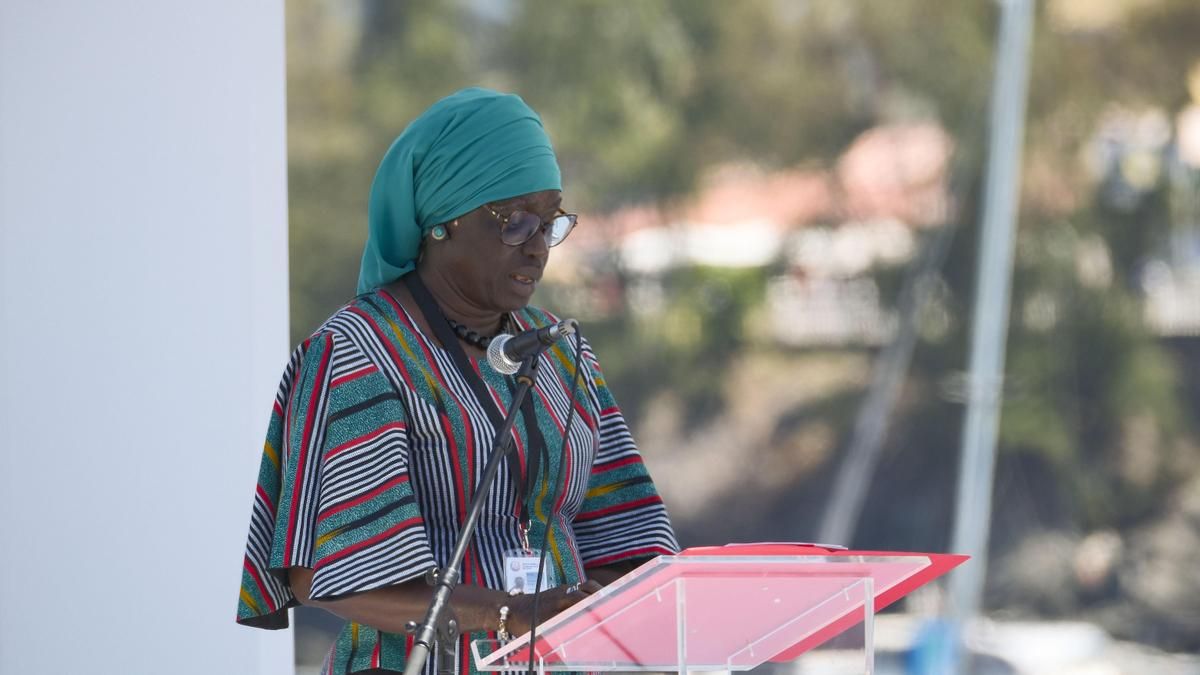
When Pope Leo XIV visited Gran Canaria, the whole country listened to Soda Niasse. On that 11 June, she gave voice to a friend’s story: a Nigerian woman, a victim of trafficking, who could not be there for her own safety. Thanks to Niasse, who devotes part of her life to fighting for the rights of migrants, dozens of officials were able to learn of the violence that the 22-year-old woman suffered during her journey to Spain. Four months after that moving testimony, Niasse needs her voice to be heard once again. This time, she is the one suffering the consequences of border policy.
The Senegalese woman, who works as an educator at a children’s centre in Gran Canaria, has been blocked in Senegal for two months, unable to return to the island where she has lived since 2019 and despite holding legal residency in Spain.
“If this has happened to me, with two Spanish children and living there, imagine what happens to someone who travels in a small boat, or who doesn’t speak the language, or who is a victim of trafficking or of female genital mutilation,” she says in an interview with this newspaper.
A family holiday that turned into an ordeal
On 26 June she travelled with her 13-year-old son and nine-year-old daughter to the country where she was born. They spent a month of holiday there, but when the time came to return, the problems began. Before the trip, the immigration office had approved her legal residency in Spain. Her card was renewed for five years, until May 2031.
“I made an appointment, they took my fingerprints, and they gave me a receipt. It is written that I am administratively legal in Spain,” she asserts. But the receipt was not enough for her to be able to fly to Gran Canaria. Nor could her children travel that day.
“After my children went through, I handed over my Senegalese passport and they asked me for the residency card. I gave them the receipt that the immigration office had given me and they told me no, that they needed an authorisation, but the very same immigration office that would give me that authorisation is the one that gave me the paper saying the physical card is being produced,” Niasse insists.
As her children had to start school within weeks, she tried to ensure that at least they could fly. That was not possible either. The airline replied that minors could not board the plane without an adult and that the company could not offer them an escort service.
Shortly afterwards, Niasse and her husband obtained an authorisation from the Consulate of Senegal in Las Palmas de Gran Canaria for their children to travel with a family friend who was returning to the island.
Two months in Senegal
After the episode at the airport, Soda Niasse sent an email to the Spanish Consulate in Dakar. “I told them I needed an authorisation, a return visa. They replied automatically telling me that the response could take 15 days and that there was no need for me to send new emails on the same subject,” she recounts. A month passed, so Niasse wrote again. “I told them that in August I had to return to my job and I asked them to give me written proof that the visa had taken more than 15 days. They didn’t reply,” she says.
During that time, the woman had to rent a flat in Dakar. Now, after more than two months, she has managed to book an appointment at the Consulate for next week. Meanwhile, the children at the shelter where she works keep asking after her. So do her own biological children, who have gone months without being able to see their mother. The family has had to juggle to manage childcare, since the children’s father works a night shift. Previously, the children stayed with their mother. Now they have to rely on friends and acquaintances so that they are not left alone.
Niasse has turned to the Ombudsman, and the Federation of African Associations of the Canary Islands (FAAC) has been trying to find a solution for her from the outset. “It reassures me to know that I have people helping me. For me, the most important thing is that we don’t lose our humanity,” she concludes.
What’s happening in the Canaries – straight to your phone
News, weather alerts and practical updates – direct from the islands, in English. We live here and know what’s going on – before the international media catch up. Everything lands on our WhatsApp channel – no middlemen, no algorithm. Curated for families, expats and travelers.
PSOE warns Tenerife fire prevention cuts risk lives
Driverless truck crashes into Air Force gate in Las Palmas

Lanzarote housing assembly demands action on evictions
World’s first octopus farm scrapped in Las Palmas
Postal voting opens for Canary Islands election
Cliff clean-up begins at Las Palmas’ El Confital

Canary Islands doctors announce indefinite strike from 16 October

Tenerife court upholds holiday rental ban in block

Tenerife Circuit contracts suspended after court blow