Compiled with the help of artificial intelligence, based on Spanish-language information. Source below the article.
Science, not hypothesis, sheds light on the Telde fish kill
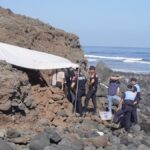
At last, science and evidence, rather than hypothesis, are bringing transparency to what happened off the coast of Telde, where thousands of sea bass belonging to Aquanaria died. Everything points to the emisario 222 outfall and untreated discharges. What is truly regrettable, however, is how attempts were made to point the finger without evidence and to demonise a company that has been operating professionally for more than 30 years, creating employment in the Canary Islands, by holding it responsible for what happened. Biased statements, devoid of proof, in various media outlets triggered a backlash among part of the public and part of the environmental movement against aquaculture.
Aquaculture is essential, but it must comply with the law
One may be for or against aquaculture, but the reality is that it is how fish are produced to feed a large part of the world’s population — provided it rigorously complies with what the law requires, in designated locations and under close supervision. The Canary Islands could develop its food sovereignty in this sector, and to that end the competent authorities must comply fully and be extremely rigorous about untreated discharges into the sea, because we are not only talking about organic matter: heavy metals and chemical elements are also involved, and these can harm people, marine ecosystems and their biodiversity.
The question nobody asked about the emisario 222
It seems nobody asked the big question about the potential chemical pollutants being discharged through the emisario 222. With an industrial estate, a wastewater treatment plant, a port handling fuel discharges and other water infrastructure in the area, the danger is supposed to be an aquaculture company? The whole area was a ticking time bomb which, combined with October’s flat calm, produced the perfect storm: the currents did not carry the untreated discharges out to sea to be diluted by the churn of the tides.
The canary in the coal mine
In the past, miners would take a canary down the mines to detect whether the air was breathable. Using a similar analogy, we could say that Aquanaria’s sea bass played the role of the canary: they died with their gills burned, unable to breathe, and everything points to a chemical discharge.
403 discharge points across the archipelago
Our authorities can no longer hide the problem of discharges across all the islands. According to the latest register compiled by the Government of the Canary Islands, there are 403 land-to-sea discharge points across the archipelago. If we look at their administrative status, of that total only 112 are authorised, 75 are in the process of being authorised and 216 have no authorisation at all.
Discharges have been ongoing since 2017
Returning to the emisario 222, this is not an isolated case: the discharges have been happening since 2017, and responsibility for what is treated and discharged through the outfall lies with Telde Town Council and Aguas de Telde. These are extremely serious matters because we are talking about public health, marine pollution, environmental damage and serious harm to the business activity of a company that everything suggests has been a victim rather than a culprit.
What’s happening in the Canaries – straight to your phone
News, weather alerts and practical updates – direct from the islands, in English. We live here and know what’s going on – before the international media catch up. Everything lands on our WhatsApp channel – no middlemen, no algorithm. Curated for families, expats and travelers.

New Canary Islands foundation takes on climate change
Playa Jardín in Puerto de la Cruz closed over faecal bacteria
Invasive mosquito species detected in Gran Canaria
New planet born from dead star discovered
European Solar Telescope in La Palma wins major EU status
Magnitude 3.2 earthquake shakes southwest Fuerteventura
Tiger mosquito detected in south of Gran Canaria
Quantum telescope network planned for La Palma
Third closure of Playa Jardín beach in Tenerife