Compiled with the help of artificial intelligence, based on Spanish-language information. Source below the article.
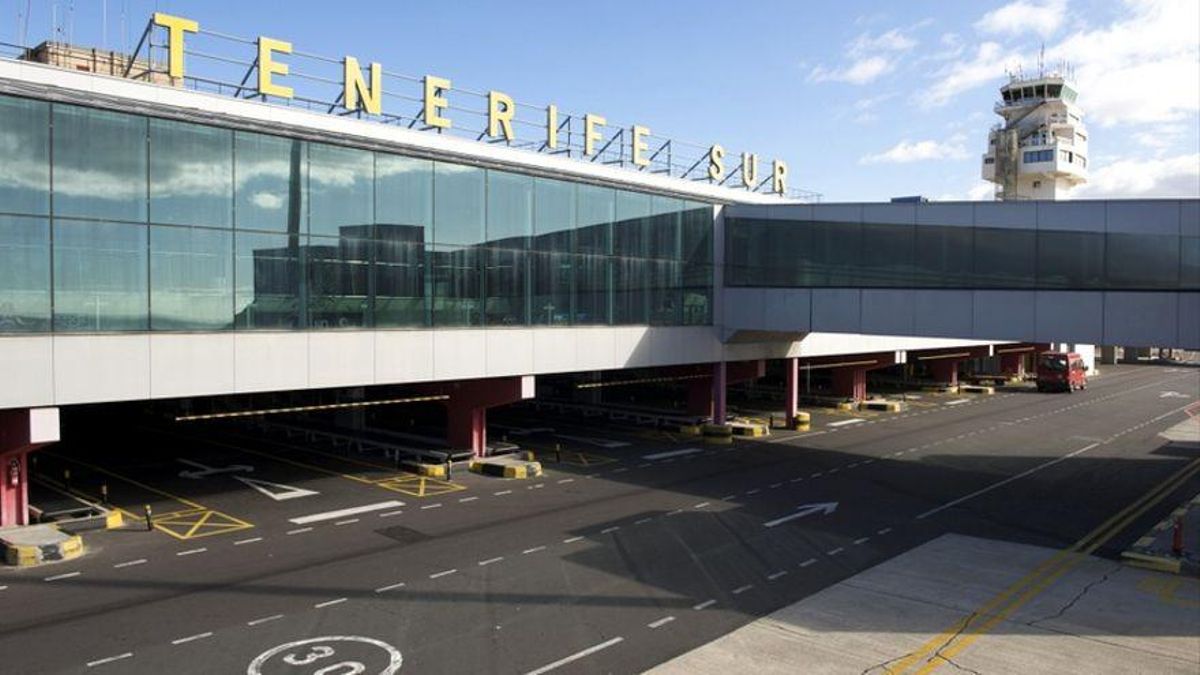
Aena has confirmed that no bids were submitted for the planned remodelling of Tenerife South airport, one of the flagship investments in the DORA III regulatory period, drawing concern from the Canary Islands Government.
Canary Islands Government voices concern
The spokesperson for the Canary Islands Government, Alfonso Cabello, has expressed concern over the tender for the remodelling works at Tenerife South airport being left empty, as confirmed on Monday by the chairman and chief executive of Aena, Maurici Lucena. Speaking at the press conference following the meeting of the Governing Council, Cabello noted that it now falls to the administration responsible for the project to analyse the circumstances that led to this situation.
“It will now be up to whoever is responsible for carrying out the tender to review and analyse the causes that have left it empty,” Cabello said. He argued that, once those causes have been examined, action should be taken to unblock the situation and allow the works to go back out to tender as soon as possible.
Aena plays down the setback
Maurici Lucena confirmed that Aena has not received a single offer for the remodelling of Tenerife South airport, one of the investments envisaged under the DORA III plan. He acknowledged that this is “not good news” but stressed that the company can absorb the setback.
Speaking at an analysts’ conference to present DORA III, which was approved by the Government last week, Lucena explained that while the news is not positive, if Aena’s legal status were different and the State held, for example, 40% of the company instead of 51%, the public would not even be aware that the tender or contract had been left empty.
According to the executive, in any private company it is normal when attempting to contract a major investment (€464 million) not to succeed at the first stage and for things not to go according to plan. “This is exactly what has happened in Tenerife, but the difference is that everything has unfolded in full public view. So, from that perspective, it is not something to be worried about,” he qualified.
Aena’s shareholder structure allows transparency in examining aspects that, in other companies of a similar size, could not be scrutinised, since only the final outcome would become known once the contract had been awarded, rather than at a stage where no award has yet been achieved. “Sometimes this happens, and we will do everything possible to improve the new tender so as to at least maximise the chances of a proper award,” he added.
One of the most complex projects in DORA III
Aena’s executive vice-chairman, Javier Marín, added that the Tenerife South project is probably one of the most complex, if not the most complex, to be carried out under the DORA III framework. Due to the lack of available space at Tenerife South airport, various parts of the terminal must be demolished and a new one built. “It is a task that will take us several years,” he stressed.
In fact, the contract put out to tender envisaged a term of 96 months — in other words, a very long and complex project at a difficult time, given the uncertainty over construction costs. In his view, the reality is that the risk the market has attached to this project is greater than anticipated.
At the same time, Aena has launched other tenders — for example, two in Madrid and one in Tenerife for a new car park — and has perceived interest from the market, he recalled. “In any case, our technicians are evaluating the situation and we will find a solution to meet the requirements,” he said.
Marín added that Aena is confident of being able to attract the best offers from construction companies for the projects envisaged under DORA III. “I believe we have many construction companies for which Spain is their home market, and we are convinced they will be very interested in working with us on the future development of Spanish airports,” he highlighted.
Flexibility within a €10 billion investment plan
The approved investment programme is “genuinely ambitious”, both because of the volume of investment and because it affects most of the main airports, but the regulations offer certain tools of flexibility, since the various investments at the different airports carry different classifications. “There are strategic investments — the most important ones — for which compliance with a schedule is obligatory, and many others that are unclassified, which gives us flexibility to prioritise the project portfolio,” he explained.
“We began this process with uncertainties over prices and over some projects that are still pending definition. We will have to manage the portfolio, but one thing is clear: we are not going to invest beyond what has been approved and provided for in our airport charges,” he stressed.
“In other words, we have €10 billion available and we will have to establish priorities, taking into account the flexibility mechanisms at our disposal. For example, we are obliged to execute 80% of the approved investment for each airport, so we can bring some projects forward or offset delays, and if cost overruns arise compared with the initial planning estimates, we will have to postpone other, less important projects in order to manage the portfolio properly,” he specified.
Works set to run into the 2030s
Last July, Aena announced that the total cost of the remodelling exceeds €550 million, including baggage equipment and handling, which will be put out to tender later. It also indicated that the most significant works at this airport will be carried out in the 2027-2031 five-year period, extending into later regulatory periods (DORA 4, that is, from 2031 to 2036).
The project envisages a complete modernisation of the terminal, the enlargement of the car parks and the integration of the future railway station, configuring a more modern, efficient airport ready to face the challenges of the coming decades.
What’s happening in the Canaries – straight to your phone
News, weather alerts and practical updates – direct from the islands, in English. We live here and know what’s going on – before the international media catch up. Everything lands on our WhatsApp channel – no middlemen, no algorithm. Curated for families, expats and travelers.
Bus lane to Las Teresitas beach returns this weekend
Tenerife approves €5bn sustainable mobility plan
Sumar Canarias rejects €1.8bn airport expansion plan
Canary Islands August arrivals up 0.9% as Spain hits 12.3m
Imserso website crash sparks anger among Canary travel agencies

Binter unveils revamped BinterMás loyalty programme
Canary Islands airports to receive €1.8bn investment
Canary Islands airports to receive €1.8bn investment
Family stranded at Lanzarote airport after flight cancelled