Compiled with the help of artificial intelligence, based on Spanish-language information. Source below the article.
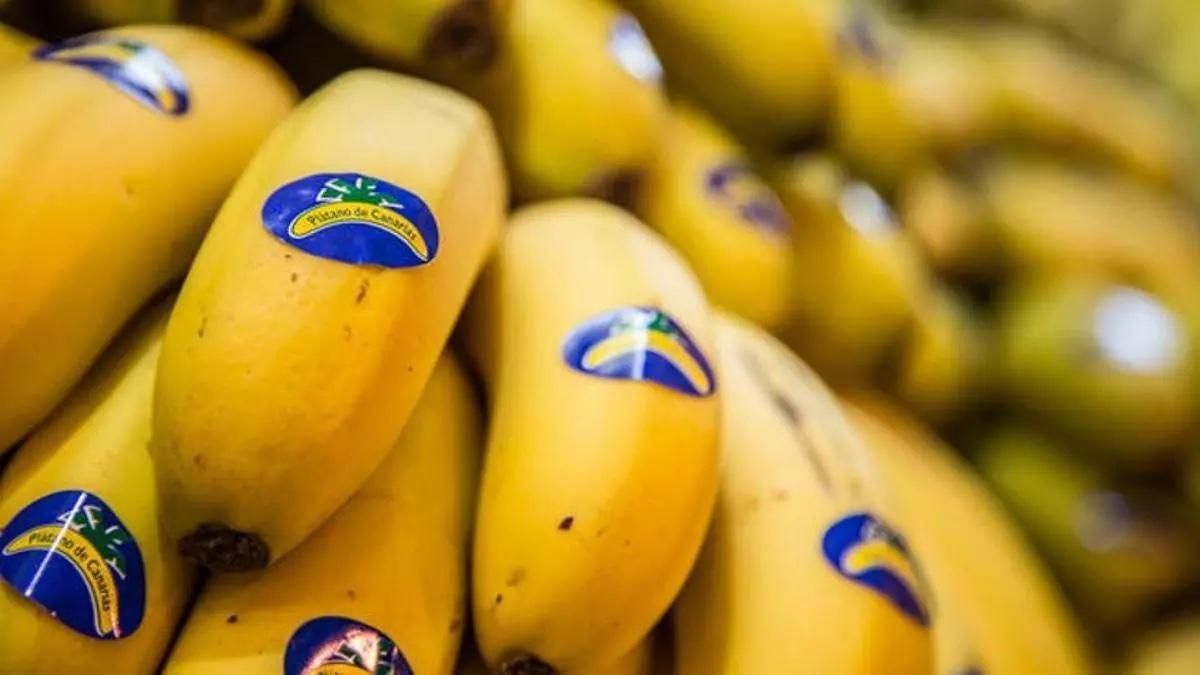
Canary banana growers face their worst prices of 2026
September has so far brought the Canary Islands banana sector anything but the gradual recovery in origin prices that growers had been hoping for — and, despite the very different picture when it comes to retail prices, it has delivered the worst return of the year for farmers on the Spanish mainland. For two weeks now the price paid to producers for top-quality fruit has fallen to its lowest average level of 2026, recorded in week 37 (7 to 13 September), at a threshold of just 0.3214 euros per kilo. Agricultural organisations such as Palca-Unión de Uniones are already talking about losses running into millions of euros.
What growers actually take home
That is the average amount per kilo which the island producer receives for bananas sold wholesale and green in week 37, according to figures published this Thursday by the Ministry of Agriculture, Fisheries and Food (MAPA). In other words, it is the money that actually lands in their account after the costs of commercialisation and other contributions have been deducted. In week 36, the same figure stood at 0.3296 euros. Once that final income is received, the island banana grower still has to cover agricultural production costs, which are currently fixed — pending any further updates — at between 0.80 and 0.90 euros per kilo.
This means that wholesale commercialisation in week 37 once again — as it has done for many weeks now — amounts to selling at a loss: a price that does not even cover production costs, in this case not even when the direct aid from the Posei programme, at 0.32 euros per kilo, is added on top. The result is losses and no profitability whatsoever. The story is repeating itself, and has been doing so for more than two months.
Hopes pinned on a slow recovery in mainland prices
Solutions have not arrived by mid-September, desperation in the fields is growing by the day, and the banana producer organisations (OPPs) and their umbrella body, Asprocan, have so far failed to find the answer. They are, however, clinging to the forecast of a slow but upward response in prices on the Spanish mainland — something that appears to have already happened in week 38, after shelves were cleared of older fruit through price promotions in outlets serving final consumers.
In week 37 of this year, from 7 to 13 September, the origin price — the amount the Canary Islands producer receives for sales during that period, once all costs owed to the commercial operator (packaging and shipping to the mainland market) have been deducted — fell to 0.3214 euros per kilo, the lowest mark of 2026 and even lower than the figure recorded in week 35, the last week of August. At that point the level reached 0.3252 euros per kilo, which had seemed likely to be the lowest value of the year.
Shipping volumes remain high
In week 38 (the current week, 14 to 20 September), the Canary Islands set a shipping mark to the mainland very close to seven million kilos (6.89 million), a level of banana supply that is being maintained, more or less, in the following weeks. For week 39, the week now beginning, the decision taken on shipping volume is 7.17 million kilos.
Possible short-term solutions
For some analysts consulted, the current problem of unremunerative prices affecting local banana growers is linked to an excess supply of fruit on the mainland, where a great deal of Canary Islands banana remains unsold while demand picks up only slowly after the end of the summer. To that problem can perhaps be added the weekly shipping of very high volumes, in the region of seven million kilos, when the figure should perhaps be lower until that external market — effectively the islands’ only market, absorbing more than 90% of Canary Islands bananas — has been completely cleared.
With all the fruit still in the fields, one of the shortcuts suggested by some analysts is to opt for the practice known as pica (destruction of fruit or withdrawal of supply from the market), the fastest formula for achieving that adjustment in supply and clearing previous stock from the end market. This may be one route, but it appears not to be on Asprocan’s list of options. The other formula is the one currently being applied, which sources linked to Asprocan already insist is producing results. It is more closely related to a gradual and somewhat slower recovery in wholesale and green prices, and involves clearing old fruit from the shelves — an action that has now been completed through the setting of purchase offers. Official origin price data in the coming weeks will reveal the impact of these measures, and whether they really do change the direction of prices, as is expected.
What’s happening in the Canaries – straight to your phone
News, weather alerts and practical updates – direct from the islands, in English. We live here and know what’s going on – before the international media catch up. Everything lands on our WhatsApp channel – no middlemen, no algorithm. Curated for families, expats and travelers.

La Palma volcano group demands reconstruction overhaul

La Palma five years on: ‘We lost everything’

Canary Islands hotels demand Imserso overhaul
Gran Canaria must be an island to live in, not just visit

Cueva de la Negra demolition on hold as appeal admitted

Lanzarote hospital pioneers microwave fibroid ablation

Fuerteventura historic home faces demolition on 21 September

Canary Islands opens applications for young renters’ bonus

Canarias has lowest salaries in Spain at 2,016 euros