
Compiled with the help of artificial intelligence, based on Spanish-language information. Source below the article.
The sea that swells in September
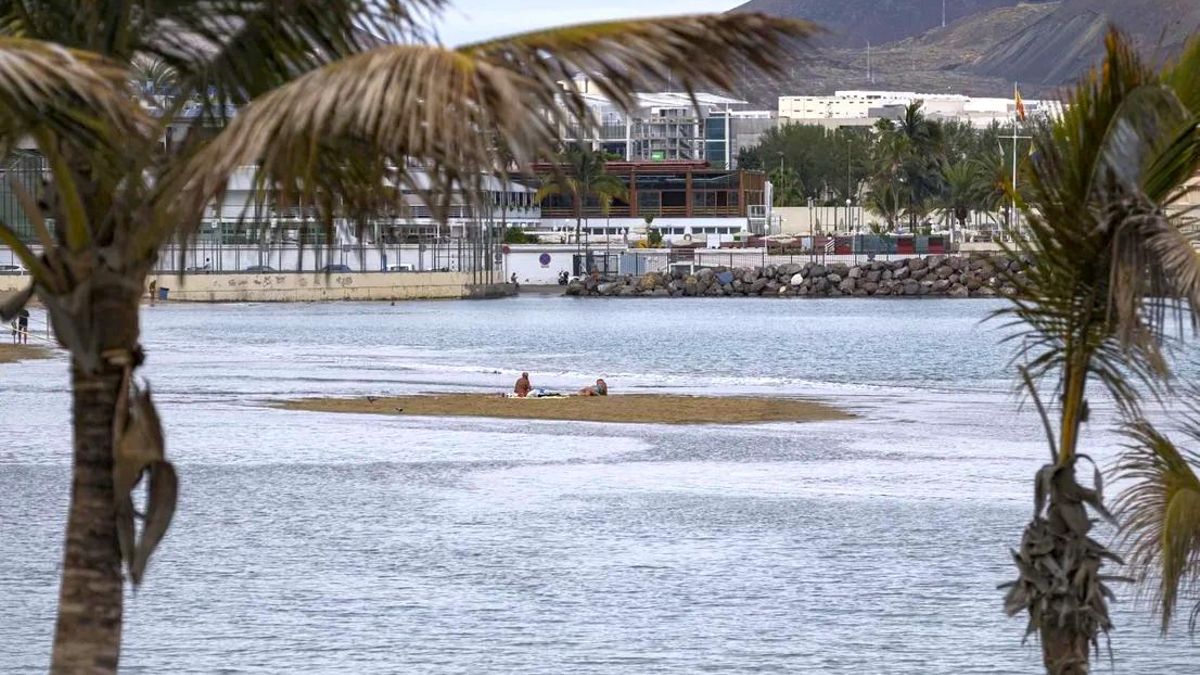
When the tide rises in September, it does so more than usual: the water gains ground and leaves little room for towels and parasols. Conversely, when it falls, it also retreats further than normal, transforming the coastline into an opportunity for sailors and fishermen to gather limpets, sea snails and octopus, which become more accessible among the rocks. This characteristic coastal phenomenon, which occurs in the Canary Islands around this time of year, is known in some islands as the mareas del Pino (tides of the Pine), in homage to the Virgin of the Pine whose feast day is celebrated every 8 September, and as spring tides in others.
Yet beyond religious devotion, this date on the calendar brings with it peculiar tides, the result of the interaction of two natural phenomena: large variations in sea level and a heavy groundswell. Spring tides occur when the gravitational pull of the Moon and the Sun on the Earth combines in such a way that the amplitude between high and low tide increases. In September and early October, they also coincide with the approach of the autumn equinox, which is why they are also known as equinoctial tides.
A natural clock for the changing season
The large waves of the groundswell, known in the Canaries as reboso, which often accompany the mareas del Pino, are closely linked to this change of season. The full moon favours an increase in the amplitude of the tides and, after the calm of summer, can give way to a strong swell that forecasts, almost like a natural clock, the arrival of autumn. It is also around these dates when the trade winds begin to lose strength and the traditional calms or flat spells arrive. From this arises another of the most characteristic signs of the mareas del Pino: their apparent ability to bring the wind to a standstill in the Canary Islands during the following months, just as the sea begins to take centre stage.
Key dates for spring tides in 2026
This year, 2026, the spring tides in the Canary Islands will occur in two main windows, associated with the new moon and full moon of September. The first will run from Friday 4 to Tuesday 8 September, with the peak around Saturday 5 and Sunday 6, when the high tides will be at their highest and the low tides at their lowest. The second window will arrive from Saturday 19 to Wednesday 23 September, with the maximum around Sunday 20 and Monday 21, coinciding with the full moon on 20 September.
These periods will be reflected in the tide tables for Las Palmas de Gran Canaria, Tenerife and Lanzarote, although the phenomenon is not limited to the Canary Islands. Spring tides are part of a natural cycle that, at this time of year, becomes especially visible on all national coastlines and announces that summer is beginning to fade.
Greater risks for swimmers in Gran Canaria
The mareas del Pino do not go unnoticed on the coasts of Gran Canaria. During these episodes, the sea can show a far more energetic face, with a swell of greater size and force that can turn some habitual bathing spots into especially dangerous areas for swimmers. The weakening of the trade winds, together with the possible arrival of low-pressure systems and groundswell, can contribute to creating a more unstable scenario in certain parts of the coastline.
For this reason, a beach that on normal days seems completely calm can present, during the mareas del Pino, stronger currents, more violent breakers and a swell capable of surprising even experienced swimmers. The risk does not depend solely on wave height. Rip currents and rapid changes in sea conditions are among the main dangers for those who enter the water without first assessing the state of the coast. At this time of year, therefore, it is advisable to look at more than just the sky before taking a dip: the state of the sea and the recommendations of the authorities are also part of the forecast.
How to stay safe on the beach
Enjoying the beaches of Gran Canaria during the mareas del Pino requires taking extra precautions. The increase in swell and the appearance of more intense currents make it especially important to consult the maritime conditions before entering the water. Here are some basic recommendations to avoid any scares:
The mareas del Pino are part of the natural dynamics of the Canarian coastline, but they also serve as a reminder that the sea does not always offer the same conditions.
What’s happening in the Canaries – straight to your phone
News, weather alerts and practical updates – direct from the islands, in English. We live here and know what’s going on – before the international media catch up. Everything lands on our WhatsApp channel – no middlemen, no algorithm. Curated for families, expats and travelers.

Canary Islands sea hits second-hottest year on record

Legal bid to halt tree felling in Santa Cruz’s La Salud

Fiesta del Charco: A journey through La Aldea’s past

Corralejo dunes power line set for removal

ULPGC launches 14 research projects at Las Canteras

TMT will never be built, says Canary Islands astrophysics chief

Pedro Duque: Canarias is the “ultimate dream” for rockets

Court blow to Tenerife motor circuit project
La Palma faces new volcanic risk planning deadline
