Historic opportunity for La Palma
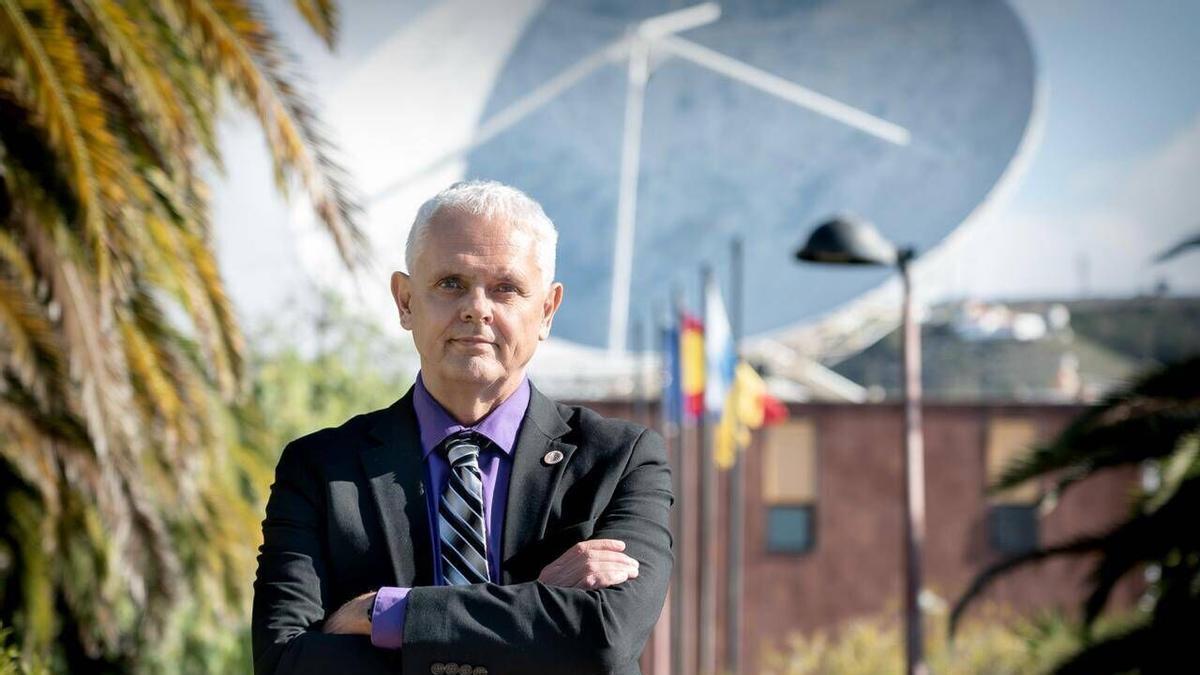
The Canary Islands have never, in nearly ten years, been so close to housing the Thirty Metre Telescope (TMT). “That much I can assure you,” insists Valentín Martínez-Pillet (Alicante, 1964), director of the Instituto de Astrofísica de Canarias (IAC), in a telephone conversation following the joining of forces between Spain and Europe to put together a handsome offer to attract the TMT to La Palma. He knows this from the horse’s mouth, having spent the last year exchanging emails, attending meetings, and travelling the world alongside the Ministry of Science and the CDTI to convince members of the TMT Consortium (Japan, India, the United States, and Canada) that their proposal is solvent, viable, and, ultimately, the best one on the table.
The ball is now firmly in the consortium’s court, with just under six weeks to decide whether or not to commit to building the astronomical giant on the Isla Bonita. Spain has issued an ultimatum: if no decision is reached before 20 September – when the environmental assessment expires – the country will walk away from the project. “The financial offer will lapse,” states Martínez-Pillet bluntly. But, in his view, the consortium is caught between a rock and a hard place: “either they accept the Canary Islands’ offer or they abandon the project altogether.”
A year of relentless groundwork
While it may seem like a sudden development, the team has been working for a year to make this happen. The CDTI, the Ministry, and the IAC have been collaborating closely with the TMT team, as well as with the European Investment Bank and, more recently, the Official Credit Institute, throughout the past year. Rather than merely good news, we are seeing the positive outcome of an enormous national effort to put an offer on the table that consolidates the opportunity to welcome the TMT to La Palma.
Last year, Spain offered 400 million euros through the CDTI. The Consortium’s response was that at Mauna Kea, with the backing of the Trump administration, they had the prospect of a fully funded construction budget for the TMT – a figure reaching 1.6 billion dollars. However, that possibility evaporated when the United States decided to strike the TMT from its budget. At La Palma, the estimated full funding requirement stands at 1 billion euros. The consortium made it clear they needed to see that complete funding package before committing to La Palma – and that is precisely what has now been assembled.
Managing rising costs
Indeed, when the project was originally proposed, the cost was estimated at somewhere between 1.5 and 2 billion. Now it is a billion more expensive. All major projects experience cost overruns at some point. But I would be cautious about using the term ‘overruns’. Are we talking about elements that were overlooked, or inflation caused by the delay? On the other hand, the project has seen cost increases, both when considering Mauna Kea and La Palma. But this is positive, because the project’s budget for La Palma is now extremely well-defined and thoroughly understood.
Shifting political tides in the US
In the 2026 budget, the Trump administration removed the TMT funding proposal. Subsequently, the US Congress, which always has the final say, reinstated it in the budget line, but with zero dollars allocated. This signified that federal money could potentially be secured one day, but certainly not that year. The news was positive for the consortium, yet this year Trump has once again removed the telescope from the 2027 budget. And that is not all. He has also reaffirmed that the only large American telescope will be the Giant Magellan Telescope (GMT). In parallel, the native Hawaiian community has once again mobilised against the project, gathering half a million signatures.
Consequently, in the short to medium term, the only two options are building on La Palma or dissolving the Consortium. Last year, the Spanish Ministry pushed for a swift decision, but no clear deadline was set. It was understood that this is a complex matter and that the details of the financial model – a highly innovative one – needed to be finalised.
A September deadline and a wavering partner
The environmental impact study expires on 20 September. It could be extended, but only if the consortium sends a clear signal of its intention to begin construction on La Palma. If not, the Spanish offer will lapse. Beyond the immense financial effort, a great deal of diplomatic work has been undertaken by the Ministry, the General Secretariat for Research, the CDTI, and the IAC.
The fundamental problem now is that the Canadian community has become disillusioned with the project. It has decided it would prefer to join the European Southern Observatory (ESO) instead. The ESO is on the verge of completing a similar telescope in Chile within three or four years. This could be the final nail in the coffin for the consortium. There is a real risk that the TMT will not be built due to this partner’s fatigue.
So far, the partners have spent a billion dollars. Canada has invested a fifth of that amount, and one of the points being negotiated in its potential exit is the fate of its investment. That is part of the project’s governance, in which we have not intervened. It could happen, of course, but it is complicated. Any replacement member would need to be a country prepared to contribute hundreds of millions to fill Canada’s shoes. I see that as difficult.
I wouldn’t want to jinx it. This wouldn’t be the first major international project to collapse. There are many people, vast sums of money, and numerous interests at stake. Achieving sound governance these days, even in Europe where there is a more established model, is very difficult for any international project. If everything must always be decided by absolute unanimity, things become complicated.
Why Mauna Kea remains a hurdle
Construction attempts were made in 2015 and 2019, and both times were halted by the native Hawaiian community. The question is why they waited so long. There are reasons, undoubtedly. There was a decadal review process in 2023, in which there was clear support for the TMT from the US federal government. The Consortium believed that by following different protocols and changing their approach, they could gain approval at Mauna Kea.
That is so. But it’s not that we were close before and now we’re a little closer; we have never been this close. We have taken gigantic strides. Opportunities in 2017 never materialised to this extent because, while there was a good alternative project, there was no Spanish commitment whatsoever. Now we have provided the entire funding.
The road ahead
These projects are enormously complex, but the Consortium already has a construction plan for La Palma. It would take 10 years to build. If work begins now, in September 2026, first light would be in September 2036. The EIB and the ICO have taken this timeline into account, assessing when the financing could be recouped by selling observation time to ensure the project’s profitability.
I like to be realistic. We have done everything we needed to do, and today the Canary Islands are closer than ever to hosting it. But from this point on, anything could happen, and nothing is certain.
What’s happening in the Canaries – straight to your phone
News, weather alerts and practical updates – direct from the islands, in English. We live here and know what’s going on – before the international media catch up. Everything lands on our WhatsApp channel – no middlemen, no algorithm. Curated for families, expats and travelers.
El Bejeque in Las Canteras adds sea to its fire

Siam Park Gran Canaria must build its own desalination plant
Fuerteventura’s biggest resort to open on 1 November
Gran Canaria to teach tourism history in schools
Canary Islands see 0.3% rise in foreign tourists in August

Row over 368-bed hotel project in La Gomera
Spanish astronaut trains in Lanzarote for Moon mission

Tivoli La Caleta hosts first red tuna Kaitai in Canarias
La Laja natural pools reopen in Las Palmas