
Buck Moon 2026: a nocturnal spectacle in the Canary Islands
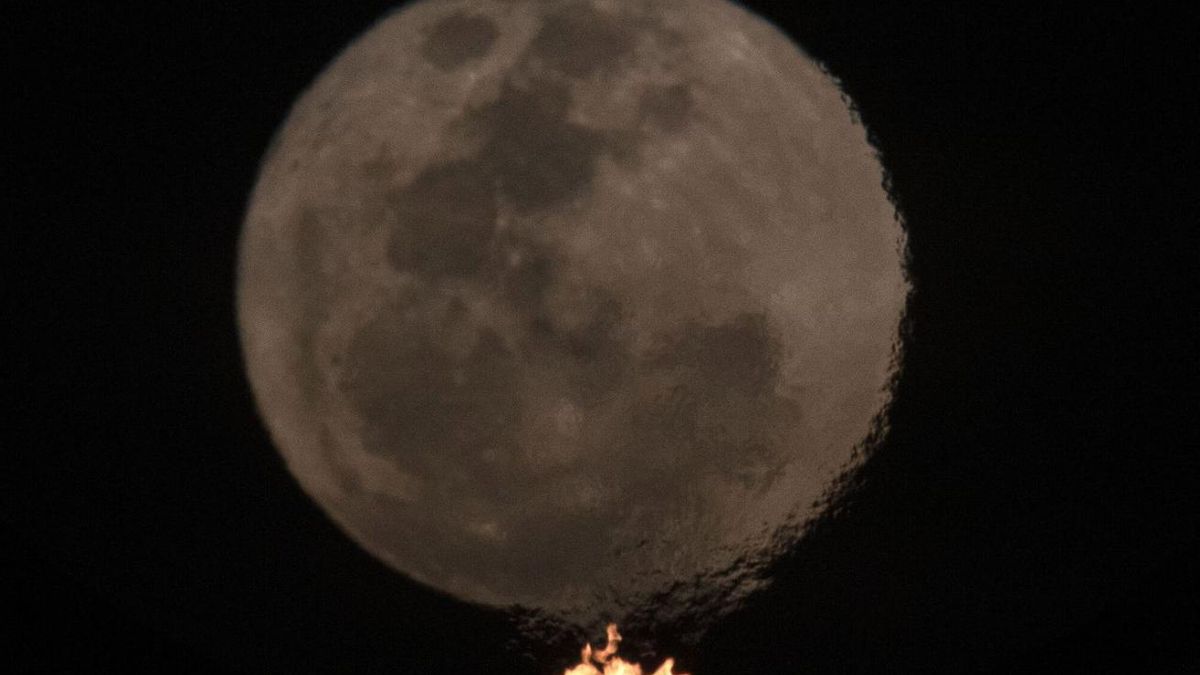
Every year, the Buck Moon marks a special moment in the night sky, and 2026 is no exception. This full moon takes its name from Native American traditions, who observed that during this time of year, male deer begin to grow their new antlers covered in velvet. On the night of 29 July, it will become an astronomical spectacle. Discover the best time to see the Buck Moon 2026 in the Canary Islands and where to view it.
When to see the Buck Moon in the Canary Islands
The Buck Moon will occur this year on Wednesday 29 July 2026. According to astronomical calculations, the exact moment the moon reaches its fullest phase will be at 15:36 (Canary Islands time). Since the moment of fullness occurs during the afternoon, the lunar disc will not be visible in nighttime conditions until several hours later, when it begins to rise above the eastern horizon.
Moonrise will take place around 21:05 (local Canary Time), although this time may vary slightly depending on your location. During the first few minutes, buildings, trees, mountains and other obstacles could make it difficult to spot, but the satellite will gain altitude as the night progresses, becoming increasingly easier to see.
Although technically it will not be a supermoon as in other years (since it does not coincide exactly with the lunar perigee), its proximity will make it appear larger and brighter than usual. The night before, on Wednesday 28 July, the moon will already show 97.44% illumination.
The full moon phenomenon occurs when the Earth is positioned between the Sun and the Moon, allowing the visible face of our satellite to become completely illuminated, marking the midpoint of the 29.5-day lunar cycle.
Best viewpoints for stargazing in the Canary Islands
To observe the Buck Moon in the Canary Islands in the best quality, the Starlight Reserves and viewpoints on the eastern slopes are the top observation spots. Elevated locations such as the Mirador de la Crucita in Tenerife, the Llano del Jable in La Palma, and the viewpoints of Guise and Ayose or the east coast in Fuerteventura and Lanzarote are ideal. You can also try the Mirador del Pico de los Pozos de las Nieves or the Mirador Astronómico de Degollada de las Yeguas in Gran Canaria.
To enjoy this phenomenon in all its splendour, the best advice is to find a place far from light pollution, preferably in open spaces such as fields, beaches or the points mentioned above. Bringing binoculars or a small telescope can enhance the experience, allowing you to appreciate details such as craters or the nuances of the lunar surface.
Beyond the moon: the Earth at aphelion
Beyond our satellite, this month the Earth reaches its greatest distance from the Sun (aphelion). Specifically, on 6 July, this distance was 152,087,828 kilometres.
What’s happening in the Canaries – straight to your phone
News, weather alerts and practical updates – direct from the islands, in English. We live here and know what’s going on – before the international media catch up. Everything lands on our WhatsApp channel – no middlemen, no algorithm. Curated for families, expats and travelers.

Iberdrola plans Tenerife’s biggest battery storage plant

The wild canary that gave its name to the Canary Islands

Canary Islands sea hits second-hottest year on record

Legal bid to halt tree felling in Santa Cruz’s La Salud

Fiesta del Charco: A journey through La Aldea’s past

Corralejo dunes power line set for removal

ULPGC launches 14 research projects at Las Canteras

TMT will never be built, says Canary Islands astrophysics chief

Pedro Duque: Canarias is the “ultimate dream” for rockets
