
Lanzarote is defined by its raw volcanic terrain, strict architectural controls, and year-round mild climate. Located 125 kilometers off the coast of West Africa, the island was reshaped between 1730 and 1736 when continuous eruptions covered one-third of its landmass in basaltic lava and black ash (picón). Unlike other Canary Islands, development here followed a strict vision set by local artist César Manrique: traditional low-rise white buildings with green or blue woodwork, no roadside billboard advertising, and minimal high-rise commercial structures.
The island attracts travelers seeking dramatic volcanic landscapes, quiet beaches, and dependable sunshine. It is ideal for independent drivers, wind-sport enthusiasts, and visitors looking for distinct cultural sites. However, travelers expecting dense green forests, lush tropical greenery, or extensive high-rise nightlife clusters outside Puerto del Carmen will find the landscape dry and stark. As of July 2026, major natural attractions require advance online ticket booking with assigned time slots, making pre-trip planning essential for anyone visiting the island.
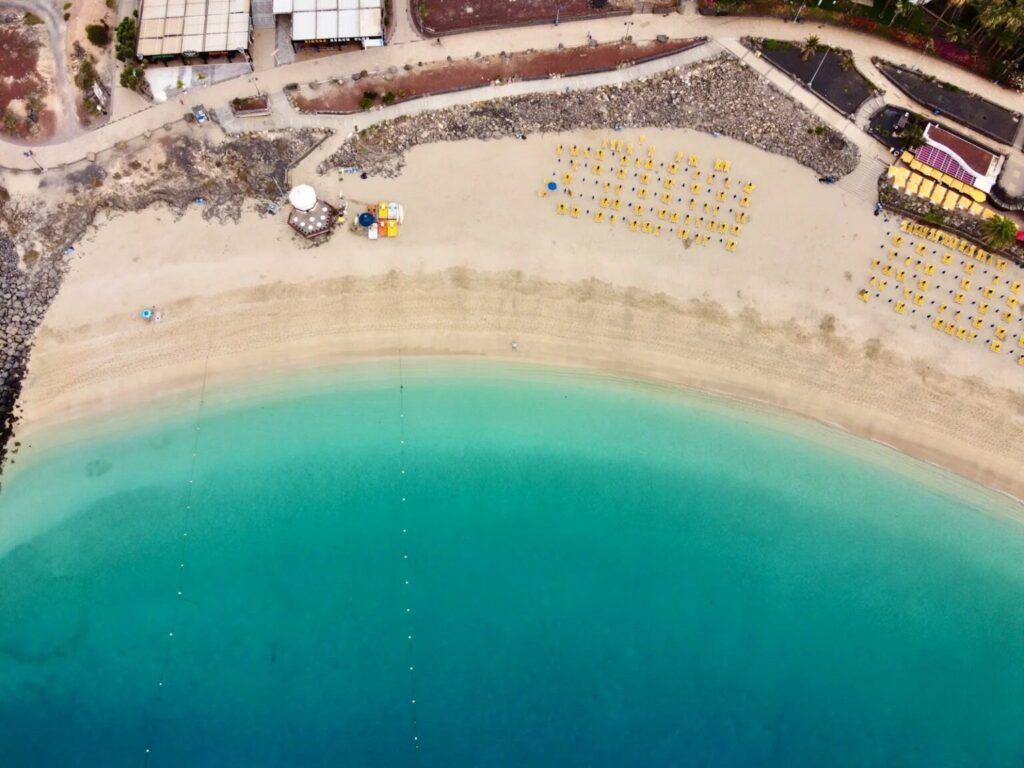
When to visit – Weather and travel seasons
The island operates under a subtropical desert climate with fewer than 200 millimeters of annual rainfall, concentrated almost entirely between November and March. Temperatures remain mild year-round, earned through its position in the Atlantic Ocean.
Summer months (June to August) bring daily highs between 26°C and 29°C and night lows of 18°C to 21°C. Northeast trade winds (Alisios) peak during June and July, moderating the heat so temperatures rarely exceed 30°C in coastal areas. These winds also make summer the busiest period for windsurfing and wing-foiling in eastern resorts.
Autumn (September to October) offers the calmest conditions of the year. Trade winds drop, sea temperatures reach their annual peak at 22°C to 23°C, and daily air temperatures stay between 24°C and 29°C. This period is favored by swimmers and travelers looking to avoid midsummer crowds.
Winter (December to February) sees high temperatures of 20°C to 21°C and overnight lows dropping to 13°C or 14°C. Sea temperatures reach their lowest point at 18°C to 19°C in February and March. While winter brings occasional cloud cover and light showers, it remains a popular escape for Northern European tourists, causing accommodation prices to peak over Christmas and Easter.
Travelers should also note the Calima phenomenon. Occasioned by easterly Saharan winds, this atmospheric event carries dry air and fine dust over the island, pushing temperatures past 35°C and reducing visibility for 2 to 4 days.
Lanzarote weather and microclimates
Weather conditions vary noticeably across the island due to local topography. Detailed monthly figures and forecasts are available in our comprehensive guide to lanzarote weather. The northern Famara cliff ridge stands at 670 meters altitude, catching cloud moisture and generating cooler, overcast skies along the heights. In contrast, the southern coast stays protected behind the Los Ajaches mountains.
Resort microclimates reflect these geographic differences. If you are staying in the south, check our guide to playa blanca weather, where conditions are consistently warmer and less windy. Central and eastern zones experience moderate breeze; examine local predictions for puerto del carmen weather or review wind patterns in our breakdown of costa teguise weather before planning water sports.
Best beaches on the island
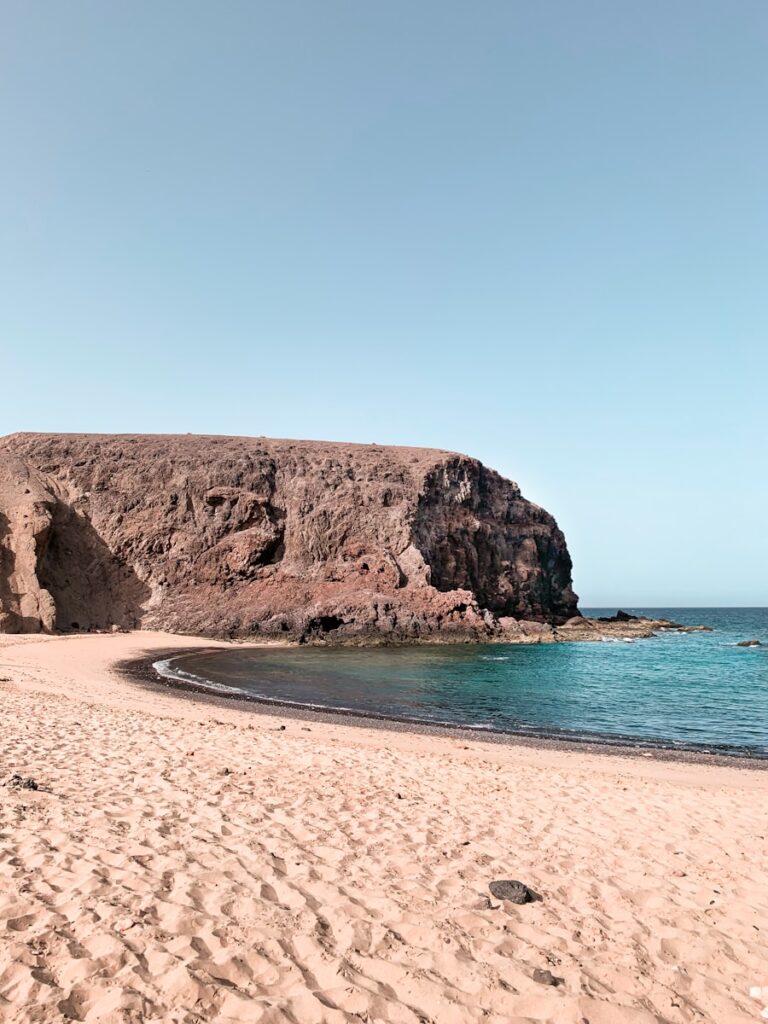
The island features diverse coastal environments, from calm golden coves to wild Atlantic surf zones. For an overview of top coastal spots across the island, consult our ranking of the best beaches in lanzarote.
In the south, the protected bays of papagayo beaches provide clear, calm waters sheltered by volcanic cliffs. Nearby, the resort coastline at playa blanca features family-friendly sandy bays like Playa Flamingo and Playa Dorada.
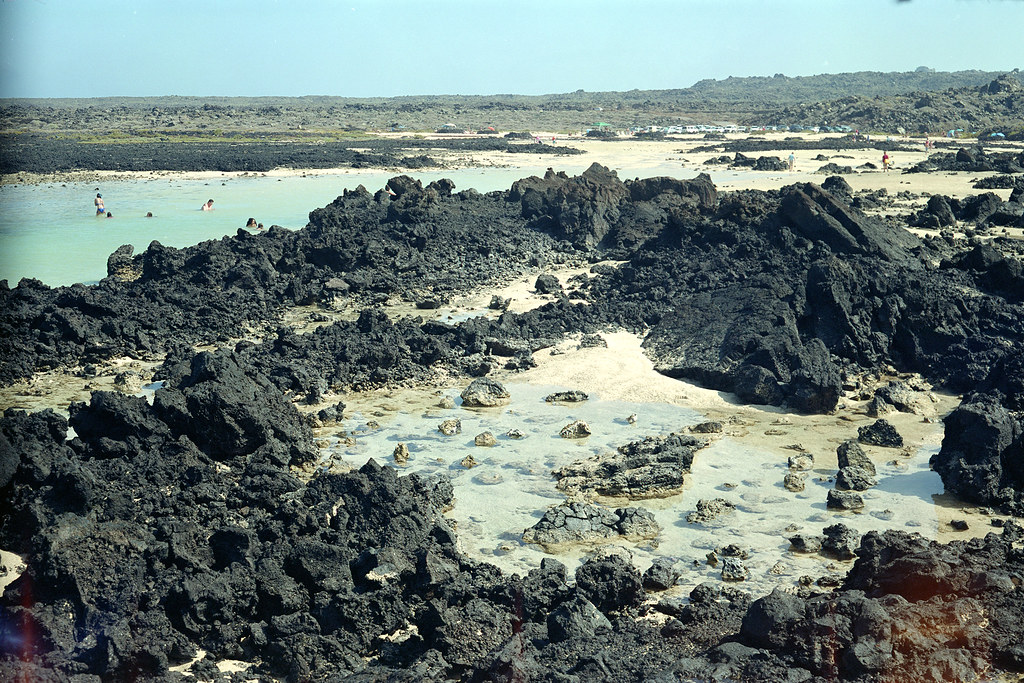
Along the capital’s waterfront in Arrecife, playa del reducto offers a broad urban beach with calm water and full amenities. On the far northern tip near Órzola, caleton blanco features natural white sand tide pools contrasted against dark basalt rocks. For surfers and walkers, the 5-kilometer curve at playa de famara delivers dramatic views against the Famara cliffs alongside heavy ocean swells.
Things to do on the island – Top sites and attractions
Sightseeing on the island centers on volcanic landscapes and architectural projects designed by César Manrique. When planning your itinerary, major cultural and natural attractions offer distinct experiences across different regions.
At Timanfaya National Park, visitors experience the lava fields created during the 1730-1736 eruptions. As of July 2026, tickets must be pre-booked online through the official CACT portal for specific time slots; gate sales at Montañas del Fuego are discontinued. Adult entry costs €30.00, while children aged 7 to 12 pay €15.00. Entry includes a 40-minute coach tour along the 14-kilometer Ruta de los Volcanes. At Islote de Hilario, staff demonstrate subsurface heat reaching 400°C to 600°C at depths of 13 meters by igniting dry brushwood and triggering steam geysers. The onsite El Diablo restaurant uses geothermal heat from a volcanic chimney to grill meat (kitchen open 12:00 to 15:45). Note that combined multi-center ticket passes (Bono CACT) are no longer available; each venue requires an individual ticket.
In the north, Manrique transformed volcanic structures into cultural sites. Jameos del Agua (open daily 10:00 to 18:00; €17.00 adult / €8.50 child) features a subterranean salt lake home to endemic blind albino crabs (Munidopsis polymorpha), an underground auditorium, and a palm-fringed pool. Nearby, Cueva de los Verdes (open 10:00 to 17:00; €17.00 adult / €8.50 child; advance online booking required) offers a 1-kilometer guided walk through a 3,000-year-old lava tube formed by the Corona Volcano, ending at a secret optical illusion chamber. At 475 meters altitude on the Famara cliffs, Mirador del Río (open 10:00 to 17:00; €9.00 adult / €4.50 child) provides panoramic views across the strait to La Graciosa and the Chinijo Archipelago.
Further inland, Villa de Teguise hosts the Canary Islands’ largest street market every Sunday from 09:00 to 14:00, featuring over 400 stalls selling crafts, volcanic lava jewelry, and local cheeses. Special Sunday bus lines (Lines 11, 12, 13, and 14) serve the market, while peripheral car parking costs €2.00 to €3.00. In the La Geria wine region along highway LZ-30, farmers dig 2-meter conical pits (hoyos) into volcanic ash (picón) and construct semi-circular stone walls (zocos) to protect Malvasía Volcánica grapevines from trade winds. Visitors can explore Bodegas El Grifo, founded in 1775 as the oldest winery in the Canaries (museum entry €5.00 to €8.00; tasting tours €9.00 to €15.50), or visit Bodegas Rubicón for free courtyard access.
Getting around the island: Flights, buses, and ferries
Arriving by air brings travelers to César Manrique Airport (ACE), located 5 kilometers southwest of Arrecife. Public transport across the island is operated by IntercityBus using modern, air-conditioned buses (guaguas).
Direct bus connections from the airport terminal include Line 22 to Arrecife (Monday to Friday, ~€1.40) and Line 23 (weekends and public holidays, ~€1.40). Passengers traveling south can board Line 161, which runs daily to Puerto del Carmen (~€1.40) and Playa Blanca (~€3.30). For Costa Teguise, there is no direct airport bus; travelers must take Line 22 or 23 to Arrecife central station (Estación de Guaguas) and transfer to Line 01 or Line 03. Drivers accept contactless card payments and cash, though change cannot be given for bank notes larger than €10.
For inter-island travel, ferries depart from Playa Blanca port in the south to Corralejo in northern Fuerteventura across the 13-kilometer Bocaina Strait. Fred. Olsen Express operates fast catamarans taking 25 to 35 minutes (up to 16 daily sailings). Naviera Armas runs the Volcán de Tindaya car ferry (35 minutes, up to 8 daily sailings), while Líneas Romero provides passenger-only fast ferries (30 minutes, up to 6 daily sailings). One-way foot passenger fares start between €17.00 and €25.00. Foot passengers must check in 30 minutes prior to departure, while vehicles require 60 minutes.
While public buses connect main urban areas, renting a car remains the most practical choice for Lanzarote holidays that involve visiting remote sights like Timanfaya National Park or La Geria, which lack frequent direct bus routes. Local rental agencies CICAR and Cabrera Medina provide all-inclusive contracts with zero deposit and zero insurance excess. Standard rental agreements prohibit driving on unpaved tracks, including the dirt access road to Papagayo.
Island news, updated daily
Our editorial team based on the Canary Islands monitors local developments, service updates, and visitor regulations as they happen. For the latest details on public transport timetables, CACT site booking adjustments, and seasonal weather advisories, check our dedicated section for lanzarote news for daily updates straight from the island.
We also run dedicated resort news pages: Costa Teguise, Playa Blanca.
Playa Blanca is best for quiet beaches, Puerto del Carmen for nightlife, and Costa Teguise for wind-sports. Puerto del Carmen features the busiest nightlife along Avenida de las Playas and large golden beaches. Costa Teguise suits active families and windsurfers due to consistent trade winds at Las Cucharas beach. Playa Blanca offers a tranquil, sheltered microclimate near Papagayo. Book accommodation in Playa Blanca if you prefer minimal wind and calm ocean waters.
Yes, the island is worth visiting for its volcanic landscapes, César Manrique architectural heritage, and year-round mild temperatures. The island offers distinct geological attractions such as the 1730 lava fields at Timanfaya National Park and underground lava tubes at Jameos del Agua. Strict building codes preserve the white-village aesthetic without high-rise clutter. Reserve tickets online well in advance for CACT sites to guarantee entry during peak seasons.
5 to 7 days is the ideal duration to see all major attractions without rushing. A 5-day itinerary allows enough time to explore Timanfaya National Park, the César Manrique sites, La Geria wineries, and key beaches. Adding 2 more days allows for a ferry day-trip to La Graciosa or Fuerteventura. Group northern sites like Jameos del Agua and Mirador del Río into a single day driving route.
Yes, renting a car is strongly recommended if you want to visit volcanic sights like Timanfaya National Park, Mirador del Río, and La Geria wineries. Public buses connect main resort towns efficiently, but rural attractions lack direct high-frequency bus service. Car rentals are affordable and island roads are well-paved and easy to navigate. Rent through local providers like CICAR or Cabrera Medina for full insurance coverage with no excess deposit.
Choose the volcanic island for sightseeing, lava caves, and Manrique architecture, or Fuerteventura for extensive white-sand beaches and windsurfing. The island provides a more compact layout with shorter driving distances between cultural landmarks. Fuerteventura features broader dune systems and expansive coastlines ideal for beach-focused trips. Take the 25-minute Fred. Olsen ferry between Playa Blanca and Corralejo to visit both islands on one trip.
Latest from Lanzarote

Calima pre-alert declared across all Canary Islands

Tuesday: calima and cloud as temperatures dip

Cruise to Canaries cancelled after collision in port

Civil Guard warns of digital skimming threat to online shoppers

Tourism overcrowding and its impact on Canary Islands healthcare

Monday: calima and 34C heat across the Islands

PSOE warns Arrecife plan could ‘bury’ El Cable beach in concrete

Canary Islands weather: Calima, storms and 34°C heat

The wild canary that gave its name to the Canary Islands
