
The standard check-in conundrum
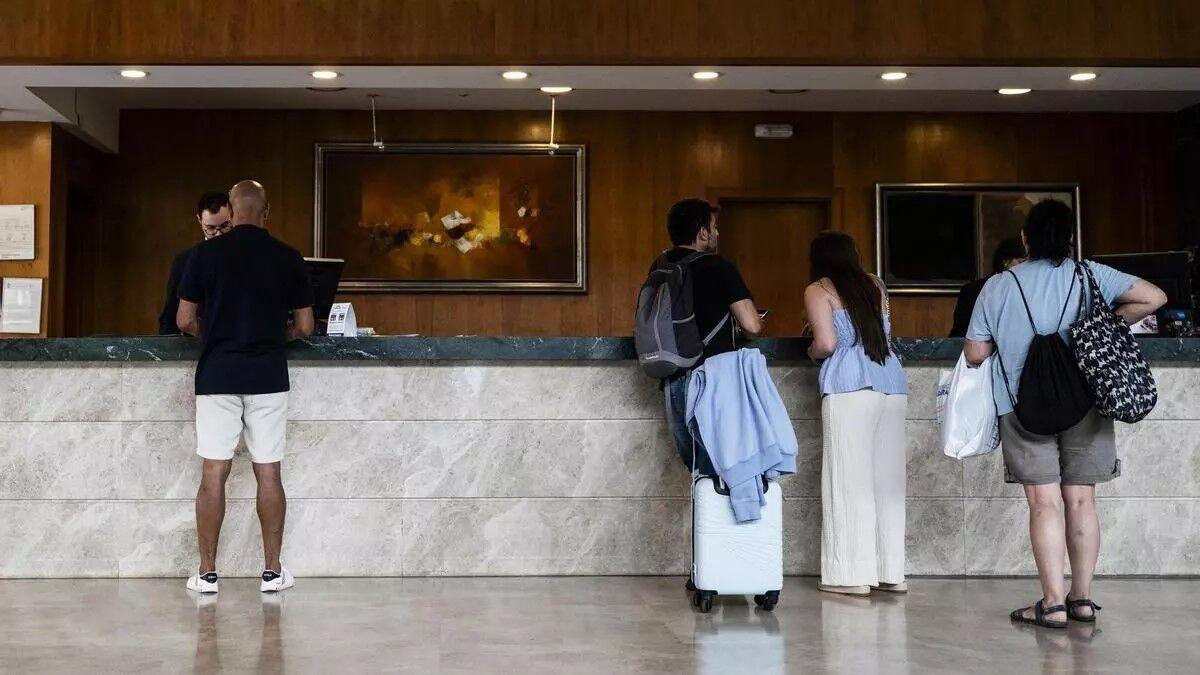
Checking into a hotel room from 3pm and vacating it by midday has become the standard practice across much of the Canary Islands. This increasingly widespread model has led some travellers to feel they are getting less value for money, or to point to the rise of paid extras such as early check-in and late check-out. However, the hotel sector rejects the notion that this trend is a commercial strategy and insists it is driven, first and foremost, by operational necessity.
What the hoteliers say
Jorge Marichal, president of the Spanish Confederation of Hotels and Tourist Accommodation (CEHAT) and of the Hotel and Extra-Hotel Association of Tenerife, La Palma, La Gomera and El Hierro (Ashotel), argues that the gap between check-out and check-in – usually around three hours – is purely operational and the minimum time required to keep hotels running smoothly day-to-day. “It’s an operational matter,” he says bluntly. “We need a window between a room being vacated, cleaned and reoccupied. It’s about balancing the hotel’s internal operations so the cleaning staff have some leeway to prepare the rooms.”
Similarly, José María Mañaricua, president of the Federation of Hospitality and Tourism Employers (FEHT) of Las Palmas, sums up the reality with a characteristically blunt expression: “If you want a dirty room, we can give it to you instantly.” In his view, those three hours are what it takes for housekeeping staff to hand over rooms in a proper condition, making it unviable to reduce that margin across the board.
A challenge unique to the Canary Islands
The situation takes on particular significance in the Canary Islands, one of Spain’s leading tourist destinations, where many hotels maintain high occupancy levels for much of the year. According to Marichal, the higher a hotel’s occupancy, the harder it is to offer flexibility on check-in and check-out times. “Hotels with a very high occupancy rate always find it more difficult,” he says.
Compounding this is a characteristic unique to the Canary Islands as a destination: the dominance of tour operators. “In the Canaries, we work with tour operators most of the time, and almost all clients tend to arrive on the same plane or on several planes landing at the same time,” Marichal explains. This concentration of arrivals means a large number of rooms must be ready virtually simultaneously. Mañaricua agrees that occupancy is the deciding factor. “If I have 100 rooms free, I can offer that option, but if the hotel is 100 per cent full, it’s physically impossible,” he argues. He adds that rooms are released to guests as soon as housekeeping finishes them. “We hand them over as we clean them,” he says.
Paid extras and loyalty perks
In recent years, some hotels have started offering early access to rooms or the option to extend a stay by a few hours for an additional fee. However, both sector representatives downplay the importance of such services as a revenue stream. Marichal acknowledges that some hotels offer this possibility, but insists it responds to very specific circumstances rather than a widespread strategy to boost income. “Generally, those hotels hold a few rooms back specifically for this kind of thing,” he explains. Keeping part of the inventory available allows them to coordinate with the cleaning staff and facilitate early entry when occupancy permits.
Along the same lines, Mañaricua says this option is mostly limited to “large international chains” or hotels with greater capacity to reorganise their operations. “In 90 per cent of hotels, that’s not the case. It’s the big companies that offer these kinds of services,” he notes. It is mainly the major hotel chains that offer perks such as early room access or late check-out through their loyalty programmes. These benefits, designed to reward regular guests, sometimes allow them to get the first available room or extend their stay at no extra cost. “Loyalty programmes usually include these kinds of advantages, whether it’s early room access or getting the first room available,” explains the president of Ashotel, drawing a comparison with airline frequent-flyer schemes. However, he clarifies that these perks are always subject to availability and depend on the hotel’s daily operations.
What’s happening in the Canaries – straight to your phone
News, weather alerts and practical updates – direct from the islands, in English. We live here and know what’s going on – before the international media catch up. Everything lands on our WhatsApp channel – no middlemen, no algorithm. Curated for families, expats and travelers.

Vivanta shuts all dental clinics including six in Tenerife

Civil Guard warns of digital skimming threat to online shoppers

Tenerife shifts FDCAN funds from roads to housing

PSOE warns Arrecife plan could ‘bury’ El Cable beach in concrete

Canary Islands faces loss of 20% of self-employed workers

Canary Islands to get 26 new substations by 2030

Canary Islands poverty rates stuck since pandemic

Court backs eviction over verbal room rental in Arona

Canary Islands pushes for 10-year residency rule for foreign buyers
