
Marine expert warns of pollution crisis
The director of the ECOAQUA university institute, Ricardo Haroun, has warned of the serious consequences of wastewater and brine discharges on marine flora and fauna across the Canary Islands. In his view, the loss of coastal water quality in the archipelago not only affects biodiversity and the benefits generated by marine habitats, but could also have implications for the health of bathers — both locals and the many tourists who use the coastline. He considers it urgent to put this issue on the political agenda.
Calls for urgent management reform
Haroun has urged the relevant authorities to press ahead, as a matter of urgency, with more effective and sustained management models. The issue was highlighted at the First Regional Meeting of the Scientific Councils of the Canary Islands Biosphere Reserves, held recently in Puerto del Rosario (Fuerteventura), under the auspices of the Canary Islands Network of Biosphere Reserves (RCRB) of the regional government. One of the most prominent topics was the widespread concern over the loss of biodiversity, particularly in the marine environment.
At that meeting, which involved an exchange of experiences at different levels of management, representatives from the Scientific Councils of all seven Canary Islands Biosphere Reserves — together with technical staff from those reserves and officials from the regional and island governments — shared reflections, experiences and proposals on the main challenges facing the reserves in the current regional context.
Wastewater and brine: a growing problem
Among the issues discussed were those linked to the ineffective management of wastewater, exacerbated by the continuing increase in brine discharges from various types of desalination plants. For the director of ECOAQUA, the treatment of wastewater and, in parallel, brine, is a cross-cutting issue that needs to be placed squarely in the public spotlight. This is necessary, he said, to secure a commitment from managers and politicians to tackle the problem diligently, sooner rather than later.
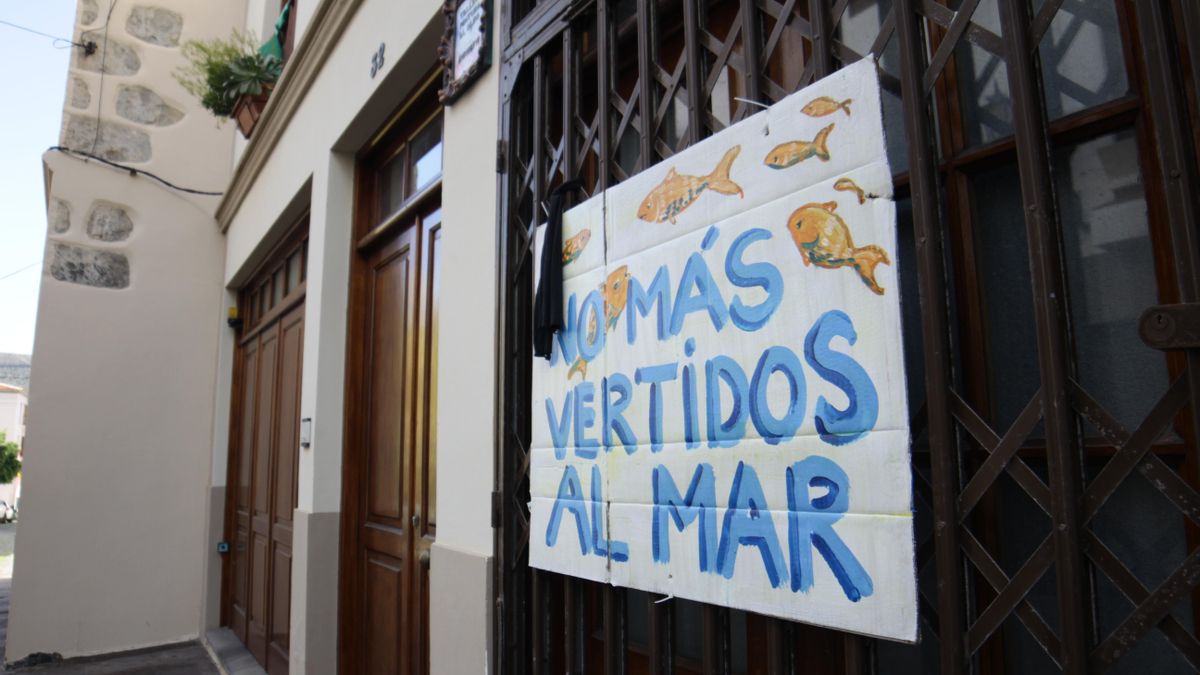
“Increasingly,” he said, “and without any effective control or mitigation mechanisms in place, we are seeing discharges of wastewater — and sometimes industrial water too — that has not been properly treated. At the same time, we are also witnessing a rise in brine discharges from desalination plants, which are generating ever larger volumes along the Canary Islands coastline. All these discharges, some legal and some illegal, are causing serious environmental impacts, with a loss of biodiversity and of emblematic habitats such as seagrass meadows.”
Seagrass meadows at risk
Haroun states that a significant proportion of the archipelago’s historic seagrass meadows have disappeared in recent decades as a result of the impacts caused by wastewater discharges and, more recently, by the increase in brine discharges from coastal desalination plants. “These seagrass meadows,” he said, “like other benthic vegetation habitats, are nursery and refuge areas for many marine species, some of which are of commercial interest to artisanal fisheries.”
Technical solutions and funding exist
In this context, he said it is becoming urgent for the relevant Canary Islands authorities to develop proposals and contribute to the design of measures that will reduce environmental impacts, moving towards more sustainable and resilient environmental management models. To improve the current situation in the management of wastewater and brine discharges, the researcher asserts that there are appropriate and innovative technical solutions available which could, at the same time, help generate blue economy jobs within the islands themselves. Furthermore, funding exists — from both European programmes and private capital — that would make it possible to carry out the technological transformations needed to mitigate or even eliminate discharges into the sea entirely.
What’s happening in the Canaries – straight to your phone
News, weather alerts and practical updates – direct from the islands, in English. We live here and know what’s going on – before the international media catch up. Everything lands on our WhatsApp channel – no middlemen, no algorithm. Curated for families, expats and travelers.

Canary Islands sea hits second-hottest year on record

Legal bid to halt tree felling in Santa Cruz’s La Salud

Fiesta del Charco: A journey through La Aldea’s past

Corralejo dunes power line set for removal

ULPGC launches 14 research projects at Las Canteras

TMT will never be built, says Canary Islands astrophysics chief

Pedro Duque: Canarias is the “ultimate dream” for rockets

Court blow to Tenerife motor circuit project
La Palma faces new volcanic risk planning deadline
