
Nature’s little marvel: a dragon straight out of a comic book
Nature never ceases to amaze us, and sometimes it places strange creatures right before our eyes that look like they have stepped out of a comic book. Some of them, given their very names, could even be mistaken for mythological beings. But one thing is certain: a trip to the beach or the mountains can bring more than a few surprises. That is exactly what happened to content creator @santi_skss, a Canarian adventurer who came across some peculiar “little critters”, as he calls them, during a day at the beach – and he did not hesitate to share them with his online community.
‘Like a Pokémon, but do not be fooled’
“I had been wanting to see this animal in person for ages, and I finally found it on the beach. They are among the most beautiful creatures you will ever see in the sea, but do not let appearances fool you even if they look like a Pokémon…” he explained on his social media, alongside a video showing several specimens he had found on the shore.
So what species is it?
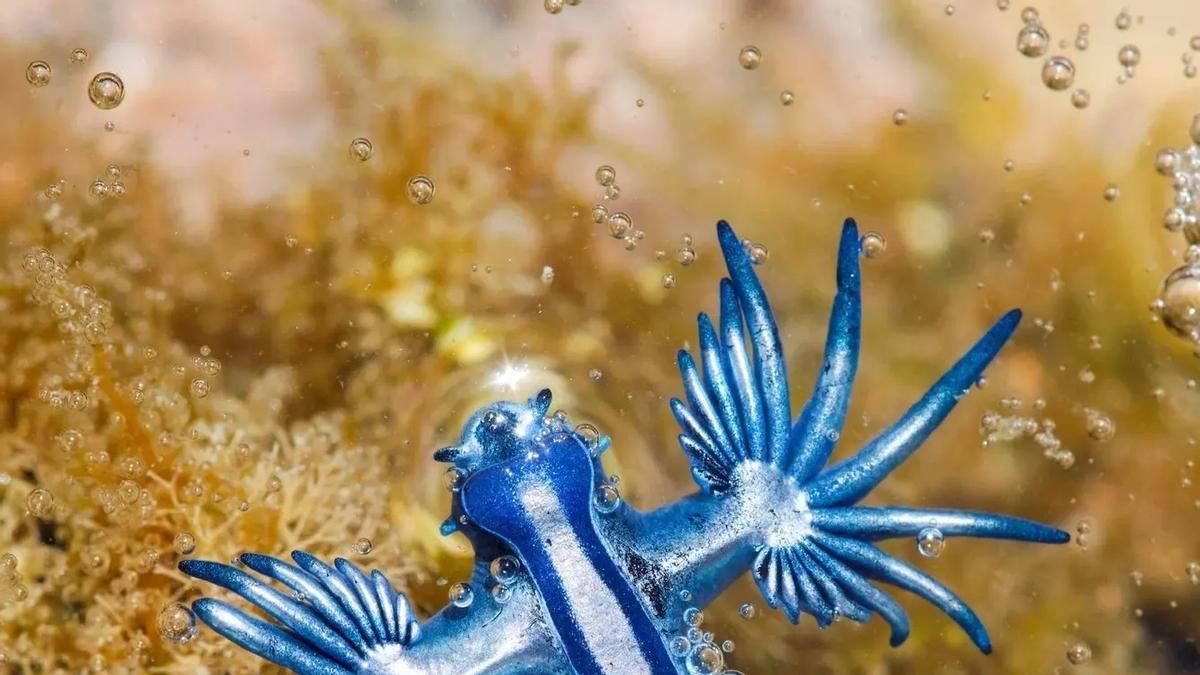
None other than the blue dragon, or Glaucus atlanticus. These are small molluscs, also known as the Atlantic sea slug, which earn their name from their dragon-like appearance. The species is unmistakable thanks to its striking blue and silver colouring. But do not let its beauty lure you in too closely, because it is venomous and can cause skin irritation.
Small but dangerous
As mentioned, this mollusc is tiny, reaching only up to four centimetres in length. Its colouring – dark blue on the back, with silver feet and an even deeper blue running along its body – allows it to camouflage beneath the sea and go unnoticed by potential predators. It has six wing-like side extensions where it concentrates its venom. Interestingly, however, the venom is not produced by the slug itself; it accumulates it from the creatures it eats – though it remains just as dangerous to humans upon contact.
A taste for the Portuguese man o’ war
In fact, one of its favourite foods is the Portuguese man o’ war (Physalia physalis), a hydrozoan resembling a jellyfish whose venomous tentacles cause painful stings in people and can lead to serious health effects, including breathing problems and intense pain. If you touch a blue dragon, the symptoms can be very similar to those of a Portuguese man o’ war sting.
An upside-down drifter
This animal is usually found on the seabed, although it spends much of its life floating on the surface, letting itself be carried along by the current. To stay afloat, it ingests air bubbles and stores them in its body. One of the most curious facts about this species is that it floats upside down – and this is precisely because of the gas bubble it holds in its stomach.
What’s happening in the Canaries – straight to your phone
News, weather alerts and practical updates – direct from the islands, in English. We live here and know what’s going on – before the international media catch up. Everything lands on our WhatsApp channel – no middlemen, no algorithm. Curated for families, expats and travelers.

Canary Islands sea hits second-hottest year on record

Legal bid to halt tree felling in Santa Cruz’s La Salud

Fiesta del Charco: A journey through La Aldea’s past

Corralejo dunes power line set for removal

ULPGC launches 14 research projects at Las Canteras

TMT will never be built, says Canary Islands astrophysics chief

Pedro Duque: Canarias is the “ultimate dream” for rockets

Court blow to Tenerife motor circuit project
La Palma faces new volcanic risk planning deadline
