
A new centre on the horizon
For some, this National Vulcanology Centre (CNV) would fulfil the archipelago’s long-standing demand, although the Minister for Science, Diana Morant, has always focused its creation from a different perspective: to bring together all the organisations and research groups working in volcanology in the Canary Islands. The state’s purpose was to harness the knowledge acquired in the archipelago over decades to create a world-class centre of excellence in volcanism with international reach.
The debate – and what must be resolved in the coming months – is whether this centre should integrate the IGN in its entirety. That is, not just its research, but also its powers and responsibilities.

Canary Islands sea hits second-hottest year on record

Legal bid to halt tree felling in Santa Cruz’s La Salud

Fiesta del Charco: A journey through La Aldea’s past

Corralejo dunes power line set for removal

ULPGC launches 14 research projects at Las Canteras

TMT will never be built, says Canary Islands astrophysics chief

Pedro Duque: Canarias is the “ultimate dream” for rockets

Court blow to Tenerife motor circuit project
La Palma faces new volcanic risk planning deadline

Fuerteventura launches campaign to rescue young shearwaters
Although the state service has always been intended to operate from and for the Canary Islands – as it is the only volcanically active region – the decision taken by the state did not sit well with the archipelago. The move sparked opposition, particularly in Tenerife, which at the same time was trying to consolidate the scientific seed that would later become the Canary Islands Volcanological Institute (Involcan). This was, specifically, the volcanology group at the Institute of Technology and Renewable Energies (ITER), which had extensive experience and had been working to reduce volcanic risk in the Canary Islands since 1997. Involcan was finally established on 29 June 2010 as an entity associated with ITER, promoted by the Tenerife island council.
The transfer of powers scuppered plans to create a volcanology centre in the Canary Islands as had been unanimously requested on 2 November 2005 in the Senate, on 11 January 2006 in the Canary Islands Parliament, and on 2 December 2009 in the Congress of Deputies. All of these statements called for the creation of a body aimed at improving the management of volcanic risk in Spain.
A new centre on the horizon
For some, this National Vulcanology Centre (CNV) would fulfil the archipelago’s long-standing demand, although the Minister for Science, Diana Morant, has always focused its creation from a different perspective: to bring together all the organisations and research groups working in volcanology in the Canary Islands. The state’s purpose was to harness the knowledge acquired in the archipelago over decades to create a world-class centre of excellence in volcanism with international reach.
The debate – and what must be resolved in the coming months – is whether this centre should integrate the IGN in its entirety. That is, not just its research, but also its powers and responsibilities.
The battle for control
Although the state service has always been intended to operate from and for the Canary Islands – as it is the only volcanically active region – the decision taken by the state did not sit well with the archipelago. The move sparked opposition, particularly in Tenerife, which at the same time was trying to consolidate the scientific seed that would later become the Canary Islands Volcanological Institute (Involcan). This was, specifically, the volcanology group at the Institute of Technology and Renewable Energies (ITER), which had extensive experience and had been working to reduce volcanic risk in the Canary Islands since 1997. Involcan was finally established on 29 June 2010 as an entity associated with ITER, promoted by the Tenerife island council.
The transfer of powers scuppered plans to create a volcanology centre in the Canary Islands as had been unanimously requested on 2 November 2005 in the Senate, on 11 January 2006 in the Canary Islands Parliament, and on 2 December 2009 in the Congress of Deputies. All of these statements called for the creation of a body aimed at improving the management of volcanic risk in Spain.
A new centre on the horizon
For some, this National Vulcanology Centre (CNV) would fulfil the archipelago’s long-standing demand, although the Minister for Science, Diana Morant, has always focused its creation from a different perspective: to bring together all the organisations and research groups working in volcanology in the Canary Islands. The state’s purpose was to harness the knowledge acquired in the archipelago over decades to create a world-class centre of excellence in volcanism with international reach.
The debate – and what must be resolved in the coming months – is whether this centre should integrate the IGN in its entirety. That is, not just its research, but also its powers and responsibilities.
The other two most closely watched islands are La Palma and El Hierro, having been the last two to experience eruptions. On La Palma, the IGN has deployed 12 seismic and borehole stations, 6 sampling points and 1 geochemical station; 8 GNSS antennas, 3 tiltmeters and 2 visual cameras. On El Hierro, there are 11 seismic stations, 4 sampling points and 3 geochemical stations; 6 GNSS antennas and 2 tiltmeters.
The battle for control
Although the state service has always been intended to operate from and for the Canary Islands – as it is the only volcanically active region – the decision taken by the state did not sit well with the archipelago. The move sparked opposition, particularly in Tenerife, which at the same time was trying to consolidate the scientific seed that would later become the Canary Islands Volcanological Institute (Involcan). This was, specifically, the volcanology group at the Institute of Technology and Renewable Energies (ITER), which had extensive experience and had been working to reduce volcanic risk in the Canary Islands since 1997. Involcan was finally established on 29 June 2010 as an entity associated with ITER, promoted by the Tenerife island council.
The transfer of powers scuppered plans to create a volcanology centre in the Canary Islands as had been unanimously requested on 2 November 2005 in the Senate, on 11 January 2006 in the Canary Islands Parliament, and on 2 December 2009 in the Congress of Deputies. All of these statements called for the creation of a body aimed at improving the management of volcanic risk in Spain.
A new centre on the horizon
For some, this National Vulcanology Centre (CNV) would fulfil the archipelago’s long-standing demand, although the Minister for Science, Diana Morant, has always focused its creation from a different perspective: to bring together all the organisations and research groups working in volcanology in the Canary Islands. The state’s purpose was to harness the knowledge acquired in the archipelago over decades to create a world-class centre of excellence in volcanism with international reach.
The debate – and what must be resolved in the coming months – is whether this centre should integrate the IGN in its entirety. That is, not just its research, but also its powers and responsibilities.
Today, on Tenerife alone, the IGN has deployed at least 26 seismic stations, 19 GNSS antennas (a satellite positioning system that includes GPS), 4 visual and thermal cameras, 4 continuous geochemical measurement stations, and 7 tiltmeters, three of which are underground to provide more accurate readings as surface measurements are affected by temperature variations. This is supplemented by 20 geochemical sampling points in underground water galleries, which are visited every two months.
The other two most closely watched islands are La Palma and El Hierro, having been the last two to experience eruptions. On La Palma, the IGN has deployed 12 seismic and borehole stations, 6 sampling points and 1 geochemical station; 8 GNSS antennas, 3 tiltmeters and 2 visual cameras. On El Hierro, there are 11 seismic stations, 4 sampling points and 3 geochemical stations; 6 GNSS antennas and 2 tiltmeters.
The battle for control
Although the state service has always been intended to operate from and for the Canary Islands – as it is the only volcanically active region – the decision taken by the state did not sit well with the archipelago. The move sparked opposition, particularly in Tenerife, which at the same time was trying to consolidate the scientific seed that would later become the Canary Islands Volcanological Institute (Involcan). This was, specifically, the volcanology group at the Institute of Technology and Renewable Energies (ITER), which had extensive experience and had been working to reduce volcanic risk in the Canary Islands since 1997. Involcan was finally established on 29 June 2010 as an entity associated with ITER, promoted by the Tenerife island council.
The transfer of powers scuppered plans to create a volcanology centre in the Canary Islands as had been unanimously requested on 2 November 2005 in the Senate, on 11 January 2006 in the Canary Islands Parliament, and on 2 December 2009 in the Congress of Deputies. All of these statements called for the creation of a body aimed at improving the management of volcanic risk in Spain.
A new centre on the horizon
For some, this National Vulcanology Centre (CNV) would fulfil the archipelago’s long-standing demand, although the Minister for Science, Diana Morant, has always focused its creation from a different perspective: to bring together all the organisations and research groups working in volcanology in the Canary Islands. The state’s purpose was to harness the knowledge acquired in the archipelago over decades to create a world-class centre of excellence in volcanism with international reach.
The debate – and what must be resolved in the coming months – is whether this centre should integrate the IGN in its entirety. That is, not just its research, but also its powers and responsibilities.
From that point on, the IGN was forced to expand its range of services to detect the other two indicators of a potential eruption: ground deformation and gas emissions. Gradually, over the last 22 years, the IGN has refined its detection and monitoring network, installing more than 100 stations across the Canary Islands for seismic monitoring, ground deformation and gas detection.
Today, on Tenerife alone, the IGN has deployed at least 26 seismic stations, 19 GNSS antennas (a satellite positioning system that includes GPS), 4 visual and thermal cameras, 4 continuous geochemical measurement stations, and 7 tiltmeters, three of which are underground to provide more accurate readings as surface measurements are affected by temperature variations. This is supplemented by 20 geochemical sampling points in underground water galleries, which are visited every two months.
The other two most closely watched islands are La Palma and El Hierro, having been the last two to experience eruptions. On La Palma, the IGN has deployed 12 seismic and borehole stations, 6 sampling points and 1 geochemical station; 8 GNSS antennas, 3 tiltmeters and 2 visual cameras. On El Hierro, there are 11 seismic stations, 4 sampling points and 3 geochemical stations; 6 GNSS antennas and 2 tiltmeters.
The battle for control
Although the state service has always been intended to operate from and for the Canary Islands – as it is the only volcanically active region – the decision taken by the state did not sit well with the archipelago. The move sparked opposition, particularly in Tenerife, which at the same time was trying to consolidate the scientific seed that would later become the Canary Islands Volcanological Institute (Involcan). This was, specifically, the volcanology group at the Institute of Technology and Renewable Energies (ITER), which had extensive experience and had been working to reduce volcanic risk in the Canary Islands since 1997. Involcan was finally established on 29 June 2010 as an entity associated with ITER, promoted by the Tenerife island council.
The transfer of powers scuppered plans to create a volcanology centre in the Canary Islands as had been unanimously requested on 2 November 2005 in the Senate, on 11 January 2006 in the Canary Islands Parliament, and on 2 December 2009 in the Congress of Deputies. All of these statements called for the creation of a body aimed at improving the management of volcanic risk in Spain.
A new centre on the horizon
For some, this National Vulcanology Centre (CNV) would fulfil the archipelago’s long-standing demand, although the Minister for Science, Diana Morant, has always focused its creation from a different perspective: to bring together all the organisations and research groups working in volcanology in the Canary Islands. The state’s purpose was to harness the knowledge acquired in the archipelago over decades to create a world-class centre of excellence in volcanism with international reach.
The debate – and what must be resolved in the coming months – is whether this centre should integrate the IGN in its entirety. That is, not just its research, but also its powers and responsibilities.
From that point on, the IGN was forced to expand its range of services to detect the other two indicators of a potential eruption: ground deformation and gas emissions. Gradually, over the last 22 years, the IGN has refined its detection and monitoring network, installing more than 100 stations across the Canary Islands for seismic monitoring, ground deformation and gas detection.
Today, on Tenerife alone, the IGN has deployed at least 26 seismic stations, 19 GNSS antennas (a satellite positioning system that includes GPS), 4 visual and thermal cameras, 4 continuous geochemical measurement stations, and 7 tiltmeters, three of which are underground to provide more accurate readings as surface measurements are affected by temperature variations. This is supplemented by 20 geochemical sampling points in underground water galleries, which are visited every two months.
The other two most closely watched islands are La Palma and El Hierro, having been the last two to experience eruptions. On La Palma, the IGN has deployed 12 seismic and borehole stations, 6 sampling points and 1 geochemical station; 8 GNSS antennas, 3 tiltmeters and 2 visual cameras. On El Hierro, there are 11 seismic stations, 4 sampling points and 3 geochemical stations; 6 GNSS antennas and 2 tiltmeters.
The battle for control
Although the state service has always been intended to operate from and for the Canary Islands – as it is the only volcanically active region – the decision taken by the state did not sit well with the archipelago. The move sparked opposition, particularly in Tenerife, which at the same time was trying to consolidate the scientific seed that would later become the Canary Islands Volcanological Institute (Involcan). This was, specifically, the volcanology group at the Institute of Technology and Renewable Energies (ITER), which had extensive experience and had been working to reduce volcanic risk in the Canary Islands since 1997. Involcan was finally established on 29 June 2010 as an entity associated with ITER, promoted by the Tenerife island council.
The transfer of powers scuppered plans to create a volcanology centre in the Canary Islands as had been unanimously requested on 2 November 2005 in the Senate, on 11 January 2006 in the Canary Islands Parliament, and on 2 December 2009 in the Congress of Deputies. All of these statements called for the creation of a body aimed at improving the management of volcanic risk in Spain.
A new centre on the horizon
For some, this National Vulcanology Centre (CNV) would fulfil the archipelago’s long-standing demand, although the Minister for Science, Diana Morant, has always focused its creation from a different perspective: to bring together all the organisations and research groups working in volcanology in the Canary Islands. The state’s purpose was to harness the knowledge acquired in the archipelago over decades to create a world-class centre of excellence in volcanism with international reach.
The debate – and what must be resolved in the coming months – is whether this centre should integrate the IGN in its entirety. That is, not just its research, but also its powers and responsibilities.
Despite this long experience, when Mount Teide stirred in April 2004, the harsh reality became clear: nobody had an explicit responsibility for monitoring or tracking this phenomenon. In fact, during the months that the uncertainty over Tenerife’s future dragged on, scientists from various research groups were forced to collect monitoring data practically every day. Spain simply had a gap in its responsibilities when it came to managing volcanic emergencies – despite the fact that they can only happen in one of its territories.
While experts and authorities struggled to agree on whether to implement emergency measures or consider the movements within normal limits, a royal decree in June of that year stepped in. Royal Decree 1476/2004 assigned responsibility for “observation, monitoring and communication of volcanic activity in the national territory and determination of associated risks” to the IGN’s Directorate General, drawing on its previous experience in volcanism and its knowledge of seismology.
Building the network
From that point on, the IGN was forced to expand its range of services to detect the other two indicators of a potential eruption: ground deformation and gas emissions. Gradually, over the last 22 years, the IGN has refined its detection and monitoring network, installing more than 100 stations across the Canary Islands for seismic monitoring, ground deformation and gas detection.
Today, on Tenerife alone, the IGN has deployed at least 26 seismic stations, 19 GNSS antennas (a satellite positioning system that includes GPS), 4 visual and thermal cameras, 4 continuous geochemical measurement stations, and 7 tiltmeters, three of which are underground to provide more accurate readings as surface measurements are affected by temperature variations. This is supplemented by 20 geochemical sampling points in underground water galleries, which are visited every two months.
The other two most closely watched islands are La Palma and El Hierro, having been the last two to experience eruptions. On La Palma, the IGN has deployed 12 seismic and borehole stations, 6 sampling points and 1 geochemical station; 8 GNSS antennas, 3 tiltmeters and 2 visual cameras. On El Hierro, there are 11 seismic stations, 4 sampling points and 3 geochemical stations; 6 GNSS antennas and 2 tiltmeters.
The battle for control
Although the state service has always been intended to operate from and for the Canary Islands – as it is the only volcanically active region – the decision taken by the state did not sit well with the archipelago. The move sparked opposition, particularly in Tenerife, which at the same time was trying to consolidate the scientific seed that would later become the Canary Islands Volcanological Institute (Involcan). This was, specifically, the volcanology group at the Institute of Technology and Renewable Energies (ITER), which had extensive experience and had been working to reduce volcanic risk in the Canary Islands since 1997. Involcan was finally established on 29 June 2010 as an entity associated with ITER, promoted by the Tenerife island council.
The transfer of powers scuppered plans to create a volcanology centre in the Canary Islands as had been unanimously requested on 2 November 2005 in the Senate, on 11 January 2006 in the Canary Islands Parliament, and on 2 December 2009 in the Congress of Deputies. All of these statements called for the creation of a body aimed at improving the management of volcanic risk in Spain.
A new centre on the horizon
For some, this National Vulcanology Centre (CNV) would fulfil the archipelago’s long-standing demand, although the Minister for Science, Diana Morant, has always focused its creation from a different perspective: to bring together all the organisations and research groups working in volcanology in the Canary Islands. The state’s purpose was to harness the knowledge acquired in the archipelago over decades to create a world-class centre of excellence in volcanism with international reach.
The debate – and what must be resolved in the coming months – is whether this centre should integrate the IGN in its entirety. That is, not just its research, but also its powers and responsibilities.
Despite this long experience, when Mount Teide stirred in April 2004, the harsh reality became clear: nobody had an explicit responsibility for monitoring or tracking this phenomenon. In fact, during the months that the uncertainty over Tenerife’s future dragged on, scientists from various research groups were forced to collect monitoring data practically every day. Spain simply had a gap in its responsibilities when it came to managing volcanic emergencies – despite the fact that they can only happen in one of its territories.
While experts and authorities struggled to agree on whether to implement emergency measures or consider the movements within normal limits, a royal decree in June of that year stepped in. Royal Decree 1476/2004 assigned responsibility for “observation, monitoring and communication of volcanic activity in the national territory and determination of associated risks” to the IGN’s Directorate General, drawing on its previous experience in volcanism and its knowledge of seismology.
Building the network
From that point on, the IGN was forced to expand its range of services to detect the other two indicators of a potential eruption: ground deformation and gas emissions. Gradually, over the last 22 years, the IGN has refined its detection and monitoring network, installing more than 100 stations across the Canary Islands for seismic monitoring, ground deformation and gas detection.
Today, on Tenerife alone, the IGN has deployed at least 26 seismic stations, 19 GNSS antennas (a satellite positioning system that includes GPS), 4 visual and thermal cameras, 4 continuous geochemical measurement stations, and 7 tiltmeters, three of which are underground to provide more accurate readings as surface measurements are affected by temperature variations. This is supplemented by 20 geochemical sampling points in underground water galleries, which are visited every two months.
The other two most closely watched islands are La Palma and El Hierro, having been the last two to experience eruptions. On La Palma, the IGN has deployed 12 seismic and borehole stations, 6 sampling points and 1 geochemical station; 8 GNSS antennas, 3 tiltmeters and 2 visual cameras. On El Hierro, there are 11 seismic stations, 4 sampling points and 3 geochemical stations; 6 GNSS antennas and 2 tiltmeters.
The battle for control
Although the state service has always been intended to operate from and for the Canary Islands – as it is the only volcanically active region – the decision taken by the state did not sit well with the archipelago. The move sparked opposition, particularly in Tenerife, which at the same time was trying to consolidate the scientific seed that would later become the Canary Islands Volcanological Institute (Involcan). This was, specifically, the volcanology group at the Institute of Technology and Renewable Energies (ITER), which had extensive experience and had been working to reduce volcanic risk in the Canary Islands since 1997. Involcan was finally established on 29 June 2010 as an entity associated with ITER, promoted by the Tenerife island council.
The transfer of powers scuppered plans to create a volcanology centre in the Canary Islands as had been unanimously requested on 2 November 2005 in the Senate, on 11 January 2006 in the Canary Islands Parliament, and on 2 December 2009 in the Congress of Deputies. All of these statements called for the creation of a body aimed at improving the management of volcanic risk in Spain.
A new centre on the horizon
For some, this National Vulcanology Centre (CNV) would fulfil the archipelago’s long-standing demand, although the Minister for Science, Diana Morant, has always focused its creation from a different perspective: to bring together all the organisations and research groups working in volcanology in the Canary Islands. The state’s purpose was to harness the knowledge acquired in the archipelago over decades to create a world-class centre of excellence in volcanism with international reach.
The debate – and what must be resolved in the coming months – is whether this centre should integrate the IGN in its entirety. That is, not just its research, but also its powers and responsibilities.
The institute’s presence in the islands dates back to 1911. That year, following the eruption of the Chinyero volcano in Tenerife, the Ministry of Public Works sent a commissioner to the islands to draw up a report on what had happened. Two years later, in 1913, the Spanish government launched a campaign to create a meteorological observatory that included seismological stations, due to the risk that the great Tenerife volcano might eventually awaken. In 1924, the IGN produced a report to install new seismometers in the Canary Islands. The pillars for their installation had already been built at the Santa Cruz Meteorological Observatory when the outbreak of the Civil War forced the project to be abandoned.
It took another 30 years and another eruption – the San Juan volcano on La Palma – for the project to be revived. In 1952, the first official seismometer in the Canary Islands, the Victoria, was installed, and at the same time the Santa Cruz de Tenerife Geophysical Observatory was created. Activity at the centre has only increased ever since. According to historical records, volcanological interpretation within the organisation began to take shape in 1974, and by 1981 there is evidence of a project to study the volcanic seismology of Mount Teide.
The 2004 wake-up call
Despite this long experience, when Mount Teide stirred in April 2004, the harsh reality became clear: nobody had an explicit responsibility for monitoring or tracking this phenomenon. In fact, during the months that the uncertainty over Tenerife’s future dragged on, scientists from various research groups were forced to collect monitoring data practically every day. Spain simply had a gap in its responsibilities when it came to managing volcanic emergencies – despite the fact that they can only happen in one of its territories.
While experts and authorities struggled to agree on whether to implement emergency measures or consider the movements within normal limits, a royal decree in June of that year stepped in. Royal Decree 1476/2004 assigned responsibility for “observation, monitoring and communication of volcanic activity in the national territory and determination of associated risks” to the IGN’s Directorate General, drawing on its previous experience in volcanism and its knowledge of seismology.
Building the network
From that point on, the IGN was forced to expand its range of services to detect the other two indicators of a potential eruption: ground deformation and gas emissions. Gradually, over the last 22 years, the IGN has refined its detection and monitoring network, installing more than 100 stations across the Canary Islands for seismic monitoring, ground deformation and gas detection.
Today, on Tenerife alone, the IGN has deployed at least 26 seismic stations, 19 GNSS antennas (a satellite positioning system that includes GPS), 4 visual and thermal cameras, 4 continuous geochemical measurement stations, and 7 tiltmeters, three of which are underground to provide more accurate readings as surface measurements are affected by temperature variations. This is supplemented by 20 geochemical sampling points in underground water galleries, which are visited every two months.
The other two most closely watched islands are La Palma and El Hierro, having been the last two to experience eruptions. On La Palma, the IGN has deployed 12 seismic and borehole stations, 6 sampling points and 1 geochemical station; 8 GNSS antennas, 3 tiltmeters and 2 visual cameras. On El Hierro, there are 11 seismic stations, 4 sampling points and 3 geochemical stations; 6 GNSS antennas and 2 tiltmeters.
The battle for control
Although the state service has always been intended to operate from and for the Canary Islands – as it is the only volcanically active region – the decision taken by the state did not sit well with the archipelago. The move sparked opposition, particularly in Tenerife, which at the same time was trying to consolidate the scientific seed that would later become the Canary Islands Volcanological Institute (Involcan). This was, specifically, the volcanology group at the Institute of Technology and Renewable Energies (ITER), which had extensive experience and had been working to reduce volcanic risk in the Canary Islands since 1997. Involcan was finally established on 29 June 2010 as an entity associated with ITER, promoted by the Tenerife island council.
The transfer of powers scuppered plans to create a volcanology centre in the Canary Islands as had been unanimously requested on 2 November 2005 in the Senate, on 11 January 2006 in the Canary Islands Parliament, and on 2 December 2009 in the Congress of Deputies. All of these statements called for the creation of a body aimed at improving the management of volcanic risk in Spain.
A new centre on the horizon
For some, this National Vulcanology Centre (CNV) would fulfil the archipelago’s long-standing demand, although the Minister for Science, Diana Morant, has always focused its creation from a different perspective: to bring together all the organisations and research groups working in volcanology in the Canary Islands. The state’s purpose was to harness the knowledge acquired in the archipelago over decades to create a world-class centre of excellence in volcanism with international reach.
The debate – and what must be resolved in the coming months – is whether this centre should integrate the IGN in its entirety. That is, not just its research, but also its powers and responsibilities.
The institute’s presence in the islands dates back to 1911. That year, following the eruption of the Chinyero volcano in Tenerife, the Ministry of Public Works sent a commissioner to the islands to draw up a report on what had happened. Two years later, in 1913, the Spanish government launched a campaign to create a meteorological observatory that included seismological stations, due to the risk that the great Tenerife volcano might eventually awaken. In 1924, the IGN produced a report to install new seismometers in the Canary Islands. The pillars for their installation had already been built at the Santa Cruz Meteorological Observatory when the outbreak of the Civil War forced the project to be abandoned.
It took another 30 years and another eruption – the San Juan volcano on La Palma – for the project to be revived. In 1952, the first official seismometer in the Canary Islands, the Victoria, was installed, and at the same time the Santa Cruz de Tenerife Geophysical Observatory was created. Activity at the centre has only increased ever since. According to historical records, volcanological interpretation within the organisation began to take shape in 1974, and by 1981 there is evidence of a project to study the volcanic seismology of Mount Teide.
The 2004 wake-up call
Despite this long experience, when Mount Teide stirred in April 2004, the harsh reality became clear: nobody had an explicit responsibility for monitoring or tracking this phenomenon. In fact, during the months that the uncertainty over Tenerife’s future dragged on, scientists from various research groups were forced to collect monitoring data practically every day. Spain simply had a gap in its responsibilities when it came to managing volcanic emergencies – despite the fact that they can only happen in one of its territories.
While experts and authorities struggled to agree on whether to implement emergency measures or consider the movements within normal limits, a royal decree in June of that year stepped in. Royal Decree 1476/2004 assigned responsibility for “observation, monitoring and communication of volcanic activity in the national territory and determination of associated risks” to the IGN’s Directorate General, drawing on its previous experience in volcanism and its knowledge of seismology.
Building the network
From that point on, the IGN was forced to expand its range of services to detect the other two indicators of a potential eruption: ground deformation and gas emissions. Gradually, over the last 22 years, the IGN has refined its detection and monitoring network, installing more than 100 stations across the Canary Islands for seismic monitoring, ground deformation and gas detection.
Today, on Tenerife alone, the IGN has deployed at least 26 seismic stations, 19 GNSS antennas (a satellite positioning system that includes GPS), 4 visual and thermal cameras, 4 continuous geochemical measurement stations, and 7 tiltmeters, three of which are underground to provide more accurate readings as surface measurements are affected by temperature variations. This is supplemented by 20 geochemical sampling points in underground water galleries, which are visited every two months.
The other two most closely watched islands are La Palma and El Hierro, having been the last two to experience eruptions. On La Palma, the IGN has deployed 12 seismic and borehole stations, 6 sampling points and 1 geochemical station; 8 GNSS antennas, 3 tiltmeters and 2 visual cameras. On El Hierro, there are 11 seismic stations, 4 sampling points and 3 geochemical stations; 6 GNSS antennas and 2 tiltmeters.
The battle for control
Although the state service has always been intended to operate from and for the Canary Islands – as it is the only volcanically active region – the decision taken by the state did not sit well with the archipelago. The move sparked opposition, particularly in Tenerife, which at the same time was trying to consolidate the scientific seed that would later become the Canary Islands Volcanological Institute (Involcan). This was, specifically, the volcanology group at the Institute of Technology and Renewable Energies (ITER), which had extensive experience and had been working to reduce volcanic risk in the Canary Islands since 1997. Involcan was finally established on 29 June 2010 as an entity associated with ITER, promoted by the Tenerife island council.
The transfer of powers scuppered plans to create a volcanology centre in the Canary Islands as had been unanimously requested on 2 November 2005 in the Senate, on 11 January 2006 in the Canary Islands Parliament, and on 2 December 2009 in the Congress of Deputies. All of these statements called for the creation of a body aimed at improving the management of volcanic risk in Spain.
A new centre on the horizon
For some, this National Vulcanology Centre (CNV) would fulfil the archipelago’s long-standing demand, although the Minister for Science, Diana Morant, has always focused its creation from a different perspective: to bring together all the organisations and research groups working in volcanology in the Canary Islands. The state’s purpose was to harness the knowledge acquired in the archipelago over decades to create a world-class centre of excellence in volcanism with international reach.
The debate – and what must be resolved in the coming months – is whether this centre should integrate the IGN in its entirety. That is, not just its research, but also its powers and responsibilities.
A question of control
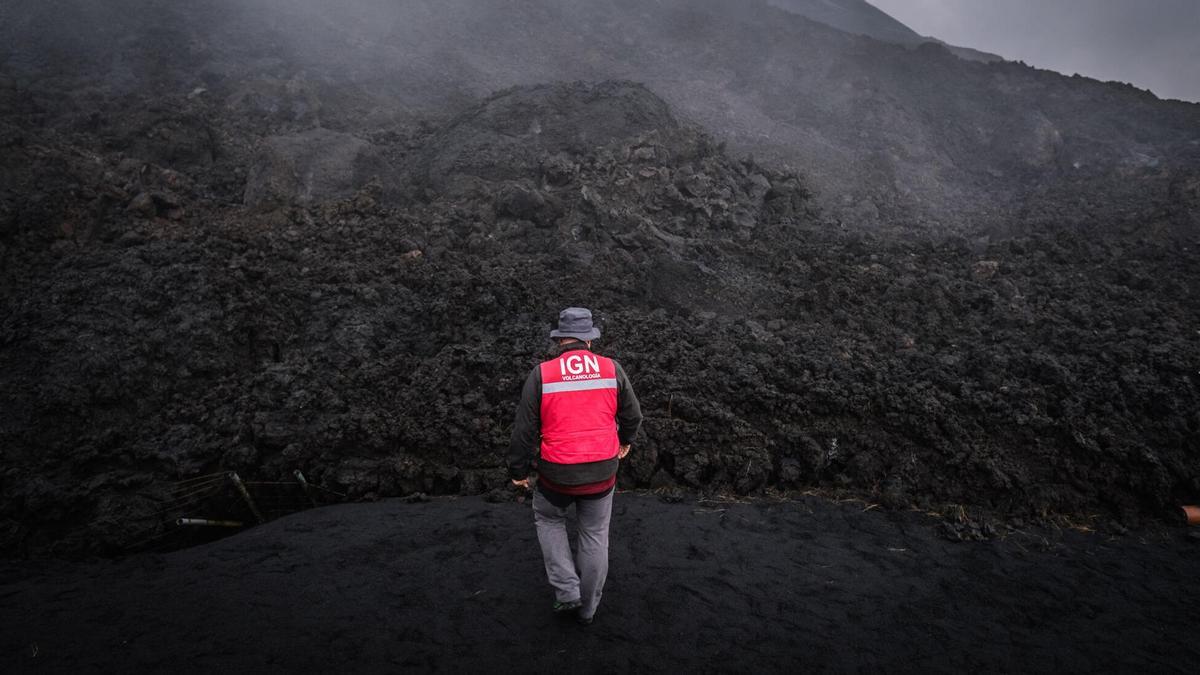
The Canary Islands’ volcanoes and their effects are monitored from within the archipelago, even though the ultimate responsibility – and therefore the duty and obligation – falls to the state alone. The National Geographic Institute (IGN), part of the Ministry of Transport, has been the body designated by the Spanish government to carry out this work since 2004. This means that if the proposed National Vulcanology Centre (CNV) is given the role of “integrated management of volcanic phenomena”, as the Canary Islands government is demanding from the Ministry of Science, it would step on the turf that the IGN has been developing from the islands for over 20 years.
Yesterday, after the La Palma island council complained of a “blockade” by the state over the CNV, the Canary Islands reopened an old can of worms that has haunted Spanish scientific policy for years: whether volcanic monitoring should be run from the islands or from the mainland. The archipelago is, after all, the only region in Spain that could face a volcanic eruption, so many argue that the islands themselves should be in charge.
A long history in the islands
The IGN carries out all operations related to volcanic monitoring from its centre in Santa Cruz de Tenerife, specifically on Calle de La Marina. The Canary Islands Geophysical Centre, a branch of the IGN, has been based there since at least 1958, carrying out volcanic-related work such as seismic detection even then. Today, it directs the management of these emergencies at a national level.
The institute’s presence in the islands dates back to 1911. That year, following the eruption of the Chinyero volcano in Tenerife, the Ministry of Public Works sent a commissioner to the islands to draw up a report on what had happened. Two years later, in 1913, the Spanish government launched a campaign to create a meteorological observatory that included seismological stations, due to the risk that the great Tenerife volcano might eventually awaken. In 1924, the IGN produced a report to install new seismometers in the Canary Islands. The pillars for their installation had already been built at the Santa Cruz Meteorological Observatory when the outbreak of the Civil War forced the project to be abandoned.
It took another 30 years and another eruption – the San Juan volcano on La Palma – for the project to be revived. In 1952, the first official seismometer in the Canary Islands, the Victoria, was installed, and at the same time the Santa Cruz de Tenerife Geophysical Observatory was created. Activity at the centre has only increased ever since. According to historical records, volcanological interpretation within the organisation began to take shape in 1974, and by 1981 there is evidence of a project to study the volcanic seismology of Mount Teide.
The 2004 wake-up call
Despite this long experience, when Mount Teide stirred in April 2004, the harsh reality became clear: nobody had an explicit responsibility for monitoring or tracking this phenomenon. In fact, during the months that the uncertainty over Tenerife’s future dragged on, scientists from various research groups were forced to collect monitoring data practically every day. Spain simply had a gap in its responsibilities when it came to managing volcanic emergencies – despite the fact that they can only happen in one of its territories.
While experts and authorities struggled to agree on whether to implement emergency measures or consider the movements within normal limits, a royal decree in June of that year stepped in. Royal Decree 1476/2004 assigned responsibility for “observation, monitoring and communication of volcanic activity in the national territory and determination of associated risks” to the IGN’s Directorate General, drawing on its previous experience in volcanism and its knowledge of seismology.
Building the network
From that point on, the IGN was forced to expand its range of services to detect the other two indicators of a potential eruption: ground deformation and gas emissions. Gradually, over the last 22 years, the IGN has refined its detection and monitoring network, installing more than 100 stations across the Canary Islands for seismic monitoring, ground deformation and gas detection.
Today, on Tenerife alone, the IGN has deployed at least 26 seismic stations, 19 GNSS antennas (a satellite positioning system that includes GPS), 4 visual and thermal cameras, 4 continuous geochemical measurement stations, and 7 tiltmeters, three of which are underground to provide more accurate readings as surface measurements are affected by temperature variations. This is supplemented by 20 geochemical sampling points in underground water galleries, which are visited every two months.
The other two most closely watched islands are La Palma and El Hierro, having been the last two to experience eruptions. On La Palma, the IGN has deployed 12 seismic and borehole stations, 6 sampling points and 1 geochemical station; 8 GNSS antennas, 3 tiltmeters and 2 visual cameras. On El Hierro, there are 11 seismic stations, 4 sampling points and 3 geochemical stations; 6 GNSS antennas and 2 tiltmeters.
The battle for control
Although the state service has always been intended to operate from and for the Canary Islands – as it is the only volcanically active region – the decision taken by the state did not sit well with the archipelago. The move sparked opposition, particularly in Tenerife, which at the same time was trying to consolidate the scientific seed that would later become the Canary Islands Volcanological Institute (Involcan). This was, specifically, the volcanology group at the Institute of Technology and Renewable Energies (ITER), which had extensive experience and had been working to reduce volcanic risk in the Canary Islands since 1997. Involcan was finally established on 29 June 2010 as an entity associated with ITER, promoted by the Tenerife island council.
The transfer of powers scuppered plans to create a volcanology centre in the Canary Islands as had been unanimously requested on 2 November 2005 in the Senate, on 11 January 2006 in the Canary Islands Parliament, and on 2 December 2009 in the Congress of Deputies. All of these statements called for the creation of a body aimed at improving the management of volcanic risk in Spain.
A new centre on the horizon
For some, this National Vulcanology Centre (CNV) would fulfil the archipelago’s long-standing demand, although the Minister for Science, Diana Morant, has always focused its creation from a different perspective: to bring together all the organisations and research groups working in volcanology in the Canary Islands. The state’s purpose was to harness the knowledge acquired in the archipelago over decades to create a world-class centre of excellence in volcanism with international reach.
The debate – and what must be resolved in the coming months – is whether this centre should integrate the IGN in its entirety. That is, not just its research, but also its powers and responsibilities.