
The intervention includes the creation of new direct lanes and the reconfiguration and widening of the roundabouts leading to the estate. These measures have reportedly unlocked one of the island’s main traffic bottlenecks, making travel easier for the 300 businesses based there. “What was once a total nightmare, with constant transport delays and timetable disruptions, has been solved urgently and efficiently thanks to the collaboration between administrations,” said Ramón Villalba, a representative of the Estate’s Business Association. He thanked the Cabildo for “its ability to carry out this work in record time,” adding that the solution “has exceeded expectations.” He noted that no traffic jams or incidents have been recorded since the improvements were opened. “It is a success for local businesses, which are now enjoying much better flow for both workers and goods transport,” he added.
Francisco González welcomed the “record” completion time and emphasised the need to prepare for the future expansion of the estate, which will bring further economic development to the southern region of the island. The mayors of Güímar and Arafo, along with the first deputy mayor of Candelaria, celebrated that a “historic demand” affecting their municipalities had finally been met. They also praised the “excellent rapport” between the administrations throughout the process, all of which have made progress on what is a “strategic” location for Tenerife.
Details of the new direct access lanes
The works involved modifying the slip roads and constructing two direct links to allow safer and more convenient entry and exit from the site, resolving the jams that had been hampering industrial activity in the area. Specifically, the following direct lanes were built:
- A lane from the TF-281 to the TF-1 southbound.
- A lane from the TF-1 (Santa Cruz) to the El Carretón estate.
- Two lanes from the Valle de Güímar estate to the TF-1 towards Santa Cruz.
- A lane from the TF-1 southbound to the estate.

Vueling plane lands with landing gear fault at Los Rodeos

Ferry contract to Canary Islands declared void

Bomb threat on Vueling flight triggers Gran Canaria airport security operation

Cruise to Canaries cancelled after collision in port

Tenerife tram delays worsen amid staff shortages

Titsa adjusts night bus times for clock change on Tenerife

Night roadworks to disrupt TF-1 traffic from Sunday

Public service obligation for Canary inter-island flights announced

Iberia accused of ejecting passengers from paid seats

Tenerife announces six months of TF-5 resurfacing works
End of an era for gridlock at Güímar industrial estate
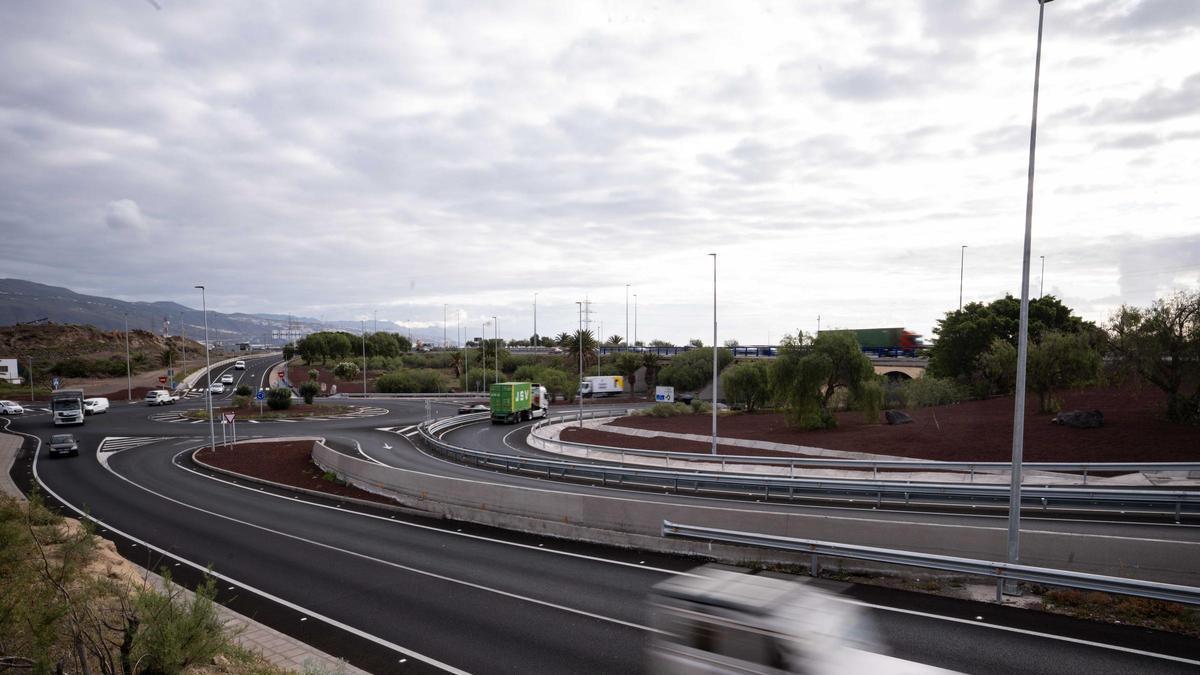
The Cabildo de Tenerife has completed works on the access roads to the Valle de Güímar industrial estate, a project backed by a €2.9 million investment from the island corporation. The aim: to unlock traffic congestion in the area and ease the flow of over 70,000 vehicles entering and leaving the site every day.
Official visit marks completion of key infrastructure
The island’s president, Rosa Dávila, visited the site on Thursday alongside Eulalia García, the island councillor for Mobility; Dámaso Arteaga, the island councillor for Roads; Francisco González, the Deputy Minister for Infrastructures of the Government of the Canary Islands; the mayors of Arafo and Güímar, Juan Ramón Martín and Carmen Luisa Castro; the first deputy mayor of Candelaria, Jorge Baute; and various business representatives. Dávila declared the completion of the works had put an end to a “historic” mobility problem. “We have eliminated the queues that built up at the access points to the estate — an economic and industrial hub where more than 5,000 people work and which sees a high density of traffic, around 3,000 vehicles per hour,” the president of the Cabildo stated in a press release.
Cabildo stepped in to fast-track the project
The island’s president also stressed that the works fall under the jurisdiction of the Government of the Canary Islands, but the Cabildo requested to take on the project in 2024 through a framework cooperation agreement. This move was intended to speed up the execution of the work, with the island authority handling both development and funding. Eulalia García, the island councillor for Mobility, explained that the improvements focused on the Arafo junctions and were carried out in phases. “The first phase was completed last year and the results are already visible. There is less congestion, more safety, and smoother journeys for the 70,000 vehicles that pass through here daily, 5,000 of which are lorries, trailers, and other heavy goods vehicles,” García specified.
New lanes and roundabouts ease daily chaos
The intervention includes the creation of new direct lanes and the reconfiguration and widening of the roundabouts leading to the estate. These measures have reportedly unlocked one of the island’s main traffic bottlenecks, making travel easier for the 300 businesses based there. “What was once a total nightmare, with constant transport delays and timetable disruptions, has been solved urgently and efficiently thanks to the collaboration between administrations,” said Ramón Villalba, a representative of the Estate’s Business Association. He thanked the Cabildo for “its ability to carry out this work in record time,” adding that the solution “has exceeded expectations.” He noted that no traffic jams or incidents have been recorded since the improvements were opened. “It is a success for local businesses, which are now enjoying much better flow for both workers and goods transport,” he added.
Francisco González welcomed the “record” completion time and emphasised the need to prepare for the future expansion of the estate, which will bring further economic development to the southern region of the island. The mayors of Güímar and Arafo, along with the first deputy mayor of Candelaria, celebrated that a “historic demand” affecting their municipalities had finally been met. They also praised the “excellent rapport” between the administrations throughout the process, all of which have made progress on what is a “strategic” location for Tenerife.
Details of the new direct access lanes
The works involved modifying the slip roads and constructing two direct links to allow safer and more convenient entry and exit from the site, resolving the jams that had been hampering industrial activity in the area. Specifically, the following direct lanes were built:
- A lane from the TF-281 to the TF-1 southbound.
- A lane from the TF-1 (Santa Cruz) to the El Carretón estate.
- Two lanes from the Valle de Güímar estate to the TF-1 towards Santa Cruz.
- A lane from the TF-1 southbound to the estate.