Water Accident Deaths Fall but Incidents Rise Sharply
The 2025 Canary Islands Water Accident Map, compiled by the association Canarias, 1,500 Km de Costa, has once again revealed stark data concerning incidents and fatalities linked to the archipelago’s coastlines. While the number of deaths fell by three cases to a total of 69, the number of water accidents increased sharply by 30% over the last year. In 2025, there were 241 accidents, of which 40 resulted in critical drowning.
Tourist Numbers and Recklessness Blamed for Increase
The report’s author and platform president, Sebastián Quintana, stressed that “the increase is linked to the rise in tourist numbers” and that 75% of incidents occurred due to recklessness. He highlighted the most dramatic case, which took place in Puerto de la Cruz last November. The analysis, now in its tenth consecutive year, also revealed that incidents occurred at 140 beaches, coastal points, and natural pools across 46 of the Archipelago’s 88 municipalities.
The document further details 16 people left critically injured, 25 seriously injured, 70 moderately injured, 32 with minor injuries, and 29 rescued unharmed during the past year. “In 30 Canary municipalities, at least one death occurred,” Quintana added.
Island-by-Island Breakdown and Victim Profile
The detailed island-by-island report shows that Tenerife accounted for the majority of drowning deaths (24); followed by Gran Canaria (18); Lanzarote (13); Fuerteventura (6); La Gomera and El Hierro (3 each); and La Palma (2). The only island that recorded no accidents was La Graciosa, despite an increase in tourist numbers.
The average victim profile is a male tourist, aged between 50 and 75, who goes for a swim on the coast in the afternoon at “beaches which also lack lifeguard posts,” emphasised Quintana, who is also a journalist specialising in prevention. The report underlines that the main activity at the time of the accident was swimming, which represents 67% of the total.
Activities and Nationalities of Those Involved
Water sports account for 9% of incidents; 8% involve fishermen; 4% are people who fall into the water after a large wave or a slip from a pier, cliff, promenade, or athletes such as paragliders or boat crew. The remaining 1% are scuba divers. The report’s author stressed that most victims are tourists, with British nationals (17) standing out, followed by Romanians and Italians (2 each).
Most Dangerous Beaches and Coastal Spots
Beaches concentrated 50% of the accidents, followed by ports and coastal zones at 26%, and 16% at natural pools. The most dangerous locations were the natural pools of Isla Cangrejo in Tenerife, with 6 deaths; and El Charco Manso in El Hierro, with 3. In Lanzarote, El Papelillo beach and Los Charcones; and the Botija coast in Gran Canaria, each with 2 cases.
Among the locations with the highest total number of affected persons were Almáciga beach and the coast of Puerto de la Cruz in Tenerife, with about ten each. In Gran Canaria, seven occurred at Las Canteras, and six at Puerto del Carmen in Fuerteventura.
By municipality, Santiago del Teide and Adeje recorded seven deaths each; followed by Teguise and Yaiza in Lanzarote with four; and Gáldar and San Bartolomé de Tirajana in Gran Canaria with the same figure in each locality.
Calls for Better Warnings and Legislation
During the press conference presenting the report, the journalist shared that on 112 days last year, alerts or pre-alerts for adverse coastal phenomena were activated in the Islands, a period during which 46% of the total deaths occurred. The president of Canarias, 1,500 km de Costa emphasised that “it is necessary that when an alert for adverse weather conditions is activated, that message reaches tourists.” He added that meetings have been held with the Canary Islands Government and Promotour to improve communication tools. “From putting up a warning sign in hotels to extra-hotel platforms like Airbnb so that owners warn their clients.”
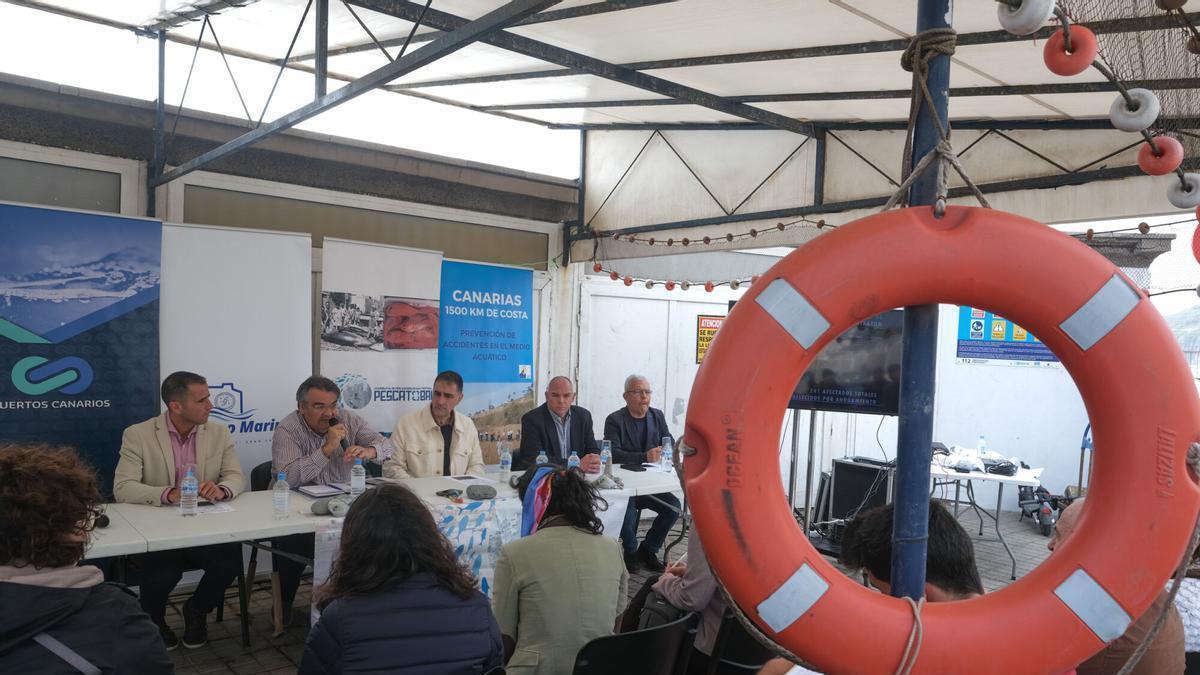
The presentation of the accident map took place at the facilities of Puerto de San Cristóbal, where Sebastián Quintana recalled, and lamented, the recent death of a girl and her mother which shocked the San Cristóbal neighbourhood and the city.
For his part, José Gilberto Moreno, managing director of Eco Puertos Autonómicos de Canarias and director of the Elder Museum, called on authorities to legislate “to penalise those whose reckless behaviour forces emergency services to intervene, risking not only their own lives but those of the emergency crews.” He recalled that water accidents are one of the leading causes of preventable death and warned of the risk of going to points on the coast that lack even footpaths, “and which they see in social media posts.”
Also present at the event were Pablo Rodríguez, Director General of the Presidency of the Gran Canaria Island Council; Carlos Esquivel, Deputy Director of Civil Protection and Emergencies of the Canary Islands Government; and Ángel Sabroso, Councillor for Physical Activity and Sports of the Canary Islands Government.

Tenerife’s Char Fuego y Brasas named 13th best steak restaurant in Europe

Gran Hotel Taoro: a foodie destination in Puerto de la Cruz

Canary Islands hotel prices rise 4.11% in September

Icod de los Vinos launches twelve self-guided routes
Four new openings shaking up Las Palmas dining scene

Tenerife faces huge tourism expansion despite moratorium calls
El Bejeque in Las Canteras adds sea to its fire

Siam Park Gran Canaria must build its own desalination plant
Fuerteventura’s biggest resort to open on 1 November