
Government Says “Enough is Enough” to Airport Chaos
The Canary Islands government has said “enough is enough” to the chaos at Tenerife South Airport’s passport controls. The regional Minister for Tourism and Employment, Jessica de León, denounced on Thursday that the management of the border post at the Granadilla de Abona facility is “unsustainable” and announced she has requested an “urgent” solution from Pedro Sánchez’s government.
Tourist Image at Stake
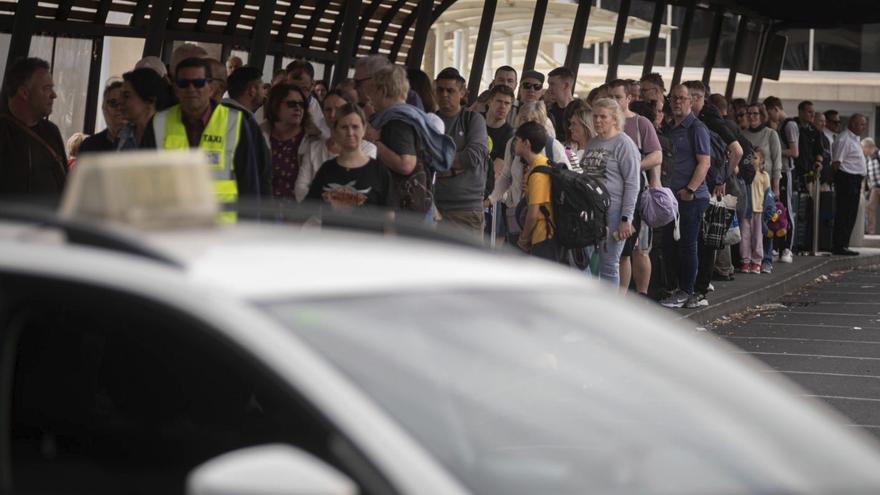
The queues at the international airport’s passport controls, also known as Reina Sofía, affect tourists from outside the Schengen area, particularly Britons, who are the largest group of visitors to the island. Following repeated complaints from the Tenerife Council and business associations about a situation that is damaging the island’s image and its main economic sector, tourism, the Ministry of the Interior, which holds jurisdiction over these border posts, announced measures.
The department headed by Fernando Grande-Marlaska stated that last July it would increase the National Police force assigned to this facility by 32 officers and would also install 36 biometric recognition machines to speed up passport control. The deficiencies, however, persist, mainly because the vast majority of the machines are not working.
Lack of Foresight Criticised
In response to a question from Vox MP Paula Jover in a parliamentary committee, the regional Tourism Minister emphasised yesterday that she has conveyed her dissatisfaction to the Minister of Tourism, Jordi Hereu, due to the “lack of foresight” from both the Ministry of Transport and the Ministry of the Interior. In Jessica de León’s opinion, what should have been done was for the Ministry of the Interior to “reinforce” the airport network in the Canaries “in anticipation that those machines would not work” following the changes imposed by Brexit, especially because the Canaries “receives six out of every ten British tourists entering Spain”.
Island Authorities’ Frustration
Lope Afonso, Vice-President of the Tenerife Council and the island’s Minister for Tourism, had already strongly criticised the lack of resources at Spain’s seventh busiest airport by passenger numbers in 2025, with almost 14 million. “Let them not come and tell us anything from Madrid given what we are suffering at Reina Sofía,” stated Afonso, who clarified that the Council has been warning the Ministry of the Interior about the collapse for over a year.
In May, the president of the island corporation, Rosa Dávila, and Lope Afonso himself requested an urgent meeting with the Government’s sub-delegate in the province of Tenerife, Jesús Javier Plata Vera, and with Aena officials to address the queues at Tenerife South’s passport control. The request came after an incident recorded a few days earlier at night, when over 500 passengers remained waiting for hours in a packed room to pass through border control, a situation denounced by those affected and which, according to Dávila and Afonso, highlighted “the serious deficiencies in this essential service”. This chaotic scenario at the start of holidays for thousands of tourists in Tenerife has been repeated since.
Business Sector Warns of Damage
José Fernando Cabrera, president of the Friends of the South of Tenerife Forum (FAST), has drawn attention to the impact this “repeated” situation has on Tenerife’s main tourist market, the British one. “It is an entrenched problem at Reina Sofía airport that Aena has not resolved so far.” The hotel association of Tenerife province has also joined these criticisms. Ashotel pointed to the joint “inaction” of Aena, responsible for airport infrastructure, and the Ministry of the Interior, in charge of providing police officers and border control equipment. The result, states the employers’ association, is “a constant deterioration of the visitor experience at one of the country’s main tourist airports, the first point of entry to Europe for thousands of non-EU travellers.”
International Repercussions
The problem has gained international traction after several videos went viral on social media, one with over eight million views, showing massive queues of passengers waiting for police checks. Another video shows at least twenty biometric machines out of service, with insufficient staff to compensate for their function.
What’s happening in the Canaries – straight to your phone
News, weather alerts and practical updates – direct from the islands, in English. We live here and know what’s going on – before the international media catch up. Everything lands on our WhatsApp channel – no middlemen, no algorithm. Curated for families, expats and travelers.

Vueling plane lands with landing gear fault at Los Rodeos

Ferry contract to Canary Islands declared void

Bomb threat on Vueling flight triggers Gran Canaria airport security operation

Cruise to Canaries cancelled after collision in port

Tenerife tram delays worsen amid staff shortages

Titsa adjusts night bus times for clock change on Tenerife

Night roadworks to disrupt TF-1 traffic from Sunday

Public service obligation for Canary inter-island flights announced

Iberia accused of ejecting passengers from paid seats
