
Scientific Discovery in a Tenerife Banana Plantation
Hidden within the fertile soil of a banana plantation in southern Tenerife survives a microscopic fungus never before seen, collected, or described by science. It may not be the first of its kind, but it is the first to be captured by the lens of scientists who now see in it a possible shield against the main enemy of these predominant agricultural expanses in the Canaries: Panama disease or yellow sigatoka. The newly discovered species, named Trichoderma ichasaguae, belongs to the extensive Trichoderma family, which comprises 400 distinct types of fungi, most with a common characteristic: they can control pests in agricultural soils.
A “Good Fungus” With Beneficial Properties
“It is part of the Trichoderma genus, which we label as ‘good fungi’ because they are beneficial microorganisms,” explains biotechnologist Raquel Correa, a researcher at the Canary Islands Institute for Agricultural Research (ICIA) and lead author of this discovery published in the journal Current Microbiology alongside her colleague Federico Laich. Specifically, this family is known for its ability to degrade organic matter and promote plant root growth.
A Fortuitous Find in Unexplored Territory
The find was as fortuitous as it was surprising. “No study of these fungi as biological control agents for Panama disease had been conducted in the Canary Islands,” reveals Correa, who notes that research had previously focused on the pathogenic fungus that causes the disease. This pathology affects at least 23% of banana plots in Tenerife, according to an AgroCabildo study. “Farmers often buy fungicides from outside the Islands, and we knew it was likely that the soils themselves contained these fungal allies for pest control,” Correa emphasises.
Uncovering the Secrets of Canarian Soil
The two researchers embarked on a project to elucidate the composition of Canarian soils. They took samples from about twenty banana plantations. “The idea was to cultivate the fungi, extract DNA, and conduct phylogenetic analyses to see what types of ‘good fungi’ we could find in the Canary Islands’ agricultural soils,” the researcher highlights. “We obtained up to 12 species of this genus, but there was one that had nothing to do with anything described to date,” explains Correa.
Characteristics of the New Species
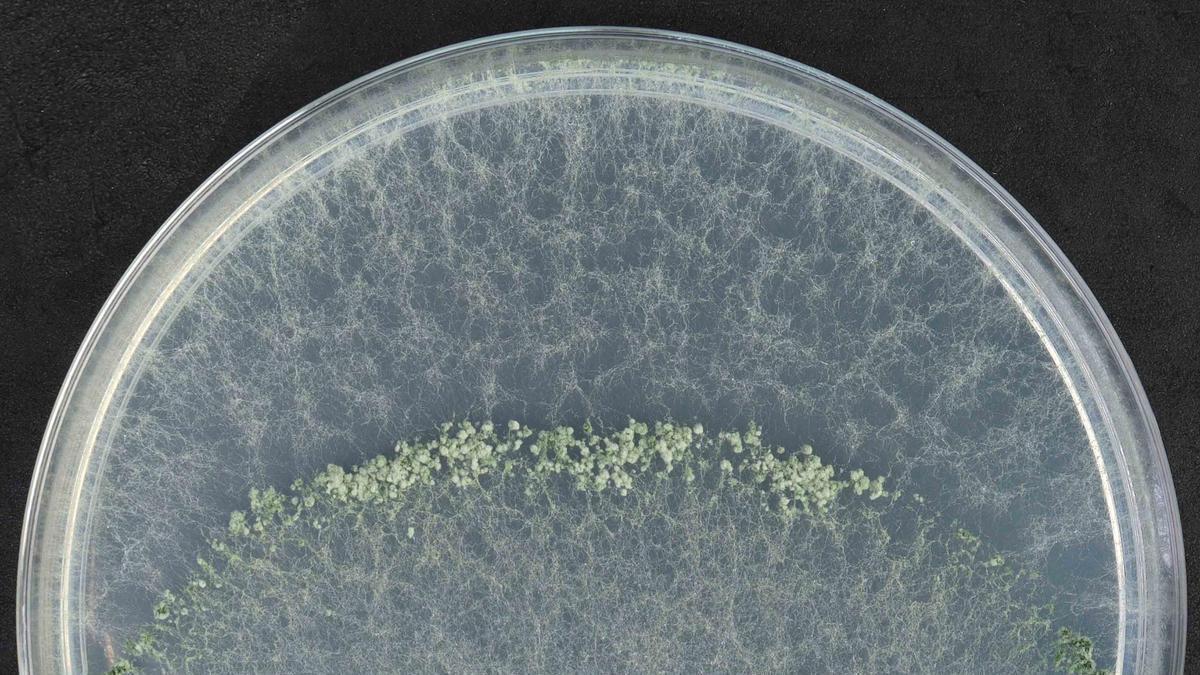
Although invisible to the naked eye, this fungus is part of the complex and abundant community of microorganisms living in the soil that contribute to the balance of the agricultural ecosystem. Under laboratory conditions, Trichoderma ichasaguae develops fast-growing colonies with greenish tones, common traits of many species in this genus. Under the microscope, the fungus showed a characteristic branched structure, with a silhouette similar to a tree. Furthermore, Trichoderma ichasaguae can form chlamydospores, structures that confer resistance and allow it to survive in adverse environmental conditions and remain dormant for long periods.
A Name Rooted in Canarian Heritage
The Canarian scientists have not only managed to add this new species to the world list of planetary discoveries but have also done so by championing its Canarian origin. The new species takes its name from the islands’ aboriginal tradition. Trichoderma ichasaguae takes its species nomenclature from Ichasagua, a member of the ancient Guanche nobility of Adeje—precisely the location where this new species was found. “For us, it was important to give this fungus a name from Canarian culture,” explains the researcher, noting that this “establishes a symbolic bridge between current biodiversity and the island’s historical memory.”
Potential for Sustainable Agriculture
The discovery reinforces the idea that Canarian agricultural soils are genuine reservoirs of still poorly understood biodiversity. In a context where agriculture seeks more sustainable solutions, local microorganisms, adapted to the islands’ unique climatic conditions, can play a key role as natural allies in controlling pathogens that affect strategic crops like bananas. “Now we have a Canarian fungus that could do a lot of the work for us,” stresses the researcher.
Next Steps: Testing Its Defensive Potential
The researchers continue to delve into this investigation, now with the goal of verifying the defensive potential of this and other fungi of the same species against Panama disease. “If we conclude that this fungus can prevent infection, we will know that all soils containing it will be protected from the pathogen,” she insists. In the coming months, the researchers will take samples from banana plantation soils in La Palma and Gran Canaria to broaden the scope. “Not only to see if this species is found in more places, but also to see if there are more species, as this discovery highlights that there is an immense amount of diversity, and it’s possible we have overlooked things,” she concludes.

Canary Islands sea hits second-hottest year on record

Legal bid to halt tree felling in Santa Cruz’s La Salud

Fiesta del Charco: A journey through La Aldea’s past

Corralejo dunes power line set for removal

ULPGC launches 14 research projects at Las Canteras

TMT will never be built, says Canary Islands astrophysics chief

Pedro Duque: Canarias is the “ultimate dream” for rockets

Court blow to Tenerife motor circuit project
La Palma faces new volcanic risk planning deadline
