
Alarming Spike in Accidents Exposes Regulatory Void
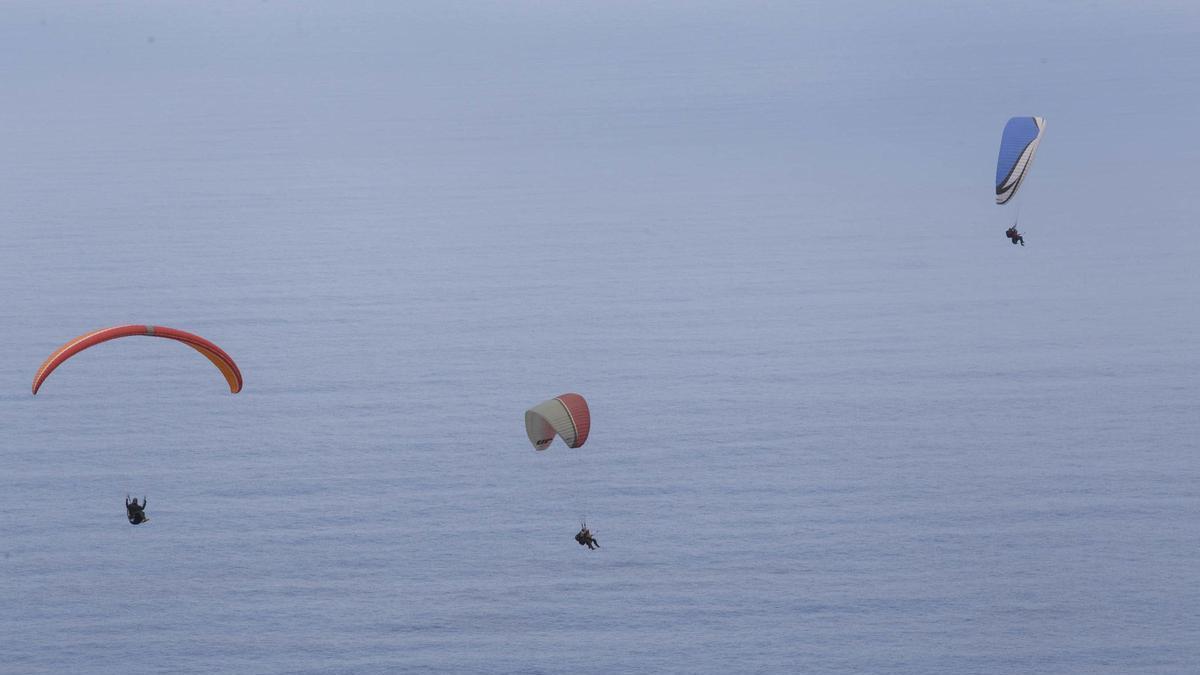
A sharp increase in serious paragliding accidents in Tenerife has exposed a total lack of rules and controls to guarantee the safety of this sporting activity. This has been acknowledged by the Canary Islands Federation of Air Sports, whose officials have just been summoned by the Canary Islands Government to find a solution to a problem that has set off all the alarm bells.
The latest episode in this long list of incidents occurred on 6 March. A tandem paraglider, whose pilot offered flights from the launch platform at Taucho in the highlands of Adeje down to the coast, crashed onto rocks during its landing manoeuvre on La Enramada beach. The 28-year-old woman flying with the instructor died three days later from her severe injuries. She is the third person to lose their life in these motor-free flying craft on the island in one year.
A Year of Tragedy and Mounting Pressure
In total, since February 2025 there have been 11 serious paragliding accidents, resulting in three deaths and nine injuries. Such a dire record is unheard of since the discipline began to be practised in Tenerife over 30 years ago. Sergio Castañeda, who was president of the Technical Commission of the Canary Islands Federation of Air Sports for 17 years and is a practitioner of the sport, admits the figures are worrying.
He points to two reasons: the absence of regulations and personnel to monitor this activity when it crosses from the sporting sphere into the commercial and tourist one, and the huge increase in flight enthusiasts heading to the dozens of launch platforms in Tenerife’s highlands. Anyone can go to one of these points with a paraglider, whether or not they have the qualification issued by the Federation, and launch themselves towards the island’s coasts.
From Federation Control to Unregulated Commercial Flights
Castañeda admits that some practitioners even flout the only existing restriction: flying over areas where the activity is prohibited, such as the Izaña Astrophysical Observatory or Teide National Park. It is also forbidden in the island’s two airports. He explains that the Federation has “very clear and strict” rules for granting permits to pilot a paraglider. “We even conduct follow-up to ensure continuous refresher training, through a test held every five years,” details the former head of the Technical Commission, who remains on the board of directors, adding: “Qualifications are awarded once a demanding exam is passed.”
The regulatory gaps appear when those individuals leave federative control and offer flights as a tourist experience. They also affect those practitioners who, whether or not they have been through a federation, take up the discipline and make launches outside of official competitions, including locals or tourists who travel to Tenerife with the main purpose of enjoying the island’s skies and unparalleled views.
“There is no protocol or personnel at the launch platforms to check if those people have qualifications or possess civil liability insurance and health coverage,” he emphasises. Online, there are multiple possibilities to book a paragliding flight as if it were any ordinary excursion, despite the high danger it entails.
A Tourist Paradise with Inherent Risks
The activity is concentrated between October and March, during the high tourist season, and although there are dozens of places to jump from, the main ones are five: La Corona (Los Realejos), Montaña de Anocheza (Güímar), Taucho (Adeje), Izaña (Teide National Park) and Tierra del Trigo (between El Tanque and Los Silos). Prices range from €180 to €90 per launch, always accompanied by an instructor in a tandem craft. On just one of the most popular websites offering nature experiences, there are 28 options on the island.
Tenerife has established itself as a paradise for these motor-free flights. But it has one drawback: its topography. The air currents generated in the ravines can destabilise these aircraft with relative ease. Among the multiple landing points, one stands out: the coast of Adeje. Of the 11 serious accidents that have occurred on the island in a year, seven happened in this municipality in the heart of the tourist area, considered the best in the country and one of the best in Europe for paragliding. It is no surprise that two of the three fatal accidents were in Adeje.
Local Authority Calls for Urgent Action
Adeje Town Hall admits its concern over this high accident rate and is calling for urgent measures. Official municipal government sources reveal that with tens of thousands of flights a year over its territory, “the probability of accidents skyrockets.” “It is a complex activity because it sits between sporting practice and active tourism, which also affects something as sensitive as the use of airspace regulated and controlled by Civil Aviation,” a spokesperson detailed.
The southern town council stresses that it maintains “permanent” contact with legally constituted companies and with the Air Sports Federation to “try to monitor the activity.” But it acknowledges that “it is not easy” because its powers are “limited” and, furthermore, “many companies are not even based in the municipality.”
“We have been studying our legal and technical capacity to act on this matter and consider regulation for some time,” explains the Adeje government, which qualifies: “In any case, that would depend on the island, regional and national administrations, which should step in to normalise the situation.” Regarding rescues and 112 emergency responses, Adeje Local Police mobilises whenever required by the emergency coordination centre. “It is true that these are resources that are mobilised, which must be diverted from other operations and which force us to make a coordination effort with other security forces,” concludes the Town Hall, which laments the death of the 28-year-old Italian woman in the latest accident.
Canary Government Seeks Solutions
The Directorate of Security and Emergencies of the Canary Islands Government prefers not to comment until it has addressed the situation with the Canary Islands Federation of Air Sports. It has already summoned its officials to a meeting to analyse the situation. It is studying which government departments would have jurisdiction and what measures can be adopted to increase the safety of this practice.

Las Palmas Begins Major Revamp of Historic Museo Néstor

Loquillo Returns to Canaries for Tenerife Peñón Fest

Sonora 2026 Final Countdown Begins in Gran Canaria

Granca Live Fest 2026: Lauryn Hill, Maroon 5 Join Star Line-up

Saramago Museum Marks 15th Anniversary with Cultural Events

Calling All Home Cooks: Santa Brígida’s ‘Cocinillas’ Contest

Mendelssohn’s ‘Paulus’ to Premiere in Canaries at La Laguna Cathedral

Agaete’s Day Carnival Draws Huge Crowds in Gran Canaria

Urban Music History Made at Tenerife’s Palmetum Concert
