
Teide National Park Remains Closed for Safety
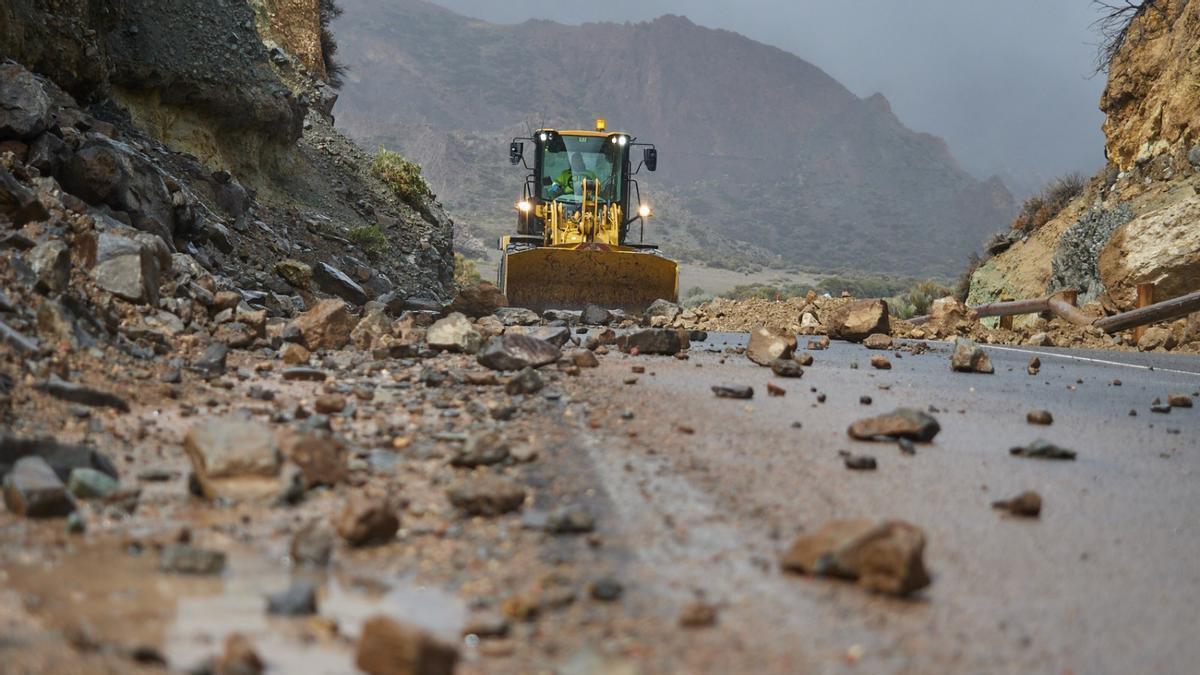
Visitors will have to wait to see the unusual streams that have formed in some areas of Teide National Park. The aftermath of Storm Therese’s passage through the archipelago has forced authorities to keep the recently snow-capped peak, with ice on the roads and affected by large rockfalls, closed off for several more days. Therese will continue to influence the Canarian atmosphere for a few more days, though its effects—which still include some storms, rain, and wind—will become increasingly residual.
Island-Wide Restrictions and the Path to Normality
The Cabildo de Tenerife, following the lead of the Canary Islands Government, has updated the Island Emergency Plan (PEIN) to a pre-alert status. It is maintaining the prohibition on access to footpaths, forest tracks, recreational areas, and high mountain zones, including Teide National Park and other protected natural spaces, which have been closed since last Wednesday. The goal is to avoid risks derived from ground instability and recent weather conditions. The access road to Punta de Teno (TF-445) will also remain closed while the pre-alert is in effect.
The decision is based on the latest forecasts from the State Meteorological Agency (Aemet), which point to the storm’s centre moving over the Canaries’ interior, albeit increasingly weak. As part of this update, the Cabildo has also ended general restrictions on cultural, sporting, and public events from Sunday afternoon, once the pre-alert situation is consolidated. The Department of Education will end online teaching in the island’s schools and colleges this Monday. The University of La Laguna (ULL) will also resume in-person classes.
Municipal Parks Reopen as Weather Warnings Ease
Some municipalities are gradually returning to normal. For example, Santa Cruz de Tenerife Council has begun reopening most municipal parks. The Public Services department reported that municipal technicians have carried out inspection and review work to guarantee safety before allowing public access. Among the spaces that have already reopened are emblematic parks like García Sanabria, Secundino Delgado, La Granja, and Las Indias, as well as squares and green zones distributed across different neighbourhoods of the municipality.
This situation will deactivate the orange weather warnings that were active. For this Monday, in fact, Meteorology maintains only yellow warnings for rains that could deposit a mere 15 litres per square metre—a negligible amount considering the accumulations of over 100 litres dumped by the storm in some parts of the islands last Saturday. However, the Canary Islands Government keeps a rain alert active for El Hierro, La Palma, La Gomera, Tenerife, and Gran Canaria.
Continued Instability and a Call for Prudence
Convective and stormy activity will continue throughout Monday, with scattered showers possible anywhere in the archipelago, over terrain already saturated by rainfall collected over the last five days. The president of the Tenerife Cabildo, Rosa Dávila, stressed that throughout the episode “the most important thing has been people’s safety,” highlighting that it was an “anomalous” meteorological situation with a very intense impact on the north and southwest of the island.
Dávila stated that all decisions were guided by prudence, responsibility, and coordination between administrations, aiming to protect lives and minimise risks. She also thanked the work of over a thousand deployed personnel, whose coordinated action was “fundamental in keeping the situation under control.” In this regard, the president insisted that, although the situation is improving, the coming hours still require maximum caution, especially due to water accumulation, and she asked the public to avoid unnecessary travel and stay informed through official channels.
Yesterday’s Incidents and Visible Aftermath
Indeed, complicated situations stemming from Therese were still recorded yesterday, particularly during the early hours of Sunday morning. The wind intensified, leaving gusts of up to 118 kilometres per hour at Izaña. As a result of its passage across the Canaries, from midnight until 8 am, emergency services managed a dozen incidents, such as branches and stones falling onto roads, water pumping from homes, and problems with public lighting.
This Sunday, running water could also be seen in the highlands of Vilaflor. According to the website CanaryWeather, this municipality was one of the rainiest on the island this Sunday, with accumulations of up to 26 litres per square metre. However, Anaga also stood out, where accumulations of up to 49 litres per square metre were recorded. The persistent rains have made ravines flow and filled reservoirs, such as the Trevejos pond, also located in Vilaflor, which is at capacity.
During the afternoon, Therese’s presence could still be felt in some parts of the island, where lightning and thunder were seen and heard due to the arrival of the storm’s most convective zone over the centre of the Canaries.

Sunday: Storm Therese brings rain and strong winds

Tenerife Recovers as Storm Therese Brings Floods and Snow

Saturday: Storm Therese brings heavy rain and gales

Storm Therese Disrupts Canary Islands Flights with High Winds

Storm Therese Floods Homes in Adeje, Forces Evacuations

Storm Therese Isolates 200 in Gran Canaria as River Bursts Banks

Storm Therese Batters Canaries with Snow on Teide

Storm Therese Hits Tenerife: Essential Driving Safety Tips

Storm Therese Approaches Canary Islands with Severe Weather Alert
