
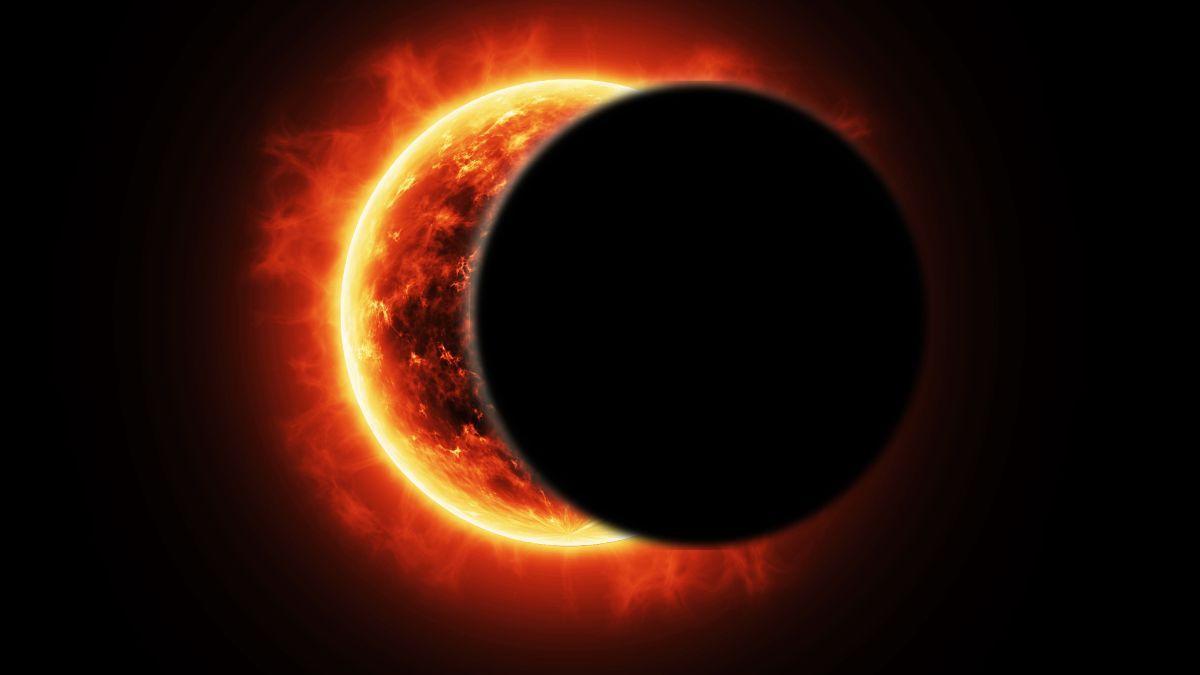
The astronomical calendar of the Canary Islands has 12 August marked in red. The skies over the archipelago will provide the backdrop for a new celestial phenomenon: the total solar eclipse of 2026 — the first of a trio that will continue over the next two years. It will be visible as a partial eclipse from the Islands, coinciding with the peak of the Perseid meteor shower, the most popular star display of the summer.
To make the most of this unique occasion, a number of institutions and associations dedicated to scientific outreach have put together a series of itineraries that go far beyond simply gazing at the night sky. Talks, safety guidance, expert accompaniment during the viewing, and even live music and tastings of local produce all feature in an astronomical menu with knowledge about the universe and the stars at its core.
Viewing points across all eight islands
The Elder Museum of Science and Technology, based in Las Palmas de Gran Canaria, will extend its activities across the whole of the Canary Islands by setting up a public observation point on each of the eight islands. The teams deployed will put together an outreach programme that will run throughout the afternoon preceding the phenomenon. Experts will offer information on the nature of eclipses, explain their different phases, and accompany the public in tracking their evolution — from the first contact of the Moon with the solar disc to the moment of maximum occultation and the subsequent sunset.
Under the name ‘Cosmic Lookouts’ (Atalayas cósmicas), observation points will be organised in Tejeda (Gran Canaria), Playa de San Juan (Tenerife), La Santa (Lanzarote), El Cotillo (Fuerteventura), Valle Gran Rey (La Gomera), Tazacorte (La Palma), La Frontera (El Hierro) and Caleta de Sebo (La Graciosa). At each of these locations, certified solar viewing glasses will be handed out free of charge, along with a set of guidelines on how to observe the astronomical phenomenon without any risk to your health.
Likewise, the Elder Museum has announced that, from this Tuesday, visitors to its premises will also receive an additional pair of glasses with their ticket. The exact locations, timings and the full programme planned for each island will be announced in the coming days, but they have already confirmed that the choice of sites takes particular account of their orientation and visibility towards the western horizon, as the eclipse will take place during the final hours of the afternoon. This initiative will allow attendees not only to witness a rare astronomical event, but also to go a step further and understand it accurately and rigorously.
An evening of stars in Tenerife
Following sunset, the Perseid meteor shower is expected to reach its peak of activity. With this in mind, the ‘Cielos Tenerife Nordeste 2026’ astronomical gathering will combine both phenomena in a single event. As well as following the eclipse using certified glasses and telescopes with solar filters, attendees will be able to enjoy a guided observation of the meteor shower. The event, held at El Montillo park in La Matanza de Acentejo, Tenerife, will feature live music to liven up the evening, tastings and samplings of local products, as well as a convoy of food trucks for those with a healthy appetite.
National institutions join the cause
In light of this event of national significance, the leading institutions associated with astronomy have seized the opportunity to join the wave of scientific outreach. Such is the case of the National Institute of Aerospace Technology (INTA), which has published infographics containing a series of key facts about the phenomenon, including an explanation of why it is a unique experience, the various events visible during the phase of totality, and the particularities of this 12 August eclipse. Finally, the institute also includes recommendations for enjoying the night with the greatest possible safety assurances.
What’s happening in the Canaries – straight to your phone
News, weather alerts and practical updates – direct from the islands, in English. We live here and know what’s going on – before the international media catch up. Everything lands on our WhatsApp channel – no middlemen, no algorithm. Curated for families, expats and travelers.

Canary Islands sea hits second-hottest year on record

Legal bid to halt tree felling in Santa Cruz’s La Salud

Fiesta del Charco: A journey through La Aldea’s past

Corralejo dunes power line set for removal

ULPGC launches 14 research projects at Las Canteras

TMT will never be built, says Canary Islands astrophysics chief

Pedro Duque: Canarias is the “ultimate dream” for rockets

Court blow to Tenerife motor circuit project
La Palma faces new volcanic risk planning deadline
