Compiled with the help of artificial intelligence, based on Spanish-language information. Source below the article.
Marineland cetaceans set for Spain
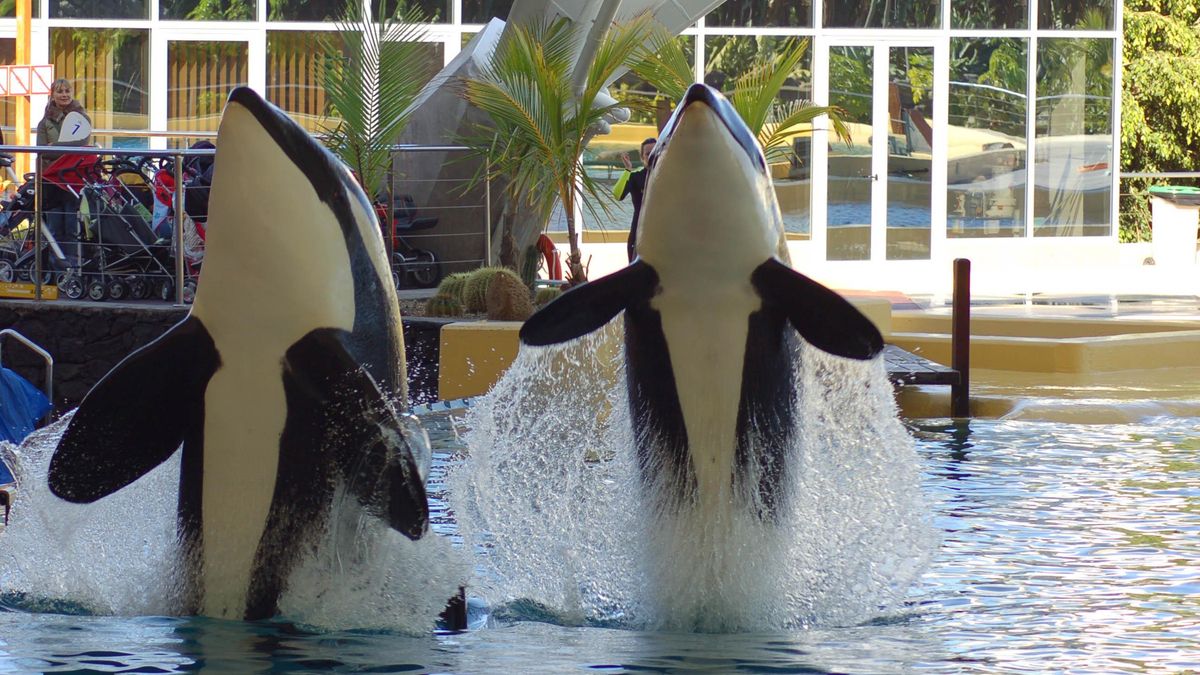
The two orcas and four dolphins still housed at the French aquatic centre Marineland de Antibes, which has been closed for a year and a half, will be transported by air to Spain in the near future. Specifically, plans for the cetaceans Wikie (24) and her son Keijo (11) involve their transfer to Loro Parque in Tenerife, owned by German magnate Wolfgang Kiessling, a move described as the most complex due to their size and weight, spokespeople for the centre told EFE this Tuesday.
French U-turn over orca destination
In the case of the orcas, back in May of this year, the French Ministry for Ecological Transition – which had previously favoured sending the animals to a sanctuary in Canada – made a dramatic U-turn, stating that its intention to move the animals to Tenerife was to avoid sending them to the United States or Japan, where they might be subjected to performances. However, the Tenerife zoo promotes its cetacean shows as one of its main tourist attractions.
Loro Parque has expressed its desire to receive Wikie and Keijo from the outset, adding them to the four orcas it already holds at the site, and said it accepted the French minister’s proposal out of “moral responsibility”. It should be noted that the Spanish scientific authority – the Spanish branch of the Convention on International Trade in Endangered Species of Wild Fauna and Flora (CITES) – has already issued an unfavourable report on the transfer of the orcas to Tenerife. For its part, Loro Parque has filed an administrative appeal against CITES and a request with the Council for Transparency and Good Governance demanding the publication of this scientific-technical report.
Spain’s position on the transfer
The Spanish government’s Ministry for Ecological Transition told Canarias Ahora that it cannot be said that the transfer has been authorised by Spain, nor that its execution depends on further action by the Spanish authorities beyond what is legally provided for and has already been carried out. Finally, it assured this newspaper that “the final decision rests exclusively with France, but within the European and national regulatory framework and on the basis of the mandatory scientific assessments and their compliance with the law.” The department pointed to Article 9 of Regulation (EC) No 338/97 on the protection of species through the control of trade, which establishes that final authorisation rests exclusively with the CITES administrative authority of the member state of origin, in this case France.
The Government of the Canary Islands issued two technical reports signed by the Directorate General for Livestock and the Directorate General for Natural Spaces and Biodiversity. According to the documents, they attest to Loro Parque’s track record in animal welfare, its compliance with European and national regulations, and its demonstrated capacity to house orcas.
Animal welfare concerns raised
A report produced by two experts from the IGEDD (Inspection Générale de l’Environnement et du Développement Durable) – an advisory body to the French government on ecological transition – notes that several animal deaths have occurred at the Tenerife zoo in Puerto de la Cruz since 2021. According to the body, these deaths were due to intestinal or cardiac problems or “unexplained causes”. Furthermore, it is worth recalling that in November 2024 the orca Keto died, after three other cetaceans had perished at the same facilities between March 2021 and September 2022.
Loro Parque subsequently published that the necropsies concluded that two of the orcas died from an intestinal torsion that caused an infection, and another from a vascular malformation. The company went so far as to say that the deaths were inevitable and denied that they were related to one another. The firm insists that it has a multidisciplinary team of veterinarians, biologists, keepers, animal behaviour specialists and international experts with extensive experience in handling cetaceans.
Life at Marineland since closure
The two orcas and four dolphins still at Marineland, which was forced to close under the animal welfare law passed by the French government in 2021, continue to be fed several kilos of fish a day and cared for daily by around twenty staff members, the Marineland sources detailed. The successive heatwaves that have hit France have not affected the cetaceans’ health, the aquatic park’s sources assured, noting that the water temperature is adjustable.
In its heyday, Marineland Antibes (owned by Spanish company Parques Reunidos) was considered the largest aquatic park in Europe, but was forced to close in early 2025 precisely due to the animal welfare law coming into force, which banned performances with mammals.
Environmental groups hit back
Environmental groups in Tenerife have repeatedly rejected the transfer of orcas Wikie and Keijo from France to Tenerife, arguing that it is not a rescue and that it means relocating the problem elsewhere. Furthermore, they claim it has been rejected by the CSIC (Spanish National Research Council) and contradicts the spirit of French legislation that ended cetacean performances and prioritised their welfare. The groups have argued that there is scientific evidence of the negative effects of captivity on these animals and believe that France cannot legally acknowledge that cetacean captivity must end while simultaneously exporting that same problem to another country.
Dolphins bound for Valencia
The four dolphins, for their part, will travel to Valencia, also on a date yet to be confirmed in the near future. In total, the six cetaceans will depart from the cargo area of Nice airport, just as the eight dolphins that left at the end of July for the Selwo Marina park in Benalmádena, Málaga (Spain), did amid controversy. Just today it emerged that those eight dolphins will not ultimately return to France, to the Beauval zoo (central France), which has ruled out creating a research centre for their conservation.
What’s happening in the Canaries – straight to your phone
News, weather alerts and practical updates – direct from the islands, in English. We live here and know what’s going on – before the international media catch up. Everything lands on our WhatsApp channel – no middlemen, no algorithm. Curated for families, expats and travelers.
El Bejeque in Las Canteras adds sea to its fire

Siam Park Gran Canaria must build its own desalination plant
Fuerteventura’s biggest resort to open on 1 November
Gran Canaria to teach tourism history in schools
Canary Islands see 0.3% rise in foreign tourists in August

Row over 368-bed hotel project in La Gomera
Spanish astronaut trains in Lanzarote for Moon mission
Tivoli La Caleta hosts first red tuna Kaitai in Canarias
La Laja natural pools reopen in Las Palmas