
Historic plan to modernise La Laguna
The City Council of La Laguna has begun modifying its urban planning regulations to guarantee land availability for a major sports complex in Las Mantecas and the development of university residence projects. The changes will also tackle the housing crisis with protected housing, among other issues. To this end, the Governing Board of the Urban Planning Department has given the green light to a change in the General Urban Plan (Plan General de Ordenación) relating to land classified as a university teaching and socio-cultural system. This agreement will drive a new layout for the Anchieta, Guajara, and Geneto campuses and opens the door to developing strategic open spaces and green corridors, responding to neighbourhood and sector demands, the local government reports.
Addressing housing and campus needs
This modification will allow for the reorganisation of land that the University of La Laguna (ULL) has declared unnecessary for its growth. In Anchieta, the incorporation of new facility uses will allow for student residences; in Guajara, land is enabled for protected housing, sports facilities, and new residences; and in Geneto, it will optimise land use and improve ecological continuity. The Mayor of La Laguna, Luis Yeray Gutiérrez, who chaired the session, stressed that “we are taking a historic step to modernise the university city with a modification of the General Urban Plan that will allow us to free up underused land, address real accommodation and facility needs, and build a more cohesive, sustainable, and fairer city. With this responsible, brave decision aligned with citizens’ demands, we are activating real opportunities for thousands of people.”
The Councillor for Territorial Planning, Adolfo Cordobés, explained that this minor modification of the PGO “is a strategic tool to solve very specific problems affecting the daily life of residents and students, such as the lack of university halls of residence, the pressure this puts on the long-term rental housing market, the lack of large-scale sports facilities, the need to protect rural land, and the urgency to improve mobility and safety in university environments.” Cordobés argued that “this is not a technical adjustment, but a profound re-reading of the campuses as living, connected, and sustainable urban pieces. La Laguna reaffirms itself as a university city, but it does so with a 21st-century model.”
Procedure and timeline for approval
The agreement includes sending the draft plan and the strategic environmental document, already prepared, to the island’s environmental body, thus initiating the environmental assessment procedure. Once the mandatory report is issued, the Urban Planning Department will prepare the document for initial approval, which must be endorsed by the full council. Given the usual timelines, this is envisaged for the first half of 2027.
Impact on housing and the Las Mantecas sports complex
The social relevance of this modification is particularly notable in terms of housing and rentals. The ULL has repeatedly warned of a lack of places for students, while student and neighbourhood groups have pointed to competition between students and families in the housing market. The modification of the current planning will allow for the creation of new halls of residence in Anchieta and Guajara, which will increase the specific supply for students, reduce pressure on long-term rentals, and strengthen coexistence in neighbourhoods near the campuses.
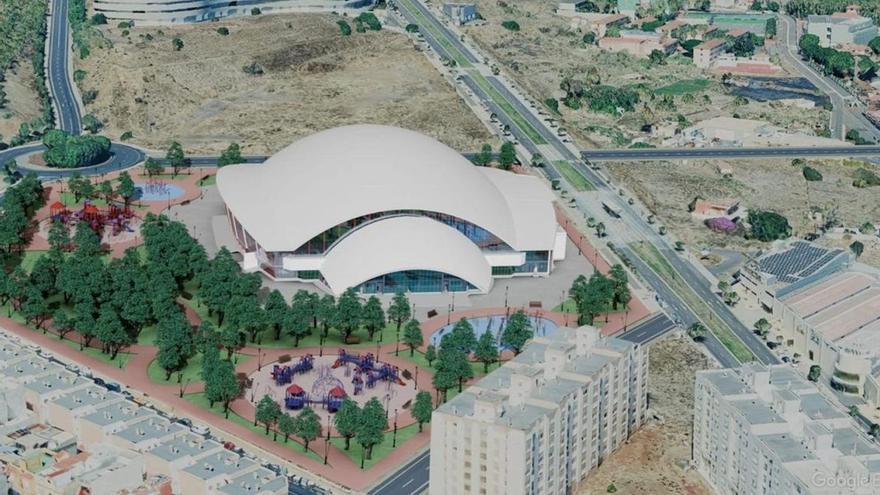
In the sporting arena, the city has faced, for decades, the need for a space meeting the standards required for hosting official competitions and significant regional, national, and international sporting events. It must also respond to the growing demand from clubs and athletes; a multipurpose facility that can simultaneously host cultural and leisure events, even large-scale ones, thereby reducing pressure on the UNESCO World Heritage historic centre. The new layout for Guajara expressly identifies sports facilities as one of the priority uses, allowing for the planning of this facility in a strategic location, well-connected and with the capacity to generate a new urban hub linked to sport, culture, and academic life. This refers specifically to the case of the large Las Mantecas sports pavilion.
Commitment to sustainability and mobility
The modification also responds to a growing social demand to protect rural land and curb urban sprawl. The document states that the operation “contributes to territorial and social cohesion, activating the city from within and reducing pressure on rural land,” aligning with the sustainable development principles of the Local Urban Agenda. The people of La Laguna, very sensitive to the protection of the agricultural landscape and territory, have repeatedly called for a compact and sustainable growth model, which this modification will clearly reinforce, according to the municipal government.
Thus, in Geneto, the modification introduces an innovative vision of the landscape and green infrastructure. The proposed alternative turns part of the area into an open space with ecological, landscape, and hydrological functions, creating a hinge between city and territory that improves ecological continuity and environmental quality. The legal report requires justifying this design in accordance with the principle of no environmental regression, ensuring that open space standards are not only maintained but strengthened.
Active mobility and safety are also central to this process. The document proposes removing planned roads that are incompatible with university activity or pedestrian safety and reinforcing pedestrian and cycle routes between campuses and neighbourhoods. This will create safer, more walkable and cyclable university environments. The Urban Planning Department explained that the approval of this minor modification to the General Urban Plan “marks the beginning of a process that will continue with broad public participation, transparency, and technical rigour.” Mayor Luis Yeray Gutiérrez concluded, “La Laguna is moving towards a more balanced, sustainable, and humane city model. This decision will allow us to address urgent needs without renouncing our identity, reinforcing our status as a university city, protecting our territory, and generating opportunities for present and future generations.”

Housing Crisis Deepens as Multiple Property Ownership Soars in Canary Islands

Canary Islands’ Housing Crisis Solved by Splitting Large Homes

Canaries to Lead Global Housing Debate at UN Forum

Canary Islands House Prices Soar 16.5% as Sales Plunge

Holiday Rental Association Leader Re-Elected Amid Regulatory Challenges

Senate to Debate Plan for 44,000 New Homes in Canaries

Canary Islands to Launch First Aerospace Engineering Degree

Santa Lucía Mayor Faces Ouster as 2020 Ruling Paves Way

Canary Islands Property Sells in Days as Buyers Face Frenzied Market
