Record investment figures for the archipelago
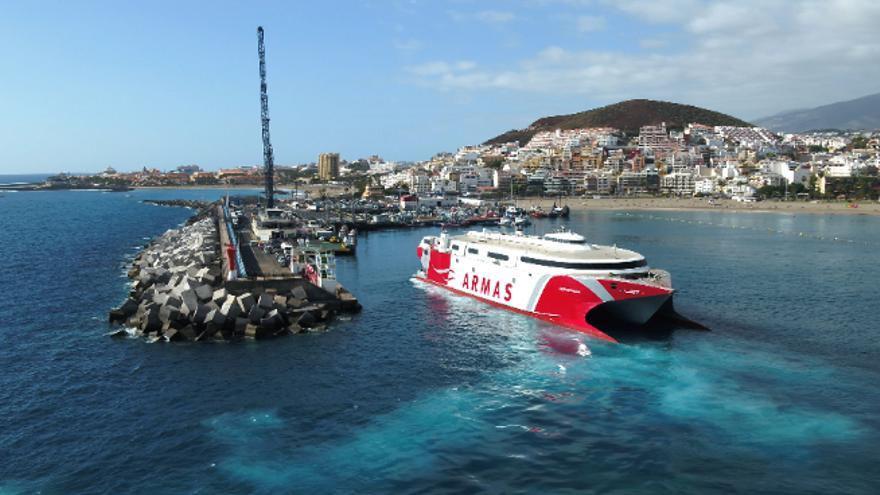
The ripple effects of Baleària’s acquisition of Naviera Armas, led by Adolfo Utor, were still evident in foreign investment figures for the Canary Islands in the first quarter of this year. Of the €67.2 million invested — the third-highest Q1 total on record for the Islands — €53.1 million, or 79 per cent of the total, fell under the category of “rental of navigation equipment”, according to Datainvex. This relates to the financial engineering used by the bondholders who owned Armas before receiving the green light from Spain’s National Markets and Competition Commission. From now on, such transactions are expected to disappear from the tally of millions invested by foreign entities in the archipelago. “Unless Baleària bought through a company based in, say, Luxembourg,” sources close to the investment market explain.
Excluding that major operation — worth around €350 million — the autonomous community received €14.1 million in foreign investment, a quarterly sum much closer to the norm seen since the turn of the century. The only two quarters in which foreign investment surpassed the figure recorded between January and March this year were the first quarters of 2022 and 2014. In 2022, the total reached €90.4 million, with €56.2 million again attributed to “rental of navigation equipment”. The first quarter of 2014 also saw activity in this category — €17.9 million out of a total of €72.9 million — though the main driver that year was the Japanese group Itochu’s entry into Canaragua, contributing €36 million.
Tourism sector drives record year
Beyond the distortions caused by specific one-off deals, last year as a whole made clear that the Canary Islands are firmly on the radar of foreign investors. Throughout 2025, €329 million from abroad landed in the Canary Islands — double the figure for the previous year. This was an all-time high, representing 22 per cent of all foreign investment attracted by Spain as a whole. Much of this record performance was driven by the strong performance of the tourism sector. Over the past decade and into the current one, major investment funds have chosen to back the archipelago’s hotel stock, acquiring numerous establishments while leaving operations in the hands of sector specialists.
In recent years, these funds have begun to divest, and the sums involved are dizzying. According to Datainvex, €202.9 million of last year’s total related to “hotels and similar accommodation” assets. In its annual report on hotel investment, consultancy firm Colliers valued the volume of hotel asset transactions in the archipelago at €1.039 billion, spread across 17 deals. The report also notes that this figure makes the Canary Islands the national leader for the third consecutive year, accounting for nearly a quarter (24 per cent) of all money changing hands for tourist properties in Spain.
Positive outlook despite national downturn
“We expect 2026 to maintain a positive tone in investment activity,” said Laura Hernando, Managing Director of Hotels at Colliers, during the presentation of the report. She based this prediction on the “attractive profitability compared with other alternatives” offered by the accommodation sector. This substantial regional increase comes against a backdrop of decline at the national level. Foreign investment in Spain as a whole fell by 21.8 per cent, recording its worst year since the pandemic despite the pull of European Union funds. However, as is also the case in the Canary Islands, foreign investment figures can be artificially boosted or depressed by the timing of major transactions.
For the Canary Islands, tourism remains the most solid differentiating factor and explains the growth in foreign investment last year while Spain as a whole saw a drop of over 20 per cent. During that period, six out of every ten euros coming from abroad landed in this sector. Property speculation is also attracting wealthy investors seeking returns. The shortage of housing supply is driving up rental prices in urban centres across Spain, and the Canary Islands have declared a housing emergency.
Methodology and data sources
All investment figures cited in this article come from Datainvex, Spain’s official database on foreign investment, unless otherwise stated. Hotel transaction data is sourced from Colliers’ annual report on hotel investment in Spain.
What’s happening in the Canaries – straight to your phone
News, weather alerts and practical updates – direct from the islands, in English. We live here and know what’s going on – before the international media catch up. Everything lands on our WhatsApp channel – no middlemen, no algorithm. Curated for families, expats and travelers.

Canary Islands tourism chief offers dialogue on residentialisation

Canary Islands office helps small councils ditch the peseta

Two tonnes of illegal tropical fruit seized at Tenerife port

Canary Islands approves new €1.6bn development fund

Mogán mayor says her €65,000 salary is too low

Abandoned cars in Canary Islands: hundreds left to rot

Work resumes on 27 affordable rental homes in Las Palmas

Los Realejos residents fight on against propane gas plant

Canarias among Spain’s poorest regions as 36.2% live on low incomes