Campaign to save historic Tenerife offroad routes
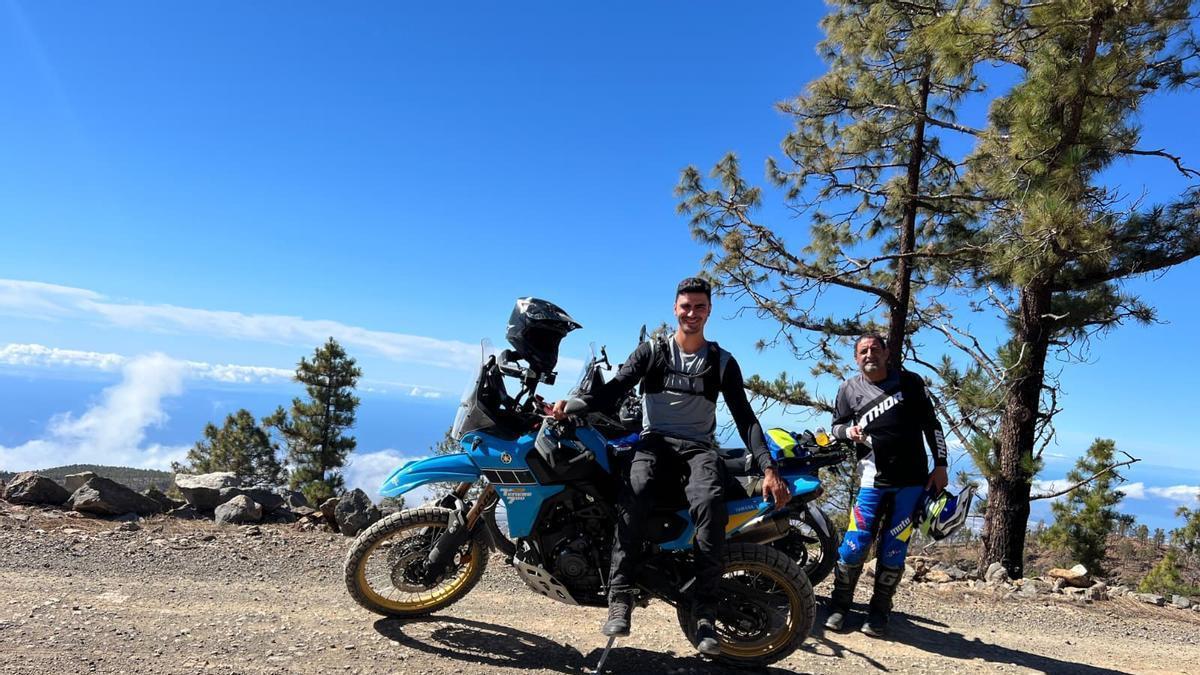
The Comunidad Offroad Tenerife is demanding that two historic routes running partly through Teide National Park remain open, arguing they form part of the island’s road, cultural and environmental heritage. The group, spearheaded by Francisco Mora, currently has around 17 people in its organisational structure and maintains links with numerous 4×4 and off-road motorcycle users in Tenerife.
Firefighter with 28 years of experience backs campaign
Francisco Mora, the driving force behind Comunidad Offroad Tenerife and a forest firefighter with 28 years of experience, maintains that orderly use of these routes can contribute to territorial surveillance, fire prevention and the preservation of historically valuable trails. He estimates there are around 12,000 offroad users on the island, including both 4×4 vehicles and motorcycles. Of these, approximately 8,000 would be motorcyclists, though this group encompasses various disciplines, from trail enthusiasts to enduro riders. The group stresses the importance of distinguishing between these activities and emphasises that its proposal is not about extreme sports, but about regulated motorcycle tourism.
Two routes at the heart of the dispute
The mobilisation centres on two sections whose future is causing concern: Montañas Negras in Arico, around three kilometres long, and the Ramón Caminero to Izaña track on the northern slope, specifically the Montaña de los Mallorquines stretch, approximately six kilometres. According to Mora, both routes were recently included in the list of tracks authorised for motor vehicles but were removed following the update of the National Park’s Management and Use Plan (PRUG). “The PRUG does not explicitly state that these specific routes will be closed, but it does say that this activity is incompatible with the conservation of the National Park,” Mora explains.
Managed access, not a free-for-all
In response, Comunidad Offroad Tenerife argues that moderate, controlled and orderly use can coexist with environmental protection. The group argues these tracks have not only recreational value but also historical significance. Mora points out that they have been in use since the mid-20th century, and are even linked to older routes used for traditional travel between the north and south of the island. He also mentions historical forestry uses, such as charcoal production, the extraction of resin for caulking ships, and the use of pitch pine wood for manor houses and churches. Although those uses are long gone, the tracks still serve current functions, particularly for hunting and beekeeping.
Proposed measures include permits and training
In this context, Comunidad Offroad Tenerife is proposing specific regulations that would allow different uses of the countryside to be compatible with the conservation of protected areas. Among the measures proposed are limited authorisations, a user fee and mandatory training. Mora argues that anyone using these routes should understand the historical, botanical, geological and wildlife value of the areas they pass through. “We want users to learn about the terrain they are travelling through and appreciate the geological context, the lava fields, the craters and the different vegetation zones,” he says.
A watchful eye on the landscape
The group also says it respects temporary closures imposed due to adverse weather or forest fire risk. Mora, who works as a forest firefighter for the Cabildo and has 28 years of experience with wildfires, adds that the controlled use of these tracks helps with territorial surveillance. In his view, the occasional presence of motorcycles or 4x4s can act as a deterrent against potential illegal behaviour, including the risk of arson. One of the group’s aims is to combat the negative image that, according to Mora, hangs over motor users in natural spaces. He acknowledges that some users behave inappropriately, but rejects the criminalisation of the entire sector. “We know there are rogue elements using bikes or vehicles as they should not, but we do not want to focus on those cases. We want off-road motorcycles and 4x4s to be seen as something that can also play a part in environmental conservation,” he says.
Historical precedent: support during the 1995 wildfire
Mora also recalls the role played by motorcyclists and 4×4 users during the major wildfire on Tenerife in 1995, when they provided support, delivered food and supplies, and transported volunteers in difficult-to-reach areas. For the spokesman, this example shows that society can also benefit from an organised community that knows the terrain well. Comunidad Offroad Tenerife argues that the future of these activities should involve a closer relationship with the authorities, clear regulation and a commitment to increasingly low-emission vehicles, including electric models.
‘If the countryside is not lived in, it dies’
The group’s core message is that responsible use of the countryside does not have to conflict with conservation. “If the countryside is not lived in, in the end it dies,” Mora sums up. From this premise, the group is calling for routes it considers ancient, useful and of heritage value to be preserved, and for a dialogue to be opened to guarantee their conservation through orderly use. This is the argument they will present next Wednesday during a meeting with Tenerife Cabildo councillor Blanca Pérez and island director Pedro Millán.
What’s happening in the Canaries – straight to your phone
News, weather alerts and practical updates – direct from the islands, in English. We live here and know what’s going on – before the international media catch up. Everything lands on our WhatsApp channel – no middlemen, no algorithm. Curated for families, expats and travelers.

Canary Islands tourism chief offers dialogue on residentialisation

Canary Islands office helps small councils ditch the peseta

Two tonnes of illegal tropical fruit seized at Tenerife port

Canary Islands approves new €1.6bn development fund

Mogán mayor says her €65,000 salary is too low
Abandoned cars in Canary Islands: hundreds left to rot
Work resumes on 27 affordable rental homes in Las Palmas

Los Realejos residents fight on against propane gas plant

Canarias among Spain’s poorest regions as 36.2% live on low incomes