Compiled with the help of artificial intelligence, based on Spanish-language information. Source below the article.
Hotel wins legal battle over coastal land dispute
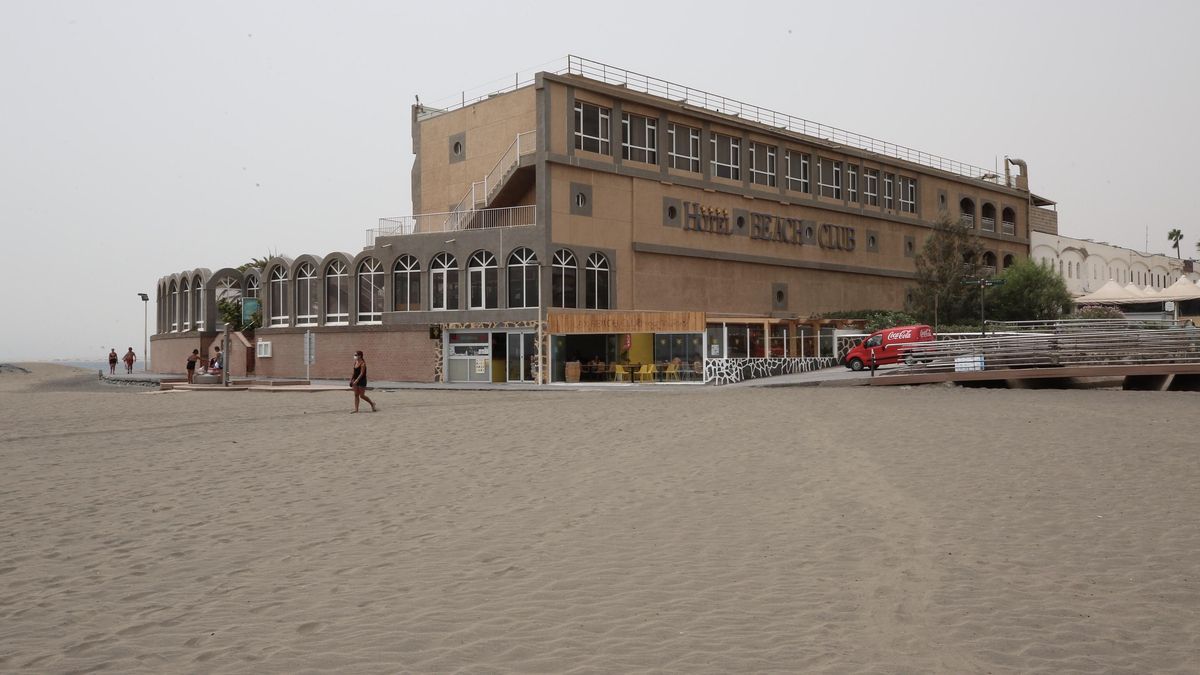
The company Extur GC, owner of the four-star Beach Club hotel on San Agustín beach in San Bartolomé de Tirajana, has succeeded in having the coastal boundary delimitation annulled for a stretch between Morro Besudo and El Veril – a ruling that has effectively spared the establishment from partial demolition ordered by the Ministry for the Ecological Transition.
The hotel had been subject to a partial demolition order since 2010 for occupying land classed as public maritime-terrestrial domain. The disputed area covers a total of 130 square metres of a four-storey building, within a strip measuring 70 metres in length and varying in width from two to five metres.
National Court overturns boundary decision
The National Court (Audiencia Nacional) has now set aside 700 linear metres of the boundary delimitation, accepting the argument that the construction of the seafront promenade at San Agustín beach had altered the characteristics of the land and, consequently, its status as public domain.
Previously, the company had appealed to the Canary Islands High Court of Justice (TSJC) after the administration failed to respond, requesting that the delimitation established in 1989 be annulled and that the hotel’s right not to be demolished be recognised. At the end of 2021, the Canary Islands high court declared itself incompetent to resolve the matter and passed it to the National Court, which has now issued its ruling – although the Supreme Court will have the final say should a fresh appeal be lodged.
Legal basis for the claim
The hotel owner’s claim, which has led to the National Court’s ruling, was based on the Third Additional Provision of the 2013 Coastal Law. This provision establishes that, for certain seafront promenades built before the law came into force, the boundary of the public maritime-terrestrial domain is set at the outer edge of these infrastructures, meaning that land on the other side can cease to form part of the public domain.
The San Agustín beach promenade was built by San Bartolomé de Tirajana council in 2000 with the authorisation of the Coastal Demarcation authority. The National Court concluded that the legal requirements are met, given that this was a substantial public works project that brought about a real physical alteration of the terrain, rather than a simple walkway or wooden path.
State opposition rejected
The State Legal Service, however, opposed the claim, arguing that the land still retains the characteristics of public maritime-terrestrial domain. The administration’s representative submitted photographs showing that the promenade is built on elevated pillars, which physically does not prevent the passage of waves or the arrival of sand up to the hotel.
The National Court dismissed this objection, recalling that the Supreme Court annulled, in a ruling dated 31 January 2024, the section of the 2022 General Coastal Regulations that limited these declassifications where flood-prone areas or land with characteristics of public maritime-terrestrial domain persisted. The court noted that the promenade has caused an alteration of the terrain, that it is not a simple walkway or wooden path, and that it was built by a public body and authorised by the state, thereby permitting the modification of the boundary delimitation.
Partial victory and next steps
The ruling is only a partial success, however, as the company must now wait for a new procedure to be concluded that will formalise the modification of the boundary. Sixteen years after the firm demolition order was issued, it remains unexecuted – and now a revised delimitation backed by the National Court may just have saved the hotel.
What’s happening in the Canaries – straight to your phone
News, weather alerts and practical updates – direct from the islands, in English. We live here and know what’s going on – before the international media catch up. Everything lands on our WhatsApp channel – no middlemen, no algorithm. Curated for families, expats and travelers.

Canary Islands approves new €1.6bn development fund

Mogán mayor says her €65,000 salary is too low

Abandoned cars in Canary Islands: hundreds left to rot

Work resumes on 27 affordable rental homes in Las Palmas

Los Realejos residents fight on against propane gas plant

Canarias among Spain’s poorest regions as 36.2% live on low incomes

Canary Islands bananas lose ground to imported bananas

Canary Islands bottom of Spain’s social housing table

Three migrant boats reach Canary Islands in 24 hours