Compiled with the help of artificial intelligence, based on Spanish-language information. Source below the article.
La Oliva bans quad and buggy firms from eight rural paths
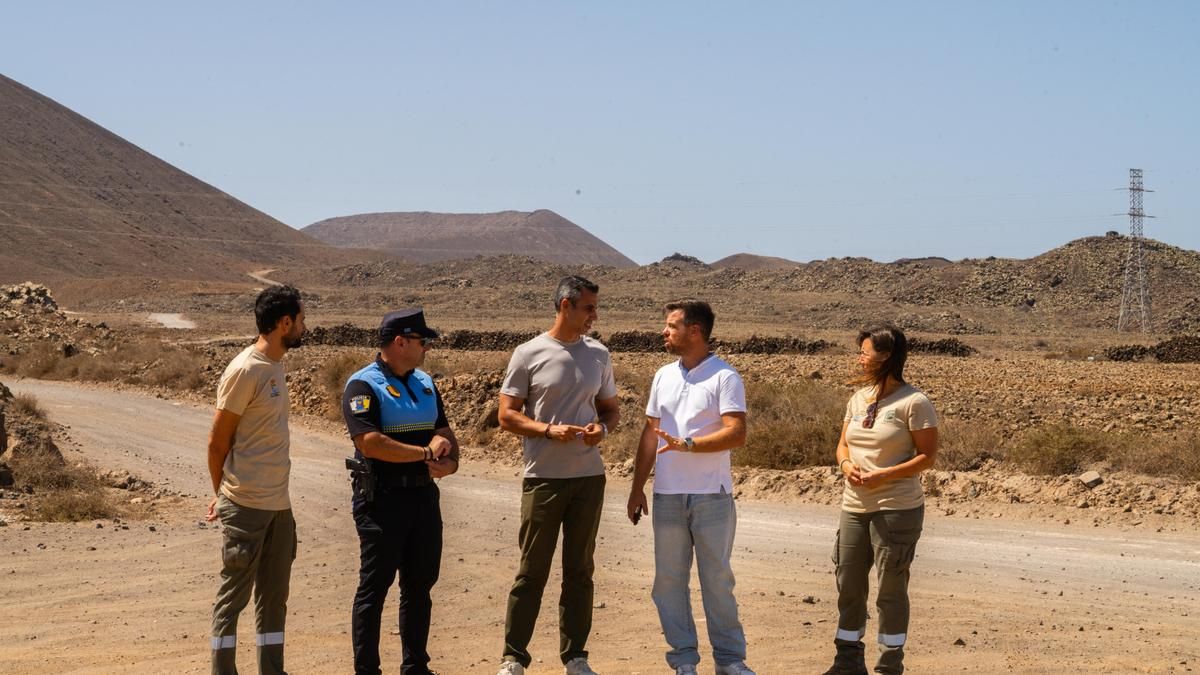
The council of La Oliva in Fuerteventura has prohibited quad bike, buggy and other recreational vehicle companies from operating on eight council-owned rural paths that are especially sensitive because of their environmental value.
In a statement, the council explained that the aim is not only to protect the municipality’s sensitive natural surroundings but also to safeguard road safety for walkers and cyclists, responding to a demand from local residents themselves.
Residents pushed for action
Residents have spent the past few months raising the problems caused by this type of vehicle in the area with the council, through written submissions and petition drives.
According to the council, joint work between the local police headquarters and the environment department concluded that the ban is legally viable and that the local authority has both municipal competence and express cover in its municipal traffic ordinance to restrict the movement of these vehicles on specific paths.
The business activity is therefore not banned outright, but reorganised in line with the island ordinance, so that companies will continue to operate on designated stretches.
Environmental and safety concerns
Among the reasons cited are the protection of biodiversity and environmentally sensitive areas, proximity to Special Protection Areas for Birds (ZEPA) and Special Areas of Conservation (ZEC), effects on homes and livestock farms, safety on paths shared with pedestrians and cyclists, and soil degradation, erosion and dust generation.
The document also recommends that the measure be implemented through the corresponding municipal instrument, backed by technical reports justifying the selection of paths and accompanied by specific signage at all their access points.
The council considers the case of the path between Corralejo, Majanicho and El Cotillo to be especially significant, as its route runs entirely through the Costa Norte de Fuerteventura Special Protection Area for Birds and largely coincides with the Huella de Leyenda HL3 trail.
Paths near Tindaya, Esquinzo, Fenimoy, Fimapaire and Cien Hombres are also covered, where factors relating to protected areas, homes, livestock farms, trails and land degradation come together.
Tourism must coexist with conservation, says mayor
The mayor of La Oliva, Isa Blanco, said: “We are responding to a demand that exists in different parts of the municipality, and we are doing so rigorously, with reports and with all legal guarantees. Tourist activity has to be compatible with the conservation of our territory, with the peace of mind of our residents and with the traditional use of our paths.”
Blanco added that La Oliva has an extraordinary natural heritage that must be protected. “It is not about acting against any economic activity, but about regulating certain uses where they are causing problems and where the technical reports tell us that intervention is necessary,” she said.
For his part, the environment councillor, David Fajardo, stressed that La Oliva cannot allow certain recreational uses to end up damaging paths, affecting protected areas or interfering with the road safety of residents, farmers, walkers and cyclists.
“We have to find a balance between tourist activity and conservation, but in the most sensitive places the protection of the territory has to prevail,” he said.
Signage to be installed at affected access points
Following this first step, the council has announced that it will also install the corresponding signage at the access points to the affected paths.
What’s happening in the Canaries – straight to your phone
News, weather alerts and practical updates – direct from the islands, in English. We live here and know what’s going on – before the international media catch up. Everything lands on our WhatsApp channel – no middlemen, no algorithm. Curated for families, expats and travelers.
Spanish astronaut trains in Lanzarote for Moon mission

Tivoli La Caleta hosts first red tuna Kaitai in Canarias
La Laja natural pools reopen in Las Palmas
Canary Islands hotel prices rise 6.08% in August
Canary Islands hotel prices almost double since 2008

CC Tenerife calls for population cap but avoids tourism moratorium
Canary Islands cruise tourism set for 18% growth
Guachinche David: Traditional Canarian food in Santa Úrsula
Tenerife named best European island for 2026 travel