Compiled with the help of artificial intelligence, based on Spanish-language information. Source below the article.
If demand is pressing, there will always be someone looking for a way to increase supply. And if, on top of that, the issue is a deep-rooted social problem, the public sector will row in the same direction. That is exactly what is happening now with the Canary Islands property market, as reflected in the figures from June. A total of 1,663 mortgage loans were signed across the Islands, a figure not seen in a sixth month of the year since 2010, when 2,391 mortgages were recorded and the bubble of the early noughties was still deflating.
A response to real demand
Ricardo Gulias, managing director of RN Tu Solución Hipotecaria, attributes this growth in mortgages to the confirmation of a real, active demand for housing that responds when financing opportunities arise. Construction is not at the unhealthy level of dynamism it reached back then – 30,000 homes per year – but something is stirring. Not at the speed business leaders would like, who argue that if production is not higher, it is because administrative red tape is getting in the way. Just a few months ago, Salud Gil, president of the Las Palmas Association of Construction and Property Developers, estimated that 12,000 homes a year were needed to resolve the problem. We are nowhere near those numbers, which would mean adding 140,000 between now and 2039, according to the business representative’s calculations.
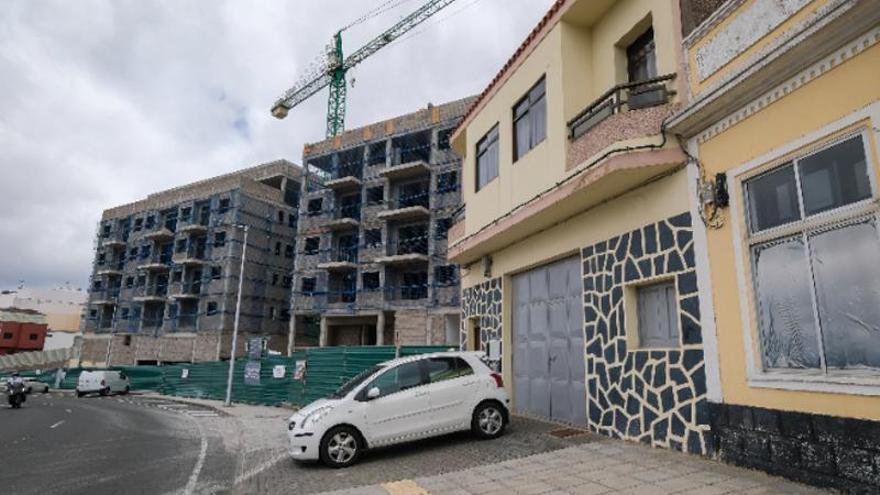
What is true is that during the past year, construction began on 5,000 homes, which are gradually coming onto the market as they receive the relevant certification. When that happens, they become new opportunities for those looking for somewhere to live. There are so many buyers that their time on property portals and other advertising channels lasts no more than a few hours. And each disappearance is liable to turn into a mortgage loan.
Leading the country in growth
That is one of the reasons explaining why the signing of home purchase loans shot up last June, as confirmed by data published yesterday by the National Statistics Institute (INE). The 1,663 signed in the region during the 30 days of June – in the years before the 2008 crash, that figure regularly exceeded 6,000 – represent 397 more than twelve months earlier. That increase, in relative terms 31.3%, is far greater than the national average, which is also on an upward trajectory with double-digit intensity (10.8%). In fact, the Islands were the region of Spain with the highest percentage growth of all. At least in June, because there may come times when the concentration of new assets hitting the market is smaller.
The interest rate factor
However, the logical increase in supply does not entirely explain the rise in mortgages. Expectations of higher borrowing costs are also a driving force. It was anticipated that at its July meeting, the European Central Bank (ECB) would decree an increase in interest rates in response to rising inflation. However, the body with sovereign authority over the EU’s monetary policy decided to hold off; all signs point to that rise happening at the institution’s September meeting. María Matos, director of research at property portal Fotocasa, said she believes the effect of the new rate environment will begin to show in the coming months and, reports Efe, predicts that the mortgage market will slow as the new financial conditions fully filter through to completed transactions.
Gulias counters that objective fact with the strengths of demand. Economic stability and solid employment, combined with pent-up housing demand and competition among financial institutions to cushion rate rises, will, in his view, keep the market dynamic during the second half of the year. Come July, there was no shortage of buyers deciding to get ahead of the rate increase that ultimately did not materialise, closing home purchases before any change. Beyond private individuals, investors speculating in this corner of the market were also active. And all the more so given that the Canary Islands is one of the territories most under pressure from foreign demand – 25.6% of transactions last year, according to the College of Registrars – a factor absent from the equation in most other Spanish regions.
Help for first-time buyers
There is another factor that has proven significant in the past: the launch of schemes to make it easier for younger people to get on the property ladder. Even more so if, as with the plan presented last month by the Canary Islands Government, the age limit is extended to 40. Naturally, an initiative that is not even operational yet could have had little influence on June’s purchasing decisions. It will be able to do so from the moment the first applications are approved, granting access to mortgage loans on advantageous terms.
What’s happening in the Canaries – straight to your phone
News, weather alerts and practical updates – direct from the islands, in English. We live here and know what’s going on – before the international media catch up. Everything lands on our WhatsApp channel – no middlemen, no algorithm. Curated for families, expats and travelers.

Canary Islands tourism chief offers dialogue on residentialisation

Canary Islands office helps small councils ditch the peseta

Two tonnes of illegal tropical fruit seized at Tenerife port

Canary Islands approves new €1.6bn development fund

Mogán mayor says her €65,000 salary is too low

Abandoned cars in Canary Islands: hundreds left to rot

Work resumes on 27 affordable rental homes in Las Palmas

Los Realejos residents fight on against propane gas plant

Canarias among Spain’s poorest regions as 36.2% live on low incomes