A tunnel to close the Insular Ring
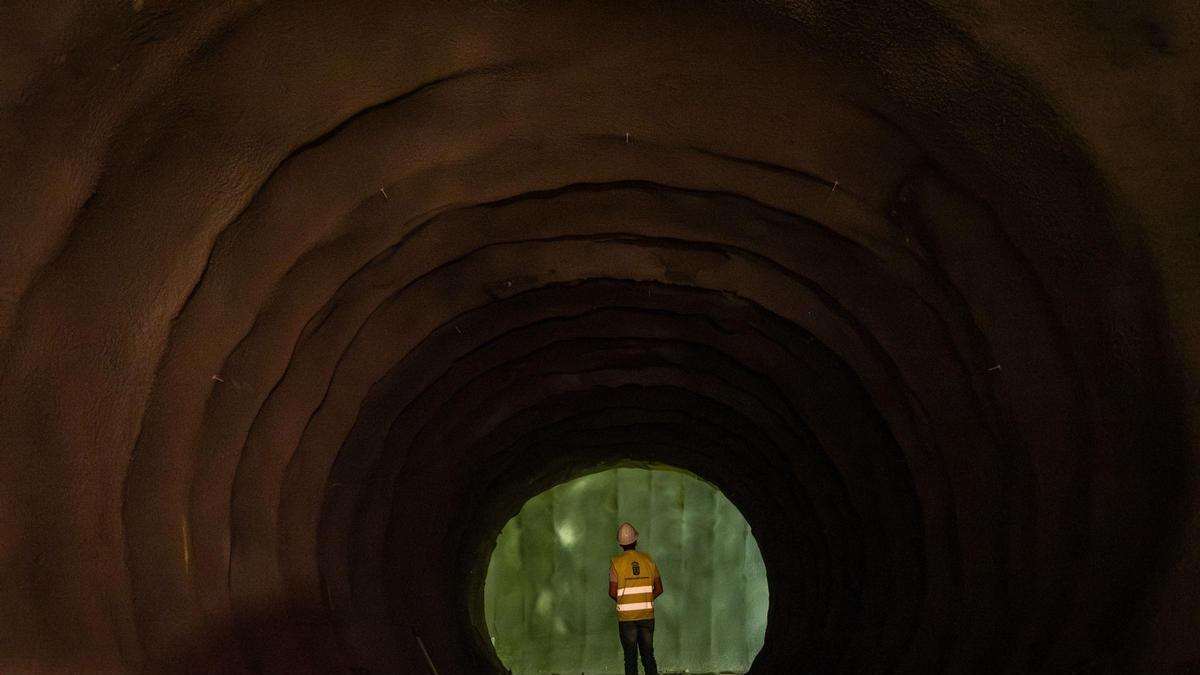
A giant seven-kilometre tunnel with a budget of more than €600 million. That is the solution being studied by the Canary Islands government to close the Insular Ring on the northern side of Tenerife, specifically on the stretch between La Guancha and Los Realejos. The regional government’s Deputy Ministry of Infrastructure has concluded that this is the best alternative for completing the ring road that would improve connectivity on the island, following two preliminary studies.
This twin-tube tunnel would become the largest in Spain, beating the Erjos tunnel by two kilometres – the latter currently under construction precisely on the Tenerife ring. That project, which links the settlement of El Tanque (north) with Santiago del Teide (south), is expected to be finished next year. The proposal for this other mega-tunnel has now entered its study phase.
Protecting the northern corridor
Its suitability is based on the fact that it bypasses the northern corridor, which passes through iconic and ecologically rich protected areas such as Tigaiga, Barranco Ruiz and Los Campeches. The tunnel would begin at the PIRS (public industrial estate) at La Guancha and end at the entrance to the TF-5 motorway in Los Realejos. The Deputy Ministry has thus ruled out the idea put forward in the previous legislature of an open-cut exit at Las Aguas (San Juan de la Rambla).
The Deputy Minister for Infrastructure, Francis González (Coalición Canaria), explains that one of the preliminary studies is environmental in nature and that the other “analyses costs, route alternatives and preliminary questions for the future construction project”. The documents have updated the information on this project, which had been “practically parked since the beginning of this century”, he contextualises.
Timeline still unclear
The timetable for this major undertaking has not yet been defined. For now, the deputy minister has presented the proposal to San Juan de la Rambla town hall and to several residents’ groups that opposed the earlier plans, which would have emerged onto the Rambla coastline. The Cabildo of Tenerife is also aware of the regional government’s proposal, but “it is still too early to talk about construction dates”.
“We need to secure funding to commission the drafting of the definitive design and construction project,” González qualifies. Meanwhile, the work is now focused on “resolving technical and environmental questions, so that the future initiative can be drafted with as much information as possible and without unnecessary delays”.
Funding is the main obstacle
The main obstacle now is “funding”, admits Francis González, alluding to the need for the Canary Islands to have “a new road agreement with the Spanish state”. “There is a framework of uncertainty regarding available resources. We need greater contributions and mechanisms that allow us to use surpluses or leftover funds.” Once this financial hurdle has been overcome, “the next big step for this tunnel will be commissioning the project”, details the head of the department, which falls under the Ministry of Public Works.
The nearest horizon is September, when meetings will continue with the various departments of the regional government. The approach is “not to stop the work and to leave the ground prepared so that, when the project is commissioned, all that information can be incorporated and the administrative process can be as quick as possible”, he argues.
Real need for infrastructure
Beyond the possibility of northern Tenerife housing Spain’s largest twin-tube tunnel, there is the real need for this infrastructure. Improving mobility on the island is a pending and complex challenge, and this construction, besides bringing the close of the eternal Insular Ring closer, would be “a relief”.
“It would improve connectivity with Isla Baja, provide that so-sought-after continuity to the ring, increase safety and prevent a strategic road from depending on a slope prone to rockfalls,” he lists. In this regard, González recalls all the episodes of TF-5 closures as it passes through San Juan de la Rambla. To these advantages, he adds “the redistribution of traffic and the easing of pressure on this road”. Around 35,000 vehicles circulate daily through the Rambla area, and there are frequent tailbacks.
Furthermore, the regional deputy minister warns that the opening of the tunnel between Erjos (El Tanque) and Santiago del Teide will generate “greater traffic attraction towards that northern corridor of Tenerife”. “It would make no sense to put a piece of infrastructure of this magnitude into service and leave the route through the north without adequate continuity,” he stresses. He also issues a warning: “Tenerife has an infrastructure deficit that must be corrected.”
What’s happening in the Canaries – straight to your phone
News, weather alerts and practical updates – direct from the islands, in English. We live here and know what’s going on – before the international media catch up. Everything lands on our WhatsApp channel – no middlemen, no algorithm. Curated for families, expats and travelers.

Canary Islands international air arrivals fall 1.3% in September

Helicopter evacuates US cruise passenger near Tenerife

El Hierro airport sees 3.6% rise in September passengers

Gran Canaria approves €509k works to shore up GC-200 slope

Canary Islands gets €47.5m for free public transport in 2026

Canary Islands airports see 0.9% fall in September passengers
El Rejo road in La Gomera to close for six hours on Tuesday

Man, 65, seriously injured in GC-1 crash in Agüimes

Las Palmas traffic changes for emergency sewer works