
August: a stargazer’s paradise in the Canary Islands
August is the perfect month to look up at the sky in the Canary Islands and the most anticipated time of year for astronomy enthusiasts. This 2026 not only brings the warm summer nights ideal for stargazing but also hosts some of the most significant astronomical events. The solar eclipse, the Perseids, and the Sturgeon Moon will mark the lunar calendar, which also offers perfect conditions for enjoying them to the full.
The Sturgeon Moon lights up the August night sky
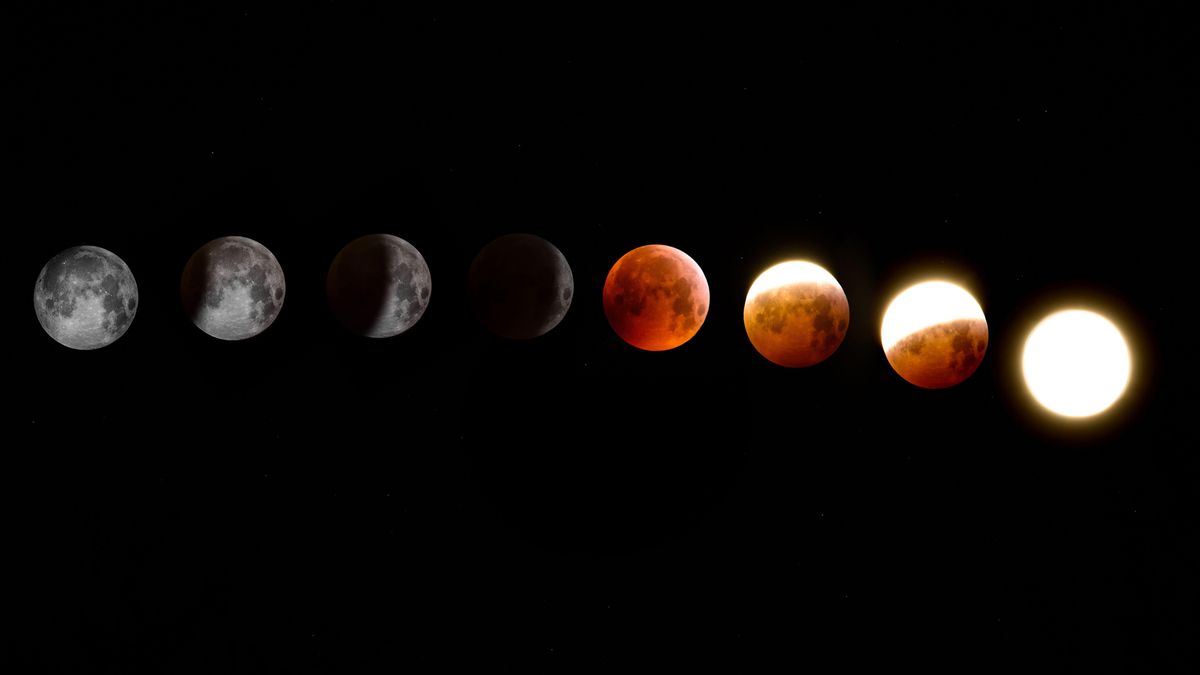
Following July’s full moon, our satellite begins a new cycle of increasing illumination until it reaches its full splendour once again. The August full moon arrives on Friday 28th and will reach its peak at 5:18 am (local Canary Islands time). Across the archipelago, this astronomical phenomenon can be observed in excellent conditions from numerous viewpoints, beaches, and areas with low light pollution.
This moon is traditionally known in the northern hemisphere as the Sturgeon Moon, a name inherited from the Native American tribes of the Great Lakes region. During this month, sturgeon fishing was particularly abundant, which is why they named the full moon accordingly. In Europe, it also receives other popular names, such as the Red Moon, due to the orange or reddish hue it can take on when it appears near the horizon. In the Canary Islands, this effect is usually more intense during the summer months, when the calima (suspended dust particles) alters the way the atmosphere scatters moonlight.
If weather conditions are favourable, the August full moon offers an excellent opportunity to enjoy the night sky from any island in the archipelago, especially in elevated locations such as Teide National Park, the Roque de los Muchachos observatory, or the viewpoints on Gran Canaria, Fuerteventura, and Lanzarote.
Key dates for lunar phases and spring tides
These are the key dates according to official astronomical data:
As with every cycle, the gravitational alignment during the new moon on 12th August and the full moon on 28th August will trigger the so-called spring tides, making the movements of high and low tide the most pronounced of the month.
Perseids 2026: set to be one of the best meteor showers in years
If August is known for anything, it is for being the month of the Perseids (or St Lawrence’s Tears), the most popular meteor shower of the year due to its high density – with potential rates exceeding 100 meteors per hour – and the pleasant night-time temperatures. The 2026 Perseids will offer unrivalled observation conditions.
The peak of maximum activity for this spectacular meteor shower will take place during the early hours of 12th to 13th August 2026, coinciding with the new moon phase – one of the most important factors for enjoying the astronomical phenomenon. The absence of moonlight will make the sky much darker, especially in areas far from light pollution. This will allow observers to see a greater number of meteors, including the fainter shooting stars and the brightest fireballs, all without the need for a telescope. Everything points to the 2026 Perseids being one of the best meteor showers in recent years for naked-eye viewing.
A historic total solar eclipse over the Canary Islands
This month, one astronomical event will clearly steal the spotlight from the Moon. On Wednesday 12th August 2026, coinciding with the new moon phase, a total solar eclipse will occur. In the Canary Islands, it will only be visible as a partial eclipse, just before sunset. For a few minutes, the lunar disc will cover up to 74% of the Sun’s surface, darkening the sky in the late afternoon and revealing the solar corona.
This is a historic event that the scientific community and enthusiasts have been preparing for over years. Indeed, the Instituto de Astrofísica de Canarias (IAC) is preparing scientific and outreach observations, highlighting the international NATE project and visual safety guidelines.
The eclipse will begin in the Canary Islands around 6:56 pm, reaching its maximum between 7:52 pm and 7:54 pm, depending on the island, and will end between 8:43 pm and 8:46 pm. The phenomenon will coincide with sunset, when the Sun is already very close to the horizon, a scenario that will add a special charm to an astronomical appointment that will hardly be repeated for several generations.
Planets on show: Venus, Mars, Saturn and Jupiter
As for the visible planets in August, the best observation opportunities will depend on the time of day. Before dawn, Mars and Saturn will gain altitude over the eastern horizon, offering an excellent chance for observation. At nightfall, Venus will shine with great intensity and be the most striking planet in the evening sky. Additionally, during the last days of August, Jupiter will reappear over the eastern horizon before dawn, marking its return to the morning sky after its conjunction with the Sun.
What’s happening in the Canaries – straight to your phone
News, weather alerts and practical updates – direct from the islands, in English. We live here and know what’s going on – before the international media catch up. Everything lands on our WhatsApp channel – no middlemen, no algorithm. Curated for families, expats and travelers.

Canary Islands sea hits second-hottest year on record

Legal bid to halt tree felling in Santa Cruz’s La Salud

Fiesta del Charco: A journey through La Aldea’s past

Corralejo dunes power line set for removal

ULPGC launches 14 research projects at Las Canteras

TMT will never be built, says Canary Islands astrophysics chief

Pedro Duque: Canarias is the “ultimate dream” for rockets

Court blow to Tenerife motor circuit project
La Palma faces new volcanic risk planning deadline
