
Beach closures signal systemic failure, warns foundation
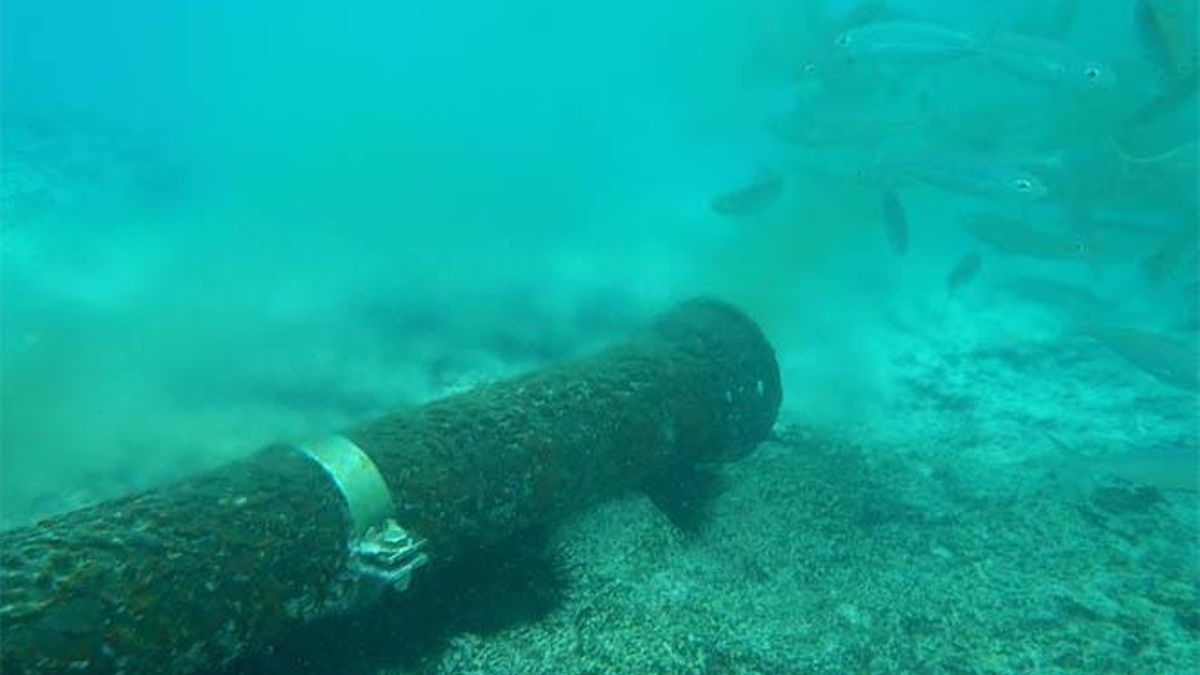
The Canarian Foundation has warned that beach closures across the Canary Islands due to faecal contamination are no longer isolated incidents, but rather a symptom of a chronically incomplete sewage system. “Each beach closed due to contamination does not represent a standalone incident, but the visible manifestation of a sanitation network that still has significant shortcomings. As long as the treatment network is not completed and all discharge points are properly authorised and controlled, these episodes will continue to recur,” the organisation detailed.
Repeat closures at popular beaches
The Foundation highlighted several examples. Playa Jardín in Puerto de la Cruz reopened in 2025 after nearly a year closed due to faecal contamination, but controversy returned in 2026 over the alleged use of hypochlorite (bleach) in wastewater treatment. In June this year, Playa del Pueblo in Playa Blanca (Yaiza, Lanzarote) banned swimming as a precaution following a wastewater spill caused by a blockage in the sewage network. Just days later, on 7 July, Leocadio Machado beach in El Médano (Granadilla de Abona) was forced to close again after concentrations of Escherichia coli—a bacterium found in human faeces—exceeded permitted limits.
Shocking statistics on unauthorised discharge points
According to the Government of the Canary Islands’ Land-to-Sea Discharge Register, updated in 2025, the archipelago records 403 discharge points into the sea, of which 291 (72%) lack a valid permit. Tenerife presents the most concerning situation, with 180 discharge points—almost half of the Canary Islands’ total—and only 59 of them authorised. The data also reveals a significant technical deficiency: only 13% of discharge points use submarine outfalls, the appropriate infrastructure for dispersing effluent, while more than 70% discharge through systems that do not offer optimal evacuation conditions. This deficit lies behind some of the episodes that have forced beaches such as Playa Jardín and Leocadio Machado to close.
EU condemnation and structural failings
The gravity of the problem, the Foundation emphasises, was underscored by the Court of Justice of the European Union, which in December 2025 condemned Spain for failing to comply with EU regulations on urban wastewater treatment. The ruling specifically identifies several treatment systems in Tenerife—including Añaza, Candelaria-Casco, Adeje-Arona, and La Laguna-Santa Cruz—as facilities that did not meet treatment obligations before discharging into the sea. The Foundation also points out that 94 discharge points release effluent directly onto 10 of the archipelago’s 24 marine Special Areas of Conservation (SACs), demonstrating that “pressure on protected spaces is part of a structural problem, not isolated cases.” It notes that the recurrence of these episodes is particularly evident in municipalities such as Adeje, where beaches like Troya and El Puertito experience closures due to bacteriological contamination practically every summer.
Infrastructure progress still incomplete
On the island of Tenerife, the Monitoring Committee comprising ACUAES, the Cabildo of Tenerife and the Insular Water Council certified in May that the actions planned under the sanitation agreement have reached 67% completion, with €158 million spent out of the planned €233.5 million. However, the Foundation recalls that a significant portion of the infrastructure needed to complete the system remains pending. Although some treatment plants are now finished or in the testing phase, collector pipes, pumping stations, connections, and other essential works are still lacking for the entire network to function as an integrated system—the Acentejo network, for example, is still in the project design phase. “As long as this infrastructure is not completed, contamination episodes and precautionary beach closures will continue to recur, especially during the months of highest tourist pressure,” it warns.
SOS Costas Canarias report calls for urgent action
The SOS Costas Canarias report, prepared by the Canarian Foundation and the Sustainability Observatory, proposes as priority measures: accelerating the modernisation of sanitation infrastructure, completing the pending networks, ensuring the authorisation and effective control of all discharge points, and strengthening surveillance of those affecting protected marine areas.
What’s happening in the Canaries – straight to your phone
News, weather alerts and practical updates – direct from the islands, in English. We live here and know what’s going on – before the international media catch up. Everything lands on our WhatsApp channel – no middlemen, no algorithm. Curated for families, expats and travelers.

Canary Islands sea hits second-hottest year on record

Legal bid to halt tree felling in Santa Cruz’s La Salud

Fiesta del Charco: A journey through La Aldea’s past

Corralejo dunes power line set for removal

ULPGC launches 14 research projects at Las Canteras

TMT will never be built, says Canary Islands astrophysics chief

Pedro Duque: Canarias is the “ultimate dream” for rockets

Court blow to Tenerife motor circuit project
La Palma faces new volcanic risk planning deadline
