The paradox repeats itself
Tourism in the Canary Islands once again finds itself caught between two opposing realities. On one hand, demand continues to grow relentlessly, keeping the archipelago among Europe’s most sought-after destinations. On the other, an increasingly heated debate rages over the impact of this success on housing access, mobility, public services, and the land itself.
According to the latest data analysed by elDiario.es and the Urban Journalism Network, using the Eurostar report on bookings via Airbnb, Booking and Expedia, the Canary Islands rank as the fourth most tourism-pressured region in Europe. Across an area of just 7,447 square kilometres spread over eight inhabited islands, around 13,000 nights were booked in holiday lets per 1,000 residents – nearly double the rate seen in regions such as Andalusia or the Valencian Community. This reflects the intense pressure of tourism on the territory relative to its resident population.
Epicentre of the surge in Tenerife
The rise of holiday lets has one of its main epicentres in Tenerife. The island accounts for the highest number of overnight stays in the archipelago, and between 2018 and 2025, the number of nights spent there virtually doubled, rising from 5.4 million to 12.5 million – an increase of 132.9 per cent. This places the province of Santa Cruz de Tenerife among the most active in Spain for this type of accommodation.
The phenomenon is particularly acute in Puerto de la Cruz, the seventh city in Spain with the highest concentration of such accommodation, after overnight stays per 1,000 residents grew by 106.9 per cent over those seven years.
Growing social unrest and protest
This growth coincides with an intensifying debate over tourism saturation and its effects on local residents’ quality of life. Social discontent has become visible in numerous demonstrations held in recent years, where thousands of people have called for an end to mass tourism and a shift towards a more sustainable model.
Although 60 per cent of holiday let bookings came from international visitors, domestic tourism has also gained ground in recent years. Since 2018, the number of Spaniards choosing this type of accommodation within Spain has more than doubled, a trend that has further increased pressure on the supply of holiday lets in the archipelago.
Longer stays and their consequences
The number of annual overnight stays in holiday lets has also risen. As we reported, Tenerife has seen the biggest increase, but across the region as a whole, foreign visitors have gone from spending an average of 11.2 nights in 2018 to more than 23 days in 2025. This increase has intensified pressure on the available housing stock, as more properties remain dedicated to tourist use for much of the year, which in turn limits the territory available for residential housing due to the island’s constraints.
This phenomenon has implications for both the tourism sector and the residential market. On the one hand, it consolidates the importance of holiday lets as an alternative to traditional hotel accommodation, but on the other, it inevitably reduces the availability of housing for the resident population and pushes up rental prices in areas with higher tourism activity.
Furthermore, the shift of part of the demand from hotels towards holiday lets changes the distribution of tourist spending and poses new challenges for destination planning, balancing economic activity with housing access, and the sustainable management of the archipelago’s resources.
Experts warn of structural transformation
Claudio Milano, an anthropologist and tourism researcher, says that while there is a decentralisation of holiday lets, this does not mean a reduction in the most touristic areas. “There is no relaxation, quite the opposite,” he warns. Adding to this is the phenomenon of international students, digital nomads and temporary, floating residents who spend a few months in a city and can put even more strain on the housing market.
He also warns that municipal or regional regulations have little impact because “they are up against multinationals that do not have a tax base in Spain, making it complicated to apply fiscal deterrent measures”, and there is also “a lack of real supervision of compliance”. He adds: “There are ways to get around them, such as registering as a resident at a property and then renting it out.”
Seasonal patterns and regulatory response
Foreign tourists continue to prefer the winter months for visiting the islands. December and January are the months with the highest number of overnight stays in holiday lets per foreign visitor. For domestic tourists, the pattern is different. Spaniards prefer July and August for their holidays in the Canary Islands, although even in that season, more foreigners than Spaniards stay overnight, with 189 more per 1,000 residents.
This marked seasonality, combined with the growth of long-stay visits and rising demand for holiday lets, has fuelled debate about the effects of this accommodation model on the Canary Islands’ residential market. Various experts point out that the expansion of holiday lets is helping to transform how the housing stock is used and increasing pressure on access to housing.
The Canary Islands government steps in
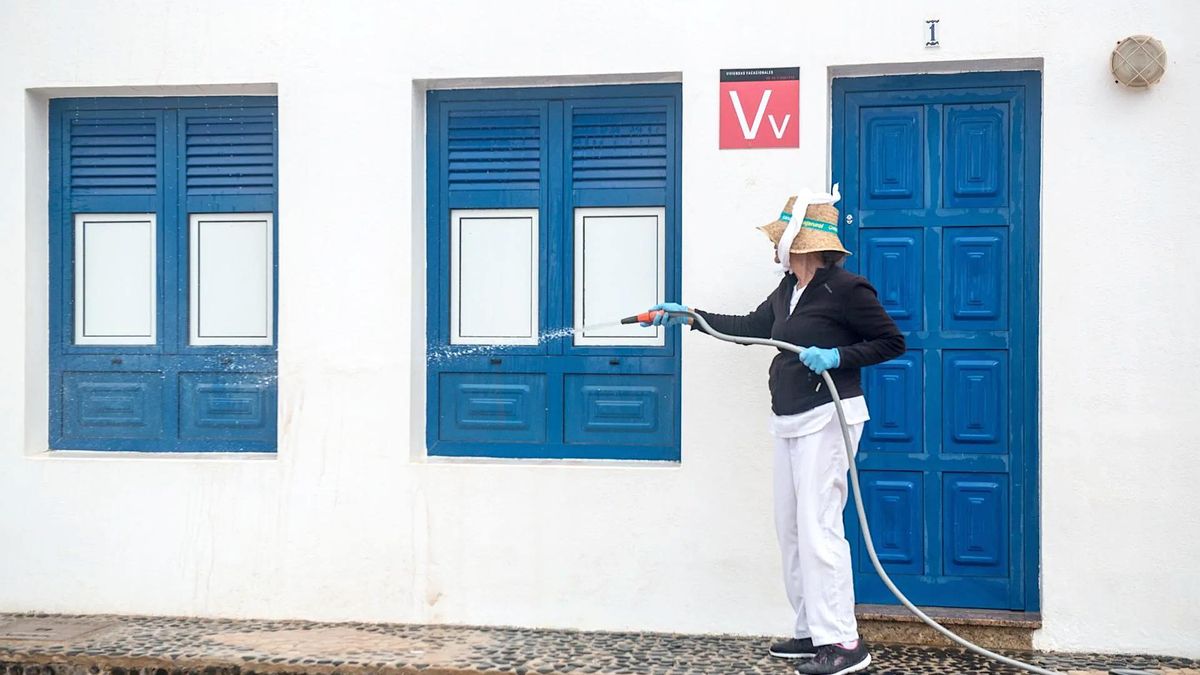
The Canary Islands government applied the brakes to holiday rentals after massive social protests on the islands and opted to approve the Sustainable Regulation of Tourist Use of Homes Act (Ley de Ordenación Sostenible del Uso Turístico de Viviendas), aiming to tackle the housing crisis and prevent residents from being pushed out of their neighbourhoods. This legislation bans the registration of new tourist apartments for five years (unless local councils can demonstrate they have capacity for them) and completely prohibits holiday use of social housing (VPO). With a general cap of 10 per cent per municipality, the law aims to return control of the territory to residents’ associations and mayors, who now have the power to decide where and how many tourists can stay in residential areas to avoid the archipelago’s collapse.
However, although the measure has succeeded in halting the rise of tourist apartments, it has not managed to relieve pressure from the housing crisis. Geographer Agustín Cocola, a member of the Territorial Analysis and Tourism Studies Research Group at the University Rovira i Virgili in Catalonia, states that “the holiday rental market has already structurally transformed many local markets, and even if growth slows, the accumulated volume remains very high. So I would say we are more in a phase of adjustment than a change of trend with clear effects on housing access.”
Pablo Tucat, an economist specialising in housing at the consultancy Ksnet, argues that measures such as municipal restrictions and the single state register, recently overturned by the Supreme Court, should have some effect. He also warns of “the limitations of public resources when it comes to enforcement”. He adds: “Fines for holiday lets have been high, so they should also act as a deterrent.”
Researcher Claudio Milano also refers to a “touristification of everyday life” and maintains that there is ample scientific evidence of the impact of this phenomenon on housing prices. He explains that through these platforms, “tourism enters our apartment blocks”, by encouraging the conversion of residential homes into tourist accommodation. In his view, “there has never been as much pressure as in the last 15 years”, since a growing proportion of the housing stock has been directed towards tourist accommodation and temporary rentals, formats that offer higher returns than traditional residential leases.
What’s happening in the Canaries – straight to your phone
News, weather alerts and practical updates – direct from the islands, in English. We live here and know what’s going on – before the international media catch up. Everything lands on our WhatsApp channel – no middlemen, no algorithm. Curated for families, expats and travelers.

Canary Islands tourism chief offers dialogue on residentialisation

Canary Islands office helps small councils ditch the peseta

Two tonnes of illegal tropical fruit seized at Tenerife port

Canary Islands approves new €1.6bn development fund

Mogán mayor says her €65,000 salary is too low

Abandoned cars in Canary Islands: hundreds left to rot

Work resumes on 27 affordable rental homes in Las Palmas

Los Realejos residents fight on against propane gas plant
Canarias among Spain’s poorest regions as 36.2% live on low incomes