Canary Islands takes aim at ‘incoherent’ spending rules
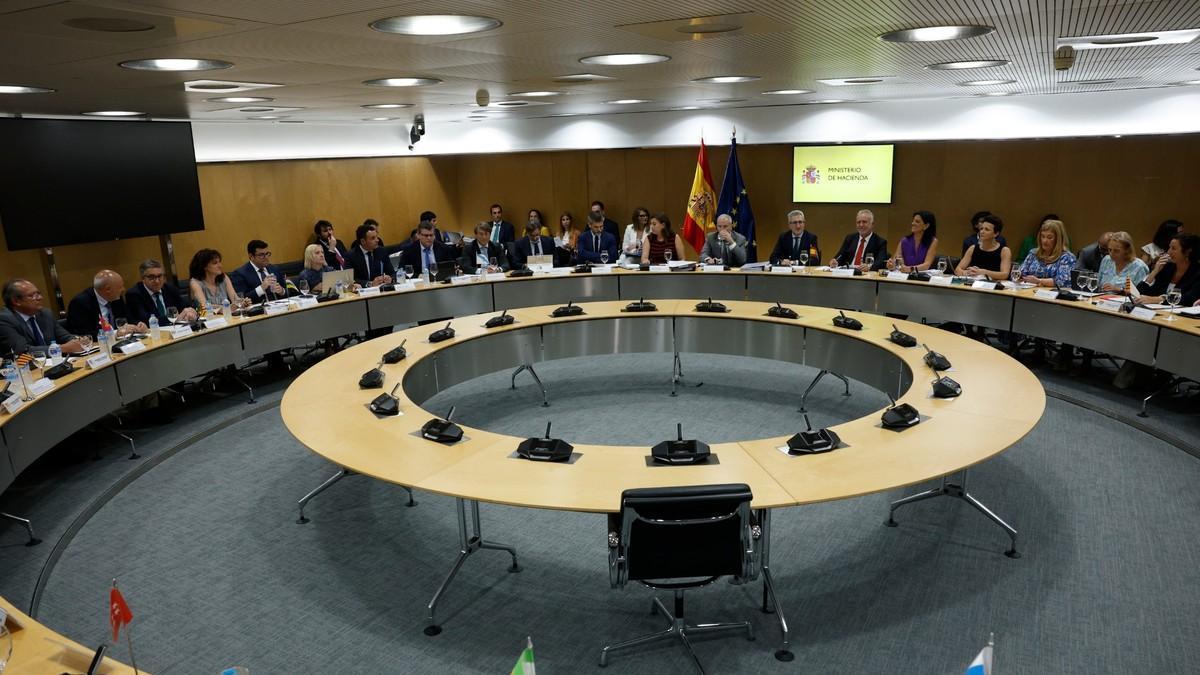
The Canary Islands government attended the Fiscal and Financial Policy Council (CPFF) on Monday with a clear and critical position regarding the application of the 2024 fiscal rules. Despite maintaining a ‘constructive’ willingness after the long period without meetings of this body, the regional Minister for Finance, Matilde Asián, denounced the ‘incoherence’ of the current spending control system for the islands before entering the meeting.
Core dispute: A mismatch between income and spending limits
The central demand from the Canary Islands is based on a discrepancy between the numerical quantification of the spending rule and the actual revenue the autonomous community receives through the funding system. According to the minister, income is expected to be higher than the spending limit permitted by the state. This technical situation forces the Canary Islands to generate a surplus which, by regulation, must be used exclusively to reduce public debt, in other words, to pay banks.
The regional government argues that this measure ‘makes no sense’ for a community like the Canary Islands, which currently maintains debt levels far below the established target. Consequently, the Canary Islands’ proposal is for this rule to be relaxed so that resources can be invested in public services and regional needs rather than being directed solely towards financial institutions.
Previous breach and extraordinary spending needs
The demand comes after the Canary Islands breached the spending rule by €444 million in 2024 and submitted an economic-financial plan to the Ministry of Finance. The regional executive has defended that this overspend allowed it to address extraordinary needs, such as the reconstruction of La Palma, the care of unaccompanied migrant minors, and the payment of court judgments.
Wage agreements and state compensation
A point of particular concern for the regional executive is the effect of the wage agreements reached by the national government with the trade unions. Asián highlighted that these state-level decisions directly affect the budgets of the autonomous communities, yet without any clarity on how these additional costs will be compensated financially. The Canary Islands warns of a double contradiction in this regard: if the state does not transfer additional funds to cover these wage increases, the community is forced to divert that money from other essential priorities and budget lines for citizens. Furthermore, the wage increases agreed by the central government are, in practice, higher than the spending rule that the same state seeks to impose on the autonomous communities.
Uncertainty over state budget progress
Regarding the processing of the General State Budgets, the Canary Islands recognises that the CPFF is a necessary formal step, but one whose real effectiveness is uncertain. Given that the Council’s report is not binding and considering the ‘very complex composition of the chamber’ that exists today, the minister pointed out the difficulty of knowing whether the state accounts, which would provide security for regional economic planning, will ultimately be approved.
What’s happening in the Canaries – straight to your phone
News, weather alerts and practical updates – direct from the islands, in English. We live here and know what’s going on – before the international media catch up. Everything lands on our WhatsApp channel – no middlemen, no algorithm. Curated for families, expats and travelers.

Canary Islands tourism chief offers dialogue on residentialisation

Canary Islands office helps small councils ditch the peseta

Two tonnes of illegal tropical fruit seized at Tenerife port

Canary Islands approves new €1.6bn development fund

Mogán mayor says her €65,000 salary is too low

Abandoned cars in Canary Islands: hundreds left to rot

Work resumes on 27 affordable rental homes in Las Palmas

Los Realejos residents fight on against propane gas plant

Canarias among Spain’s poorest regions as 36.2% live on low incomes