Company behind Las Teresitas scandal reveals €109m deficit
The company at the centre of one of the Canary Islands’ biggest corruption scandals has admitted it ended 2024 with a negative net worth of €109.4 million. Inversiones Las Teresitas (ILT), the vehicle created by businessmen Antonio Plasencia and Ignacio González (who died in prison) to execute the notorious Las Teresitas land deal in Santa Cruz de Tenerife, posted the figure in its latest accounts.
A black hole in the balance sheet
The massive shortfall in the company’s finances stems from two crushing liabilities: €64.3 million owed to the Spanish tax agency, which puts the firm at the top of the latest list of new defaulters, and €80.6 million in civil liability due to Santa Cruz de Tenerife Council. The company’s total assets amount to just €26.3 million. Against total liabilities of €135.7 million, this leaves a net deficit of €109.4 million. To make matters worse, an additional €10 million in tax debt is not even reflected in the company’s books.
ILT formally entered insolvency proceedings in September 2019. The monstrous debt is the direct result of the convictions handed down in the Las Teresitas case.
How the scam worked
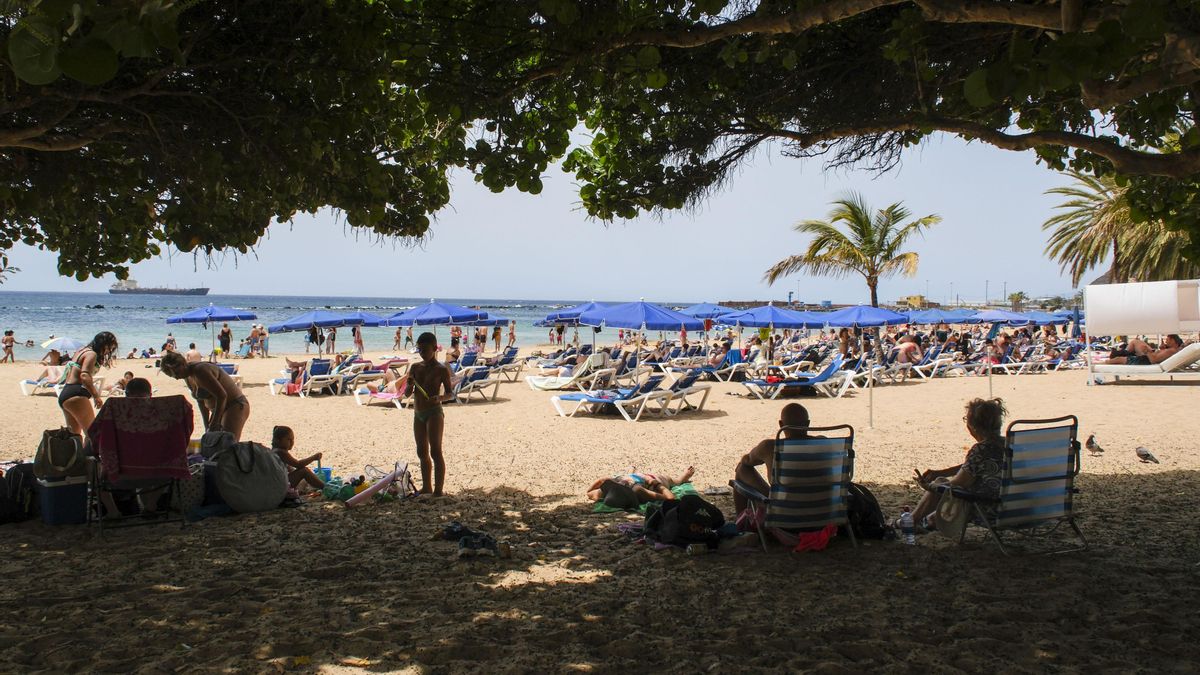
The affair dates back to 2001, when Santa Cruz de Tenerife Council bought the beachfront plots of the eponymous Las Teresitas beach from Inversiones Las Teresitas for €52.5 million. This price was almost three times the actual value of the land, estimated at around €18 million. The council claimed it wanted to protect the coastline from planned tourist developments. However, the courts later ruled that the real motive was not to serve the public interest but to execute an orchestrated plan – described by the Supreme Court in its 2019 ruling as a ‘coordinated operation’ – between politicians, including former mayor Miguel Zerolo and former planning chief Manuel Parejo (both of the Canarian Coalition party), and businessmen, aimed at enriching the latter at public expense.
ILT had originally bought the Las Teresitas plots in 1998 using a €33.6 million loan from the now-defunct CajaCanarias savings bank – the largest loan the institution had ever granted. The credit was approved by Ignacio González himself, who was a director of the bank and owned a 50% stake in Inversiones Las Teresitas through a front man, Felipe Manuel Armas. The company was essentially a shell; it had no real economic activity generating sufficient income to repay the loan, nor did it have the assets to do so. The Supreme Court ruling noted that, had the deal failed, CajaCanarias would have taken the entire loss.
Then Santa Cruz de Tenerife Council stepped in. Despite the land’s true value being around €18 million – given stringent planning restrictions, coastal regulations, and the tourist moratorium in force at the time – the council pressed ahead with the €52.5 million purchase. The local authority suppressed independent technical valuation reports, instead relying on appraisals tailored to suit the interests of the sellers.
The deal also included the free transfer to ILT of public development rights totalling 24,410 square metres, shifting them from the beachfront to the rear plots, which the businessmen already owned and spanned 120,719 square metres. The value of this giveaway exceeded €9.1 million. The council further modified the planning regulations for those plots, changing their intended use from tourist – which could not have been developed at the time due to the moratorium – to high-density residential.
The tax fraud
Thanks to that reclassification, Inversiones Las Teresitas sold the land in 2006 to Desarrollos Urbanos CIC (Desurcic) for €92.2 million. The company should have paid €27.5 million in corporation tax on the gains. But to avoid paying a single cent, it irregularly applied a fictitious reduction of €61.5 million to its tax base, using benefits under the Canary Islands Investment Reserve scheme. The law requires this reserve to be reinvested in projects such as housing or research, but the ILT owners instead withdrew the money, disguising the payments as company loans. In reality, as the 2025 Supreme Court ruling states, the proceeds from the land sale were ‘distributed as dividends’ through two companies they also controlled: Promotora Punta Larga and Promotora Victoria.
In total, between the council’s purchase of the Las Teresitas beachfront and the sale of the remaining plots to Desurcic, businessmen Antonio Plasencia and Ignacio González pocketed more than €100 million without risking a single euro of their own money.
Convictions and crushing debt
The Supreme Court sentenced them for the first of these operations to five years and three months in prison and ordered them to pay €52.5 million in compensation to Santa Cruz de Tenerife Council – a sum that, with accumulated interest, had risen to nearly €100 million by 2019. In ILT’s 2024 accounts, this debt is recorded as a long-term liability of €80.6 million.
As for the second operation – the sale of the plots to Desurcic – the Supreme Court convicted ILT of tax fraud in 2025. The ruling requires the company to pay the tax agency the €27.5 million owed in corporation tax for 2006, plus a €26.9 million penalty for a ‘very serious’ tax offence. Both amounts appear in the company’s short-term liabilities, which total €54.4 million.
On the tax agency’s list of defaulters, the debt stands at €64.37 million – about €10 million more than appears in the company’s own accounts. The difference is likely due to late payment interest.
Company admits it cannot pay
ILT itself acknowledges the gravity of the situation in its latest filing. ‘A historic and substantial tax debt (including penalties) is mounting, which cannot be satisfied with the resources available,’ the company admits. ‘Given the seriousness of this situation, this administration has decided to begin the procedures for filing a voluntary application for insolvency proceedings in the liquidation phase.’
What’s happening in the Canaries – straight to your phone
News, weather alerts and practical updates – direct from the islands, in English. We live here and know what’s going on – before the international media catch up. Everything lands on our WhatsApp channel – no middlemen, no algorithm. Curated for families, expats and travelers.

Canary Islands tourism chief offers dialogue on residentialisation

Canary Islands office helps small councils ditch the peseta

Two tonnes of illegal tropical fruit seized at Tenerife port

Canary Islands approves new €1.6bn development fund

Mogán mayor says her €65,000 salary is too low

Abandoned cars in Canary Islands: hundreds left to rot

Work resumes on 27 affordable rental homes in Las Palmas

Los Realejos residents fight on against propane gas plant

Canarias among Spain’s poorest regions as 36.2% live on low incomes