Second homes in the sun: 52,000 properties owned by non-resident foreigners
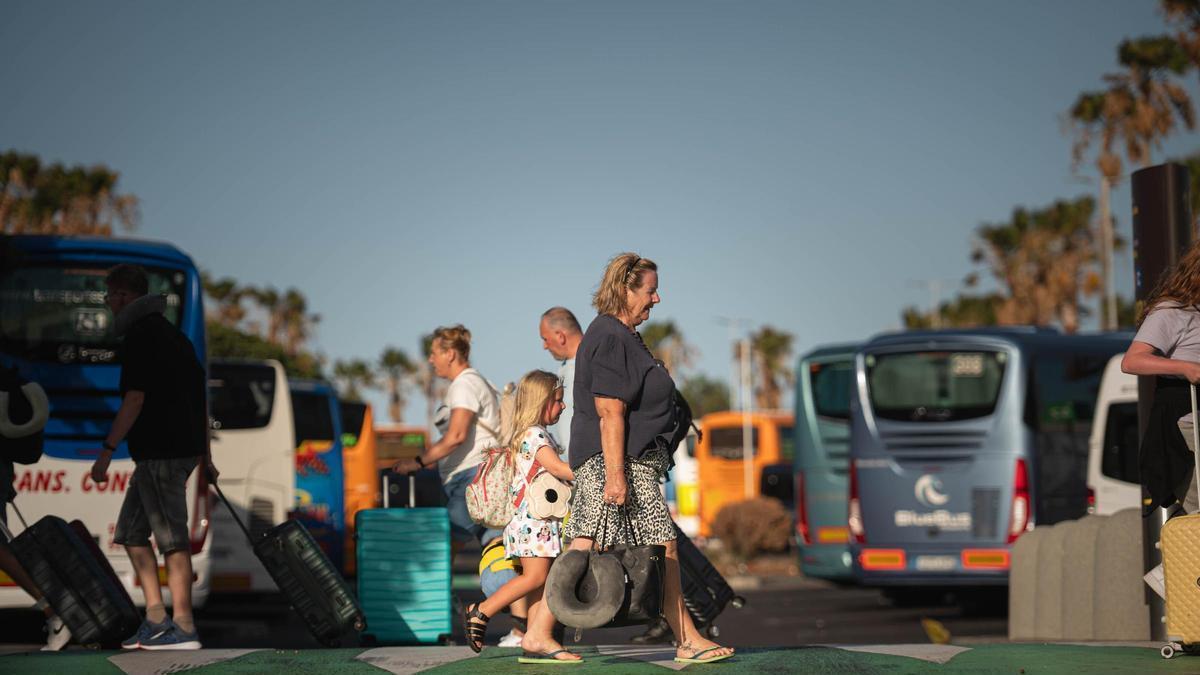
Pack your bags, head to the airport, fly to the Canary Islands and once there, enjoy your holiday in your own home. That is the reality for the non-resident foreigners who own 52,000 properties across the archipelago. These homes account for nearly 5% of the total housing stock in the islands.
This situation is nothing new in the Canary Islands, but it has not been without debate in recent times. On the one hand, the purchase of properties by foreigners who have no intention of moving here permanently, but simply want a place of their own to relax, is one of the key factors behind the soaring cost of housing. On the other hand, these investments also drive the economy, provide a boost to the construction and real estate sectors, and attract visitors who generally tend to stay for longer periods.
The data behind the debate
The figure of 52,563 homes currently in the hands of non-resident foreigners comes from the latest Annual Report published by the Bank of Spain. It reveals that just over 8% of the islands’ housing stock is not used as a primary residence, either because it belongs to international owners who do not live in the Canary Islands or because it is used as holiday accommodation.
In total, 90,800 homes in the region are not being used to house families year-round. Subtracting the 38,337 tourist properties estimated by the Canary Islands Institute of Statistics (Istac) leaves 52,463 homes whose owners were born outside Spain and have not moved here permanently.
A clash of interests
Some argue that continuing to open the housing market to foreign buyers is a mistake at a time when the housing emergency means much of the local population struggles to find a home. However, trying to restrict property purchases by foreigners — who are mostly British or from European Union countries — has proven very difficult.
Attempts suggested in recent years have not been particularly successful, since restricting property purchases in the archipelago to EU citizens alone would violate some of the bloc’s fundamental rights. Even so, the Canary Islands government has been working for some time to secure an exception for the islands, citing their status as an outermost region (OR). The aim is to limit, or at least discourage, the purchase of homes by non-resident foreigners who will not use the property as their main residence.
How foreign demand shakes up the market
So how does foreign demand affect the islands’ property market? Its impact is particularly high in a region like the Canary Islands, where interest in acquiring a second home is strong. Last year, although the pace of transactions involving a foreign buyer slowed compared to previous years, international demand still accounted for a robust 35.17% of all homes sold in the Canary Islands — reaffirming its role as one of the archipelago’s main real estate drivers.
Undoubtedly, foreign demand pushes prices up. On one hand, in a market where supply is already scarce, the demand from residents trying to find a home is compounded by foreign buyers wanting to invest. While the type of property each group seeks may not be exactly the same, it does increase pressure on an already severely strained housing stock.
On the other hand, the higher purchasing power of many international visitors interested in owning a home in the Canary Islands drives prices up even further. Why? Simply because they can afford to pay more for a property than most local families. What is more, the mere existence of an international market creates expectations among sellers, who, knowing there is foreign demand, can adjust their prices upwards or pick and choose the best offers. This phenomenon is not limited to luxury homes — it also affects mid-range properties.
Not all the blame lies abroad
That said, it is important to note that the entire increase in housing costs seen across the archipelago in recent years cannot be blamed on foreign buyers. Since the financial crisis, public administrations have neglected their role of creating and maintaining a public housing stock that provides affordable homes for the most vulnerable groups and helps cool prices. This, combined with a standstill in construction, a lack of ready-to-build land, and the cost overruns of recent years, has created the perfect storm in which the Canary Islands housing market now finds itself.
What’s happening in the Canaries – straight to your phone
News, weather alerts and practical updates – direct from the islands, in English. We live here and know what’s going on – before the international media catch up. Everything lands on our WhatsApp channel – no middlemen, no algorithm. Curated for families, expats and travelers.

Two tonnes of illegal tropical fruit seized at Tenerife port

Canary Islands approves new €1.6bn development fund

Mogán mayor says her €65,000 salary is too low

Abandoned cars in Canary Islands: hundreds left to rot
Work resumes on 27 affordable rental homes in Las Palmas

Los Realejos residents fight on against propane gas plant
Canarias among Spain’s poorest regions as 36.2% live on low incomes

Canary Islands bananas lose ground to imported bananas
Canary Islands bottom of Spain’s social housing table