PSOE calls for tax policy rethink as Canary Islands revenue hits €3.88bn
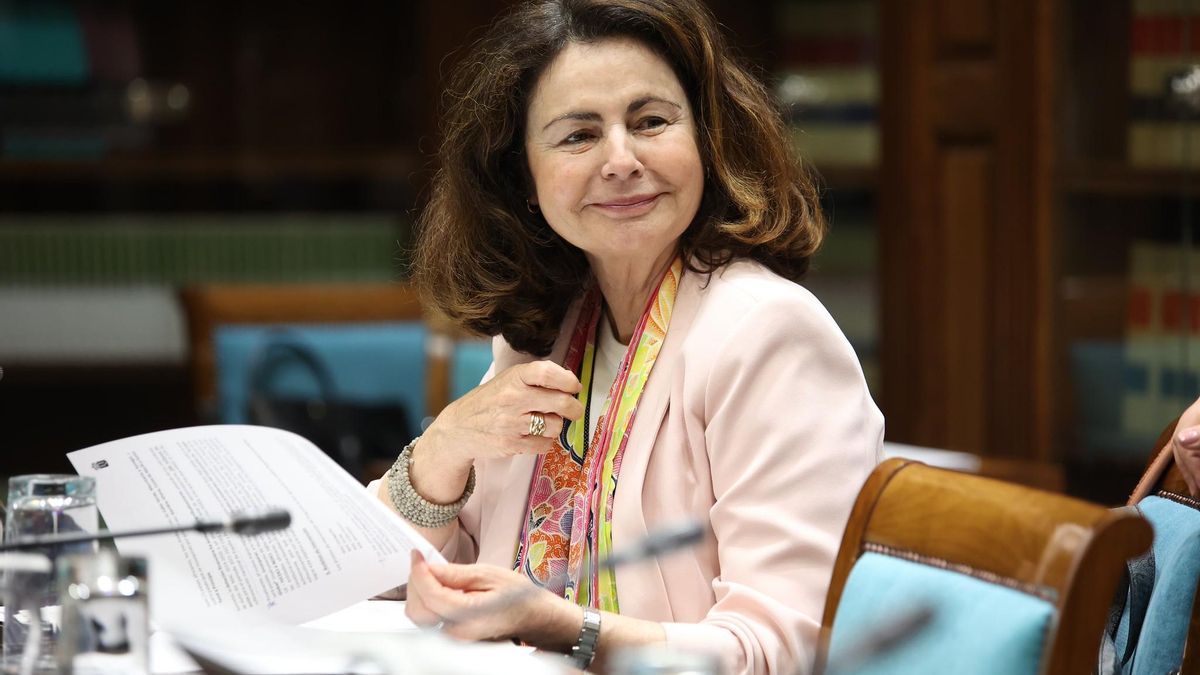
The Socialist Party (PSOE) has called on the Canary Islands government’s Finance Minister, Matilde Asián (Partido Popular), to rethink fiscal policy in light of 2025 tax revenue figures. The Canary Islands Tax Agency collected €3.881 billion last year, almost 6% more than in 2024 and 13% more than in 2023.
Despite these strong figures, Socialist MP Manuel Hernández told a parliamentary committee that his party would not accuse the regional government of “stealing and lining its pockets at the expense of Canary Islanders” — as CC (Canarian Coalition) and PP had done from opposition in the previous term. “The debate is not about how much is collected, but how,” Hernández said, noting that the revenue increase rests primarily on consumption taxes, which fall on the entire population regardless of income level.
Inheritance tax revenues collapse by 63%
Hernández highlighted a sharp decline in inheritance and gift tax revenues, which have fallen by 35% and 63% over the last two financial years — a combined €50 million shortfall for public coffers. He accused CC and PP of acting without hesitation on this issue, while now invoking spending rules as a pretext not to cut other taxes. The abolition of inheritance and gift tax was one of the first measures CC and PP introduced when they took office in 2023.
Although both parties promised during their election campaign to reduce the Canary Islands General Indirect Tax (IGIC), they have evaded that commitment three years on, Hernández said. He also underlined that the most painful tax for many is probably property transfer tax, whose revenue has risen 18% in two years — a trend he attributed to soaring housing costs.
Minister defends record and points to Madrid
Finance Minister Matilde Asián praised both the scale of 2025 tax revenue and the work of the Canary Islands Tax Agency in “meeting its objectives.” Responding to Socialist criticism, she pointed out that the Spanish government had failed to deflate the state portion of income tax (IRPF), the main redistributive tax, unlike the regional executive.
Asián also noted that, for the first time in Spain, minimum wage earners are now required to file income tax returns — something she said “she never thought she would see.” She also referenced the central government’s attempt to make unemployment benefits subject to social security contributions.
On inheritance and gift tax, Asián rejected the PSOE’s claim that the measures benefit only the wealthy, noting that the average declared base is €30,000. She described the regional government’s relief as “fair,” arguing that income from work and savings are already sufficiently taxed.
As for the rise in property transfer tax revenue, Asián attributed it to a 2021 reform requiring taxation based on reference values rather than the prices set by regional property assessments.
Finally, she acknowledged that tax revenue has increased in the Canary Islands, but added that it has risen less than at central government level, which has created “new indirect tax categories that place a greater burden on those with lower incomes.”
Spending rule dispute escalates
In the same committee session, Asián insisted that the regional government is “in no way defying” the budget stability law — a suggestion made by New Canaries (NC) MP Esther González following the latest report from the Independent Authority for Fiscal Responsibility (AIReF). That report indicates the Canary Islands government will breach the spending rule at least until 2028.
Asián stated that the regional government “fully supports” the objective of fiscal rules and accused González of omitting the fact that AIReF also forecasts the region will run a budget surplus until 2030. She argued that Spain should adapt its fiscal discipline rules to the new European framework.
The minister reiterated her call for flexibility on the spending rule and asked for “frank dialogue” with central government. However, she noted that the sectoral conference has barely met twice — “late and poorly” — and that agreements included in omnibus decrees have lapsed in the Congress.
‘A political fraud’: NC launches blistering attack
Esther González (NC) told the minister to “get off her pedestal of demagoguery and stop constantly looking to Madrid to try to cover up budget management that is a political fraud through and through.” She asked: “How long will you keep up the rhetoric of suffocation and lack of budgetary room when you left €1.2 billion unspent in 2024 and €1.051 billion in 2025? This has no other name than sheer incompetence.”
It should be noted that since CC and PP took office, more than €3.3 billion from the budgets has gone unused — reaching rates of non-execution not seen in over a decade — and hundreds of millions of euros have had to be returned for the same reason. González also called on the minister to stop using care for migrants arriving in small boats and wooden fishing vessels as purported “unforeseen spending,” and accused her of “untenable cynicism” in now calling for flexibility on the spending rule when she had defended it tooth and nail in parliament in 2012.
Asián retorted that the Constitution was amended at the behest of the PSOE, with the support of the PP.
Vox MP challenged to identify spending cuts
The finance minister also invited Vox MP Javier Nieto to “enlighten her” and indicate exactly what spending he would cut without affecting essential public services, after he drew a distinction between necessary services and those he described as “clientelist or aimed at telling citizens how to think and act.”
Asián argued that nearly 80% of the regional budget goes to essential services, with the remainder being ring-fenced funds. She also detailed that several annual audit plans monitor financial management effectiveness and efficiency, and that since 2024 a continuous supervision model has been introduced to explore potential spending reductions across the public sector. This analysis covers public entities, companies and bodies to assess whether the reasons for their creation still exist, whether they are financially sustainable, and whether current methods are the most appropriate for delivering the public services they are intended to provide.
What’s happening in the Canaries – straight to your phone
News, weather alerts and practical updates – direct from the islands, in English. We live here and know what’s going on – before the international media catch up. Everything lands on our WhatsApp channel – no middlemen, no algorithm. Curated for families, expats and travelers.

Canary Islands tourism chief offers dialogue on residentialisation

Canary Islands office helps small councils ditch the peseta

Two tonnes of illegal tropical fruit seized at Tenerife port

Canary Islands approves new €1.6bn development fund

Mogán mayor says her €65,000 salary is too low

Abandoned cars in Canary Islands: hundreds left to rot

Work resumes on 27 affordable rental homes in Las Palmas

Los Realejos residents fight on against propane gas plant

Canarias among Spain’s poorest regions as 36.2% live on low incomes