Geothermal energy push
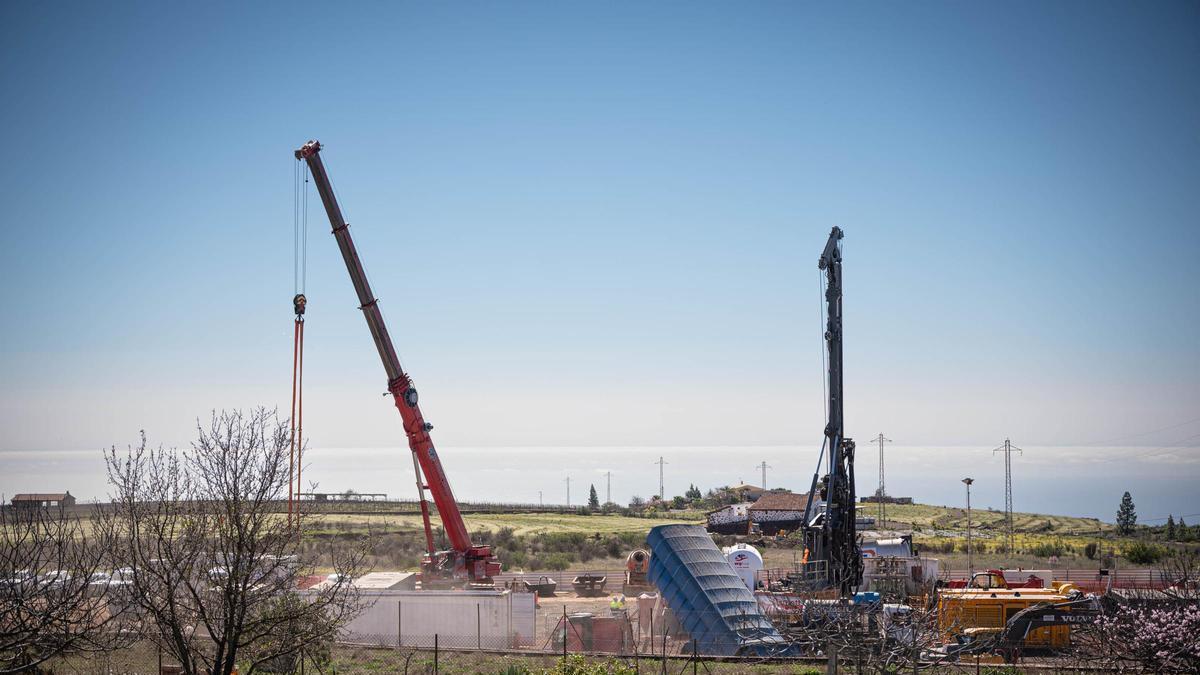
The Coalición Canaria (CC) group on the Tenerife Island Council (Cabildo) is set to take a proposal to the ‘State of the Island’ debate, scheduled for this Friday, 29 May. They will call on the Spanish Government to establish a specific energy tariff for geothermal projects in the Canary Islands. The nationalist party argues that this measure is crucial to making ongoing initiatives viable, including the strategic exploratory drilling planned around Vilaflor and Trevejos, and to position Tenerife as a benchmark territory for stable renewable energy and decarbonisation.
This will be one of ten proposed resolutions that CC will defend at the island plenary, which will also focus on mobility, youth, health, craft trades, and administrative modernisation. The nationalist group’s spokesperson, José Miguel Ruano, argues that Tenerife cannot afford to miss the opportunity to advance a renewable energy source capable of reducing external dependence. In his view, geothermal energy could become a key element in strengthening the Canary Islands’ energy sovereignty, provided there is a state framework adapted to the reality of the islands.
The proposed resolution calls for the state to establish a dedicated tariff for geothermal projects in the archipelago, covering both the exploration and development phases. The aim is to provide legal certainty, ensure project profitability, attract private investment, and foster the creation of specialised technical jobs. Ruano maintains that “it is not enough to talk about the energy transition” and that the conditions must be created for projects to actually go ahead. Coalición Canaria believes Tenerife has the scope to move towards a more autonomous, sustainable, and less vulnerable energy model, but is calling on the central government to take concrete measures that consider the unique nature of the Canary Islands.
Criticism of ‘Verano Joven’ scheme
Another proposal that CC will bring to the plenary targets the state-run ‘Verano Joven’ programme. The nationalist group will ask the Spanish Government to include specific discounts for air and sea travel for young residents of the Canary Islands, ensuring they can benefit from the programme on terms comparable to those enjoyed by young people on the mainland. The nationalists argue that the current design of the programme has a mainland bias, subsidising modes of transport such as trains, state-run buses, and Interrail, while excluding the flights or ferry journeys that young Canary Islanders need to reach the mainland or travel between islands.
Ruano warns that a young person from Tenerife must first pay for an airline or ferry ticket just to access a programme that is far more straightforward for those living on the mainland. He insists that state youth policies must take insularity into account.
Free public transport and waste management
Coalición Canaria will also defend a proposal to guarantee free public land transport in the Canary Islands during 2025 and 2026. The party is calling on the state to generate, without further delay, the credit corresponding to the outstanding 35% settlement of the 2025 aid and to allocate the necessary funds to maintain the measure throughout 2026. The nationalist group highlights that free transport has had a direct impact on family finances and on promoting more sustainable mobility in Tenerife. However, it warns that state delays are being absorbed by the island councils, which are shouldering an economic burden that CC says is not theirs to bear and does not cover the total cost of the service.
On waste, Coalición Canaria proposes urging the Spanish Government and the European Union to adapt circular economy regulations to the reality of the outermost regions. The party is calling for the application of Article 14 of the Canary Islands Economic and Fiscal Regime to compensate for the additional costs arising from distance, insularity, and double insularity. The group argues that Tenerife and the Canary Islands as a whole need a multi-year strategic plan to create advanced waste treatment and recovery plants within the island territory itself. According to Ruano, it makes no sense for Canarian citizens to finance a system in which part of the recyclable materials are exported outside the islands, resulting in a higher carbon footprint and a loss of green job opportunities.
Craft trades, spending rules, and digital twin
The package of proposals also includes increasing the budget allocation for training, promotion, and dissemination of craft trades, artisan skills, and traditional clothing. Coalición Canaria considers this sector an essential part of Tenerife’s cultural heritage, but also one that can generate employment, entrepreneurship, and economic activity. Ruano points out that crafts “are not just memory”, but also the future, the local economy, and generational renewal. For this reason, the group is calling for training programmes to be strengthened in light of the increase in applications and growing interest from young people, the unemployed, professionals, and entrepreneurs.
Coalición Canaria will also bring to the plenary a proposal to modify the spending rule to prevent financially sound administrations with a surplus and low debt levels from being penalised when they use their retained earnings to invest in citizens. The party argues that it makes no sense to force institutions that comply with budgetary stability and only breach the rules occasionally by applying accumulated savings to draw up economic-financial plans.
In the area of administrative modernisation, CC proposes promoting the ‘Tenerife, from geographic information to territorial intelligence’ programme, with the aim of moving towards an Island Digital Twin. This tool would make it possible to organise and connect data from the Cabildo, improve territorial planning, anticipate problems, simulate scenarios, and facilitate public decision-making based on integrated, up-to-date information.
The party also proposes updating internal procedures regarding personnel. To this end, it suggests opening a negotiation process to renew the Agreement on Working Conditions for civil servants and the Collective Agreement for labour personnel, both of which have been in force since 2014. Aspects to be reviewed include work-life balance, equality, occupational health, career progression, job classification, and the standardisation of conditions.
Youth violence prevention and health promotion
In the social and youth sphere, Coalición Canaria proposes strengthening the Plan for the Prevention of Violence among Pre-teens, Adolescents, and Young People through an island platform of educational resources on non-hegemonic masculinities and femininities. The aim is to provide useful tools for young people, families, teachers, and socio-educational agents to prevent hate speech, sexist stereotypes, and symbolic, relational, and digital violence.
The final proposal is aimed at boosting prevention and health promotion policies in Tenerife. The initiative urges the Government of the Canary Islands, the Canary Islands Health Service, and the Cabildo to strengthen screening programmes, prevention of chronic diseases, mental health, addictions, sexually transmitted infections, obesity, and emerging pathologies.
What’s happening in the Canaries – straight to your phone
News, weather alerts and practical updates – direct from the islands, in English. We live here and know what’s going on – before the international media catch up. Everything lands on our WhatsApp channel – no middlemen, no algorithm. Curated for families, expats and travelers.

Canary Islands tourism chief offers dialogue on residentialisation

Canary Islands office helps small councils ditch the peseta

Two tonnes of illegal tropical fruit seized at Tenerife port

Canary Islands approves new €1.6bn development fund

Mogán mayor says her €65,000 salary is too low

Abandoned cars in Canary Islands: hundreds left to rot
Work resumes on 27 affordable rental homes in Las Palmas

Los Realejos residents fight on against propane gas plant

Canarias among Spain’s poorest regions as 36.2% live on low incomes