Tourism defies geopolitical turmoil
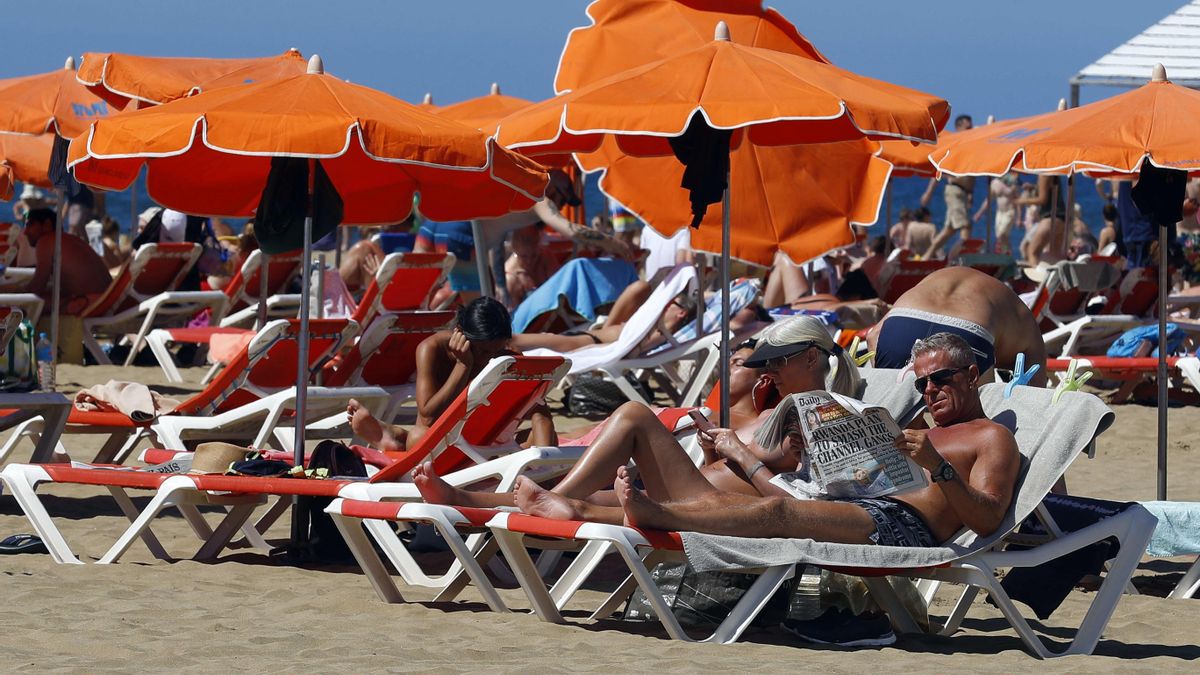
Foreign tourist arrivals to the Canary Islands continue to deliver highly satisfactory results for the local tourism industry, despite the ongoing conflict in the Middle East – including the military action launched by the United States and Israel against Iran in late February, as well as Israel’s campaign in Lebanon – and before the main Easter week figures have even been tallied (these fell outside March and traditionally mark the end of the high season in the islands).
As things stand, no negative effects of this internationally significant conflict – which has driven up crude oil and gas prices, along with general transport costs – have yet been observed in the arrival of overseas visitors to the islands. Nor is there any certainty about how this crucial demand stream for the Canary Islands will behave going forward: the war, still unresolved, could either damage the business or worsen it, or conversely accelerate and improve it by diverting tourism from other regions to safer destinations such as the archipelago (recall what happened during the Arab Spring, which delivered 1.5 million extra tourists to the Canary Islands).
On track for another record-breaking year
While waiting for that uncertainty to clear – and for the true benefits or drawbacks of the current international situation, which is proving particularly troublesome for European tourism, to become apparent – the archipelago continues to ride the wave in terms of visitor numbers. What is more, if the growth rate seen in the first quarter of this year is maintained, with a 2.8% increase in foreign arrivals, 2026 will mark a third consecutive record for visitors from outside Spain. (The milestone was narrowly missed in 2023, but achieved in both 2024 and 2025, the latter year bringing a total of 15.7 million visitors.)
If that average growth is sustained, the absolute figure would already exceed 16 million annual visitors (up by just over 400,000 projected for 2026). When combined with the average of approximately 2.7 million mainland Spaniards who choose the islands each year, the total of 18.4 million tourists welcomed by the Canary Islands in 2025 – the current all-time record, with three consecutive highs in 2023, 2024 and 2025 – would edge ever closer to 19 million. It seems there is no end in sight.
March figures and market share
According to statistics released this week by Spain’s National Statistics Institute (INE) through its Frontur and Egatur surveys, the number of foreign tourists received by the Canary Islands in March reached an absolute figure of 1.56 million people, a modest increase of 0.4% compared to the same month in 2025 (for Spain as a whole, the rise was 3.3%). However, the cumulative figure for the first three months of the year (January to March) shows relative growth of 2.8%, reaching 4.5 million foreign visitors (compared to 2.5% nationally).
In March, the Canary Islands attracted 23% of all tourism in Spain, the highest share of any autonomous community (the islands were in their high season), followed by Catalonia (19%) and Andalusia (17%).
Spending up despite stable individual outlay
The islands also claimed top spot in terms of tourist spending by foreign visitors, with the Egatur survey recording a total of €2.479 billion in March, 2.3% higher than the figure for the same month in 2025. The cumulative total for the entire first quarter reached €6.93 billion, representing 28% of the national figure, which stood at €25.017 billion (up 6.3% to March). It is worth noting that this tourist spending variable does not equate to the actual income the Canary Islands retain from the tourism activity it hosts.
The increase in tourist spending in March was not linked to an improvement in the average individual spend of visitors, but rather to a longer average stay, now closer to nine days (8.6).
What’s happening in the Canaries – straight to your phone
News, weather alerts and practical updates – direct from the islands, in English. We live here and know what’s going on – before the international media catch up. Everything lands on our WhatsApp channel – no middlemen, no algorithm. Curated for families, expats and travelers.

Tenerife faces huge tourism expansion despite moratorium calls

El Bejeque in Las Canteras adds sea to its fire

Siam Park Gran Canaria must build its own desalination plant

Fuerteventura’s biggest resort to open on 1 November
Gran Canaria to teach tourism history in schools

Canary Islands see 0.3% rise in foreign tourists in August

Row over 368-bed hotel project in La Gomera

Spanish astronaut trains in Lanzarote for Moon mission

Tivoli La Caleta hosts first red tuna Kaitai in Canarias